
Extra Select 5L Wild Bird Seed Review: Great Feed, Terrible Tub
We earn commission from qualifying Amazon purchases. It costs you nothing and does not affect what we recommend.
Why is an Amazon No.1 bird seed, with nearly 23,000 ratings and a 4.4-star lifetime average, collecting dozens of one-star reviews every week? Almost all the recent complaints share the same cause, and it is not the seed. We broke down what the Extra Select 5L mix does well, where it falls down, and whether £6.99 is the bargain it looks like on paper.
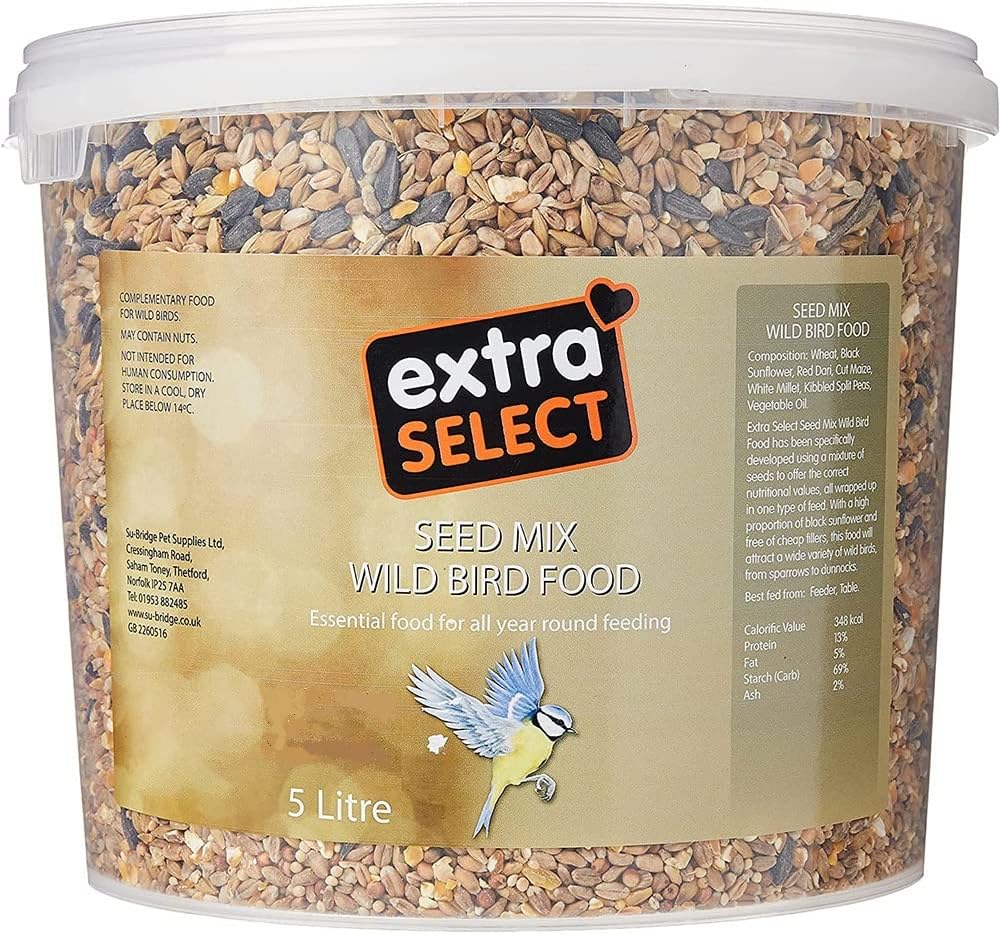
A 4.4-star average across 22,830 ratings is the kind of number that usually ends a buying decision before it starts. On that score alone, the Extra Select 5L Wild Bird Food mix looks like a no-brainer: £6.99 for a five-litre tub of seed, ranked No.1 in its category, British brand, bags of reviews. But when you read the recent feedback, something else jumps out almost immediately. Over and over, people are describing the same problem, and it is not the seed.
We went through 100 of the most recent reviews on the listing. What we found was a product with a loyal fanbase, a real quality issue in how it is shipped, and a smaller but consistent complaint about what the birds in your garden will and will not actually eat. Here is how the 5L Extra Select seed mix really stacks up.
The Disconnect Between 4.4 Stars and the First Page of Reviews
Here is the first thing to understand about the Extra Select tub. On paper it is one of the highest-rated bird foods on Amazon UK. The overall lifetime score is 4.4 out of 5, pulled from nearly 23,000 ratings. If you stopped reading there you would click buy.
Scroll to the most recent reviews, though, and the recent mood is sharply different. Out of the last 100 reviews we analysed, 33 were one-star and another 15 were two-star. That is almost half the recent feedback rated two stars or less. And when you read them, a pattern emerges straight away: the criticism is overwhelmingly about how the tub arrives, not what is in it.
Dozens of reviews mention the same issue. One buyer wrote, "Tub was split with contents coming out. Not ideal as I now have no way to store it." Another: "Lid was off, outer box had a hole in it, messy!" A third, who had bought it before: "I've bought this two times. Both times the plastic tub has split in transit."
The seed itself, in most of these same reviews, is described as good. The split between product satisfaction and packaging frustration is so clear that it is worth treating them as two separate questions, which is how the rest of this review is organised.
What Is Actually In The Mix
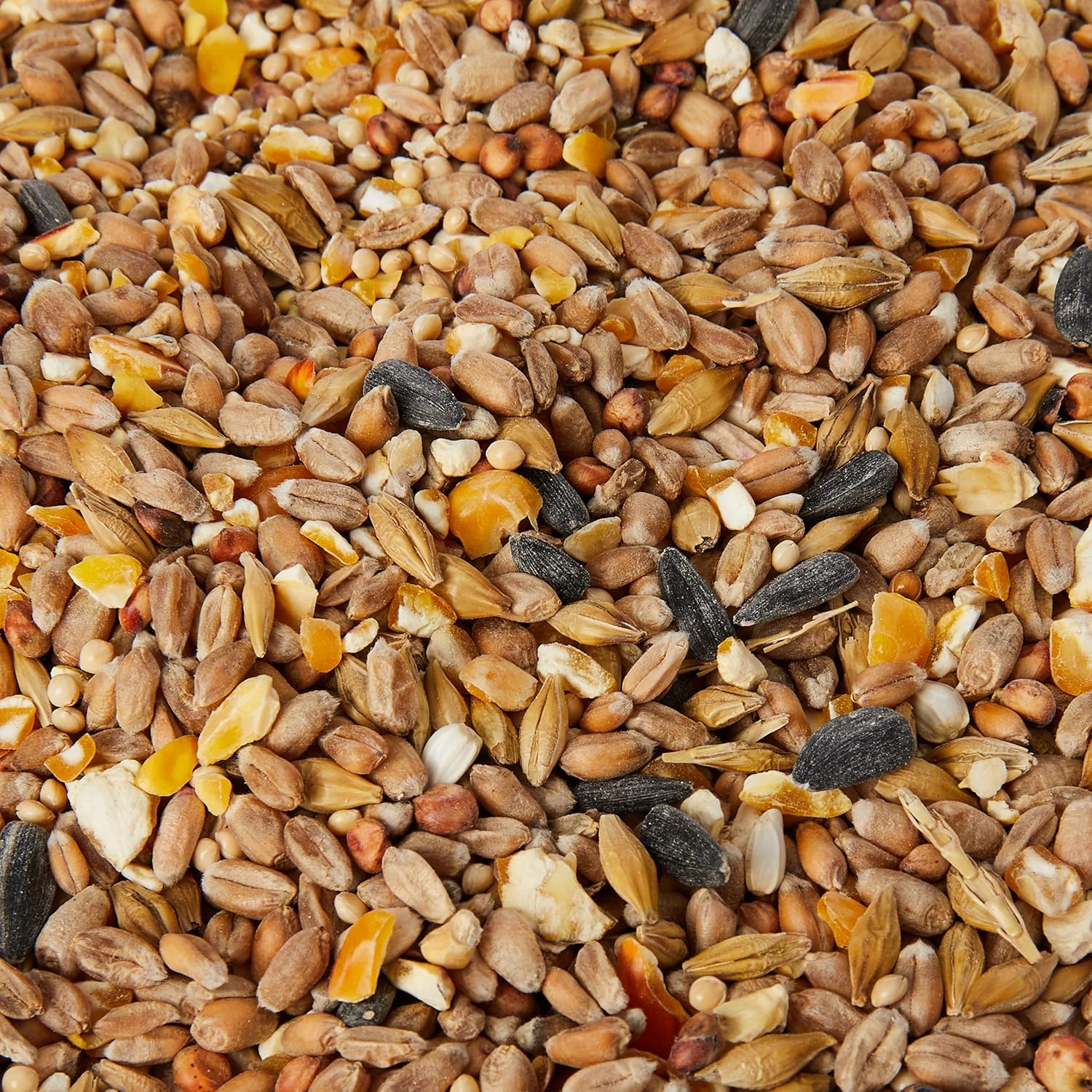
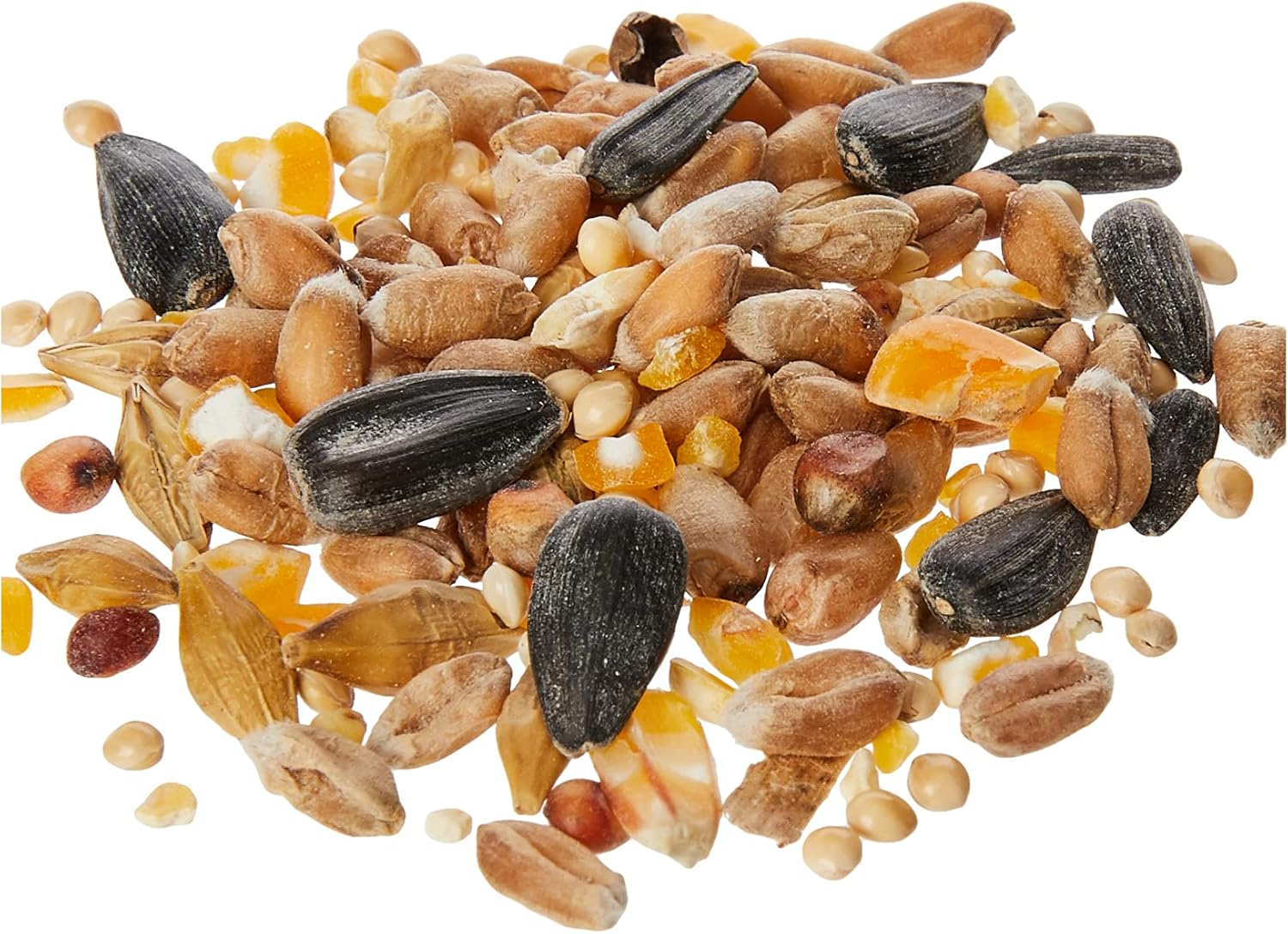
Extra Select describe their blend as a general-purpose mix for small garden birds: sparrows, finches, dunnocks, robins. The headline ingredients on the listing are black sunflower seeds, cut maize, and white millet, and the packaging claims 13% protein content. It is pitched as an all-year feed with extra emphasis on winter, when small birds need calorie-dense food to keep their body heat up.
In practice, if you open a tub and look at it, there is more wheat and cracked grain in the mix than the three headline seeds would suggest. Several reviewers call this out. One wrote, "Full of wheat which just gets left so really not worth the money." Another: "Mostly wheat, listing gives other seeds as larger proportion, but sadly my tub is mostly wheat."
This matters because the bird species you want to attract drive which ingredient they care about. Finches, tits and robins are after the oil-rich black sunflower kernels. Doves, pigeons, sparrows and corvids will happily clear the grain. If your garden leans towards the small garden birds the packaging names, you will see them pick out the sunflower and leave a fair amount of the rest, which ground-feeders or scavengers then tidy up. That is not a failure of the product, but it is a different product than a pure-sunflower or nyjer feed, and worth knowing before you buy it for a specific bird you are trying to attract.
The Tub Problem: Why So Many Bags Arrive Split
If this review has one load-bearing section, it is this one. The single most common complaint across recent reviews is that the plastic tub arrives damaged. Lids pop off. Sides split. Whole deliveries end up with seed in the bottom of the Amazon box instead of inside the container.
A representative sample of what buyers are saying:
- "Plastic tub was badly split open and the seed poured all over the floor when I removed it from the box."
- "The container was broken and spilled every where!!! A lot of it went over my carpet and had to be vacuumed up."
- "Packaging split underneath, lifted it out and seed went everywhere. Flimsy container, spent half hour clearing seed from the floor."
- "This is the second time I've ordered this item and the second time it hasn't been properly sealed."
There are two things going on here. The first is the material: multiple reviewers describe the tub as a thin, square, recycled plastic that is not built for courier handling. The second is that the outer cardboard box does not consistently have enough internal padding to protect the tub from being dropped or compressed in transit.
A few points worth adding here. First, the percentage of buyers reporting damage is high enough that it is clearly a systemic packaging issue, not bad luck. Second, if the tub does survive delivery, reviewers describe it as perfectly functional for storing the seed once you get it indoors. Third, if you are buying primarily for the seed (and plan to decant it into your own bin or feeder anyway) the tub damage is annoying but not catastrophic, as long as the seed itself is in a sealed inner bag, which varies. If you are relying on the tub as your long-term bird-food container, the risk of getting one that cannot be closed again is real.
Our recommendation: if you do order, open the parcel on a hard floor or a sheet, not your kitchen lino, because the odds of a clean unbox are not great.
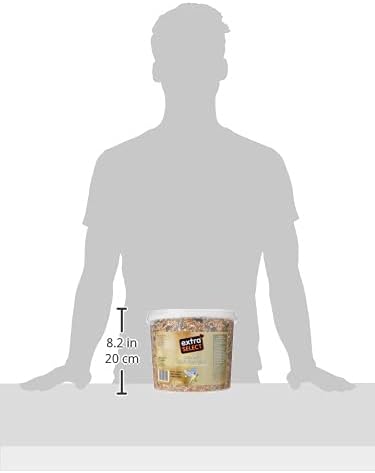
Extra Select Seed Mix Wild Bird Food, 5 Litre
A nutrient-rich mix of black sunflower seeds, cut maize and white millet for small garden birds. 13% protein content, suited to year-round feeding.
When Birds Love It, They Really Love It
Set the packaging issue aside and the seed itself has a clear group of fans, mostly long-term buyers who keep re-ordering. These are the reviews that push the overall score back up toward the 4.4-star average.
A few direct quotes that capture the mood:
- "Birds love this, I've seen more birds than usual."
- "Ordered 15 Feb. Quick delivery and the birds love it. Need to order another already!"
- "We have this product on subscription so that should demonstrate how good it is."
- "It contains a good range of seeds, and is clean / non dusty, indicating better quality. Any spilled seed is quickly taken by ground feeding birds, so there is no wastage."
That last one is worth reading carefully, because it matches something we noticed across the happy reviews: the mix works best when you have a varied bird community rather than one specific target species. If you have ground feeders (blackbirds, dunnocks, pigeons) as well as perching birds (tits, finches, sparrows), the grain that the small birds skip does not go to waste. The ground feeders pick it up, and the feeder gets emptied down faster.
The other thing that comes up repeatedly is price. Five litres of mixed seed for around £6.99 works out cheaper than most supermarket tubs and a lot cheaper than the premium sunflower-heavy blends you can buy from dedicated wildlife brands. For people filling multiple feeders or feeding a lot of visiting birds, that value is the reason they come back.
When Birds Ignore It: The Wheat Complaint
Not every garden takes to this mix, and the people who say it failed for them are not exaggerating. A chunk of the negative reviews come from buyers who had a reliable flock of visitors, swapped to this seed, and watched the birds stop turning up.
One of the clearer write-ups: "Our birds hated this seed mix. We usually have a huge number of birds on our feeder full of sunflowers seeds. We switched to this mix and the birds just stopped visiting. Literally saw 2 blue tits pop over to it over a whole week. Swapped for our usual sunflower seeds yesterday and today we have a garden full of birds again."
Another: "Birds only eat the sunflower seeds though, they leave everything else, so not worth the money. And we get a lot of different bird species in the garden."
The likely explanation is straightforward. If your birds have been trained on a richer, sunflower-heavy mix, a step down to a grain-and-seed blend with a lot of wheat is going to disappoint them. Birds learn where the best food is, and small garden species in particular are quite picky. They will fly past a feeder they judge lower value, especially if there are alternatives nearby (including other gardens).
There is also a secondary issue worth being aware of. Some reviewers reported uneaten grain going mouldy in feeders or on the ground and, in one case, attracting rats. If you put out more seed than your birds are eating in a day or two, you end up with leftovers, and leftover grain in damp UK weather does not last long before it spoils. If you are switching to this mix, start with smaller amounts and scale up only as birds come back to it.
What £6.99 for 5 Litres Actually Buys You
At 3.3kg actual weight (the listing is five litres by volume, which is worth flagging because a few reviewers felt caught out expecting 5kg), you are paying roughly £2.12 per kilo. For a general-purpose wild bird mix, that is at the cheaper end of the market. Equivalent 5kg bags from RSPB-branded or wildlife-specialist suppliers tend to come in at £10 to £15, sometimes higher for black sunflower only.
What the £6.99 gets you:
- 3.3kg of seed and grain (about 5 litres by volume)
- A plastic tub with a snap-on lid, when it arrives intact
- Enough variety to suit mixed garden visitors rather than one target species
- Black sunflower seed content that is real, even if not the dominant ingredient
What it does not get you:
- A premium sunflower-heavy or husk-free mix
- Reliable undamaged packaging
- Accurate weight information on the first read of the listing (5L ≠ 5kg)
If you go into the purchase knowing those trade-offs, the pricing maths holds up reasonably. The issue is when people buy expecting premium quality at a budget price and get a budget product that has also arrived with the lid off.
Should You Buy It?
The short version is: it depends on what your garden is already doing and what you expect from the tub.
This is a reasonable buy if you have a mixed bird community with both perching and ground-feeding species, you are filling multiple feeders, you care more about value per kilo than premium sunflower content, and you are willing to accept that the tub might arrive in a state that is less than pristine. You should also be relaxed about decanting it into your own storage container, because the as-delivered tub may or may not be usable.
It is not the right pick if you have a feeder full of specialised visitors (goldfinches after nyjer, tits after sunflower hearts), if you have had bad experiences with Amazon courier handling and can't easily be home for a re-delivery, or if you want the seed to be the premium, sunflower-heavy blend the small-bird photos on the product page imply.
On balance, with 22,830 ratings sitting at 4.4 stars, the seed clearly works for plenty of gardens. The product would be straightforwardly recommendable if the tub shipped reliably. Until that is fixed, go in with your eyes open.
Extra Select Seed Mix Wild Bird Food, 5 Litre
A nutrient-rich mix of black sunflower seeds, cut maize and white millet for small garden birds. 13% protein content, suited to year-round feeding.