
Vine Weevil Nematodes for Pots UK: The Live Treatment With a Two-Week Clock
We earn commission from qualifying Amazon purchases. It costs you nothing and does not affect what we recommend.
A rose on its last legs looking healthy again a month later, strawberry beds protected for years: the five-star reviews for these live nematodes read well. But they come with conditions: fridge storage with a tight use-by window, and soil warm enough for the worms to move. Here is what decides which camp your pots land in.
Buy most garden pest treatments and they sit on a shelf in the shed until the day you need them. Vine weevil nematodes are different. They turn up alive, they go straight into the fridge, and the packet carries a use-by date roughly two weeks out. You are not buying a chemical, you are buying millions of microscopic worms that hunt the grubs eating your plants' roots, and they only work while they are still alive.
This Gardening Naturally pack has pulled in 499 ratings at a 4.2-star lifetime average, and I read the 100 most recent reviews (which average a slightly lower 4.11) to work out where it delivers and where UK gardeners get caught out. The short version: when the timing and soil temperature are right, the recovery stories are convincing. When they are not, you are left staring at a pot with no way to tell whether anything happened.
The Damage Happens Underground
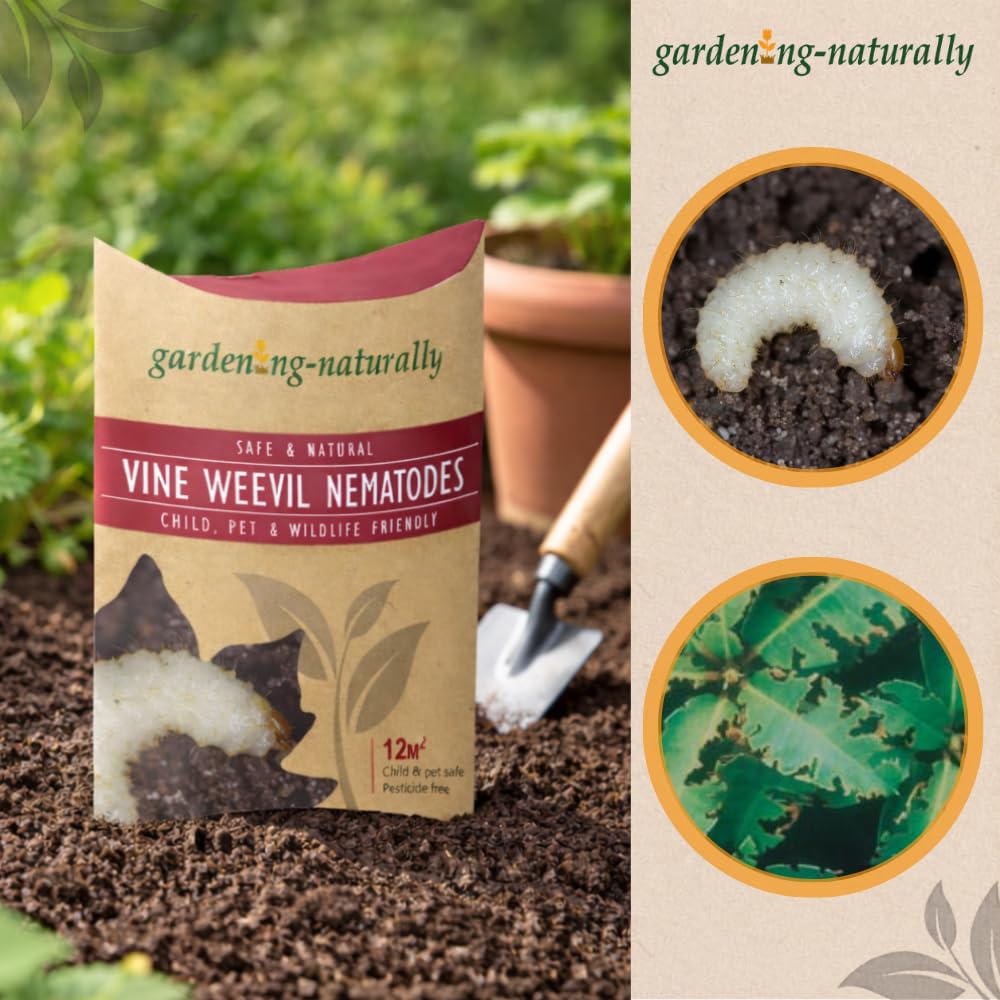
Adult vine weevils notch the edges of leaves, which is annoying but survivable. The real damage is done underground by the larvae: fat, C-shaped white grubs that sit in the compost and eat the roots. By the time a plant wilts or topples, the roots are often already gone, which is why vine weevil catches so many gardeners by surprise.
Containers are where it bites hardest. The larvae are trapped in a finite volume of compost with a captive root system, so a single pot can be stripped quickly. Gardening Naturally aims this pack squarely at that problem, covering pots, patio planters and small beds up to 12 square metres of soil. Reviewers describe the kind of losses that send you searching for a fix: one lost 'an entire strawberry patch' to the larvae despite strawberries being, in their words, 'pretty much indestructible normally', while another had pieris and rhododendrons struggling 'for years'. Cyclamen, fuchsias, lilies and a potted bay tree all turn up in the reviews as casualties too.
Live Nematodes Mean a Fridge and a Deadline
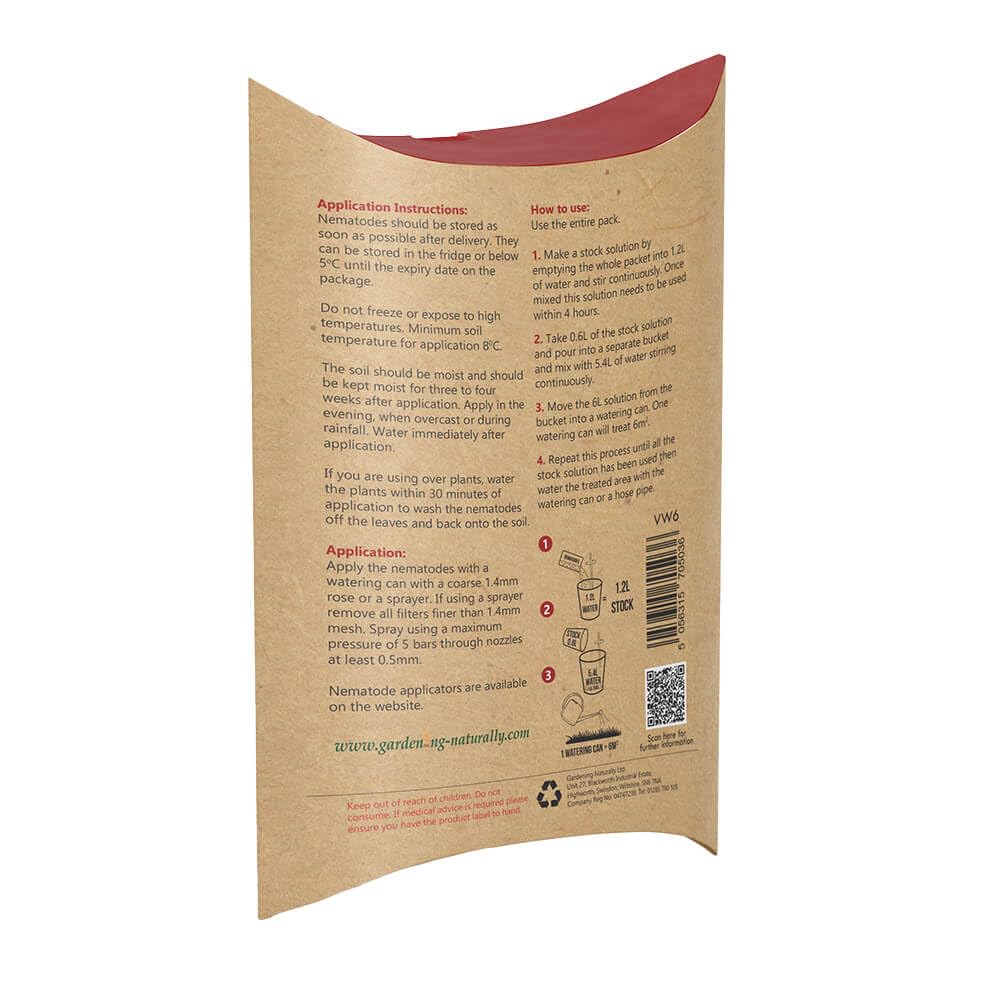
This is the part that trips people up. Nematodes are living organisms, so the pack is not something you decant into the shed and forget. It arrives as a sachet of pale, dusty-looking powder holding millions of dormant microscopic worms, and it needs to go into the fridge straight away. The use-by date is short, usually around two weeks from arrival, and once it lapses the nematodes are no longer viable.
That short window is the most common complaint in the reviews, and it is a fair one. One buyer marked the product down to two stars purely on shelf life: 'I received them on the 17th and they had a use by date of the 23rd', noting that other suppliers usually gave a fortnight's flexibility. Another warns, 'You don't get much time too use this as it goes out of date' (sic), and wishes the date and fridge instruction were printed in big letters on the front. A handful of one and two-star reviews come down to surprise at opening 'just powder' in a plain envelope, which is worth heading off: the powder is the product, and the nematodes you are paying for are invisible to the naked eye.
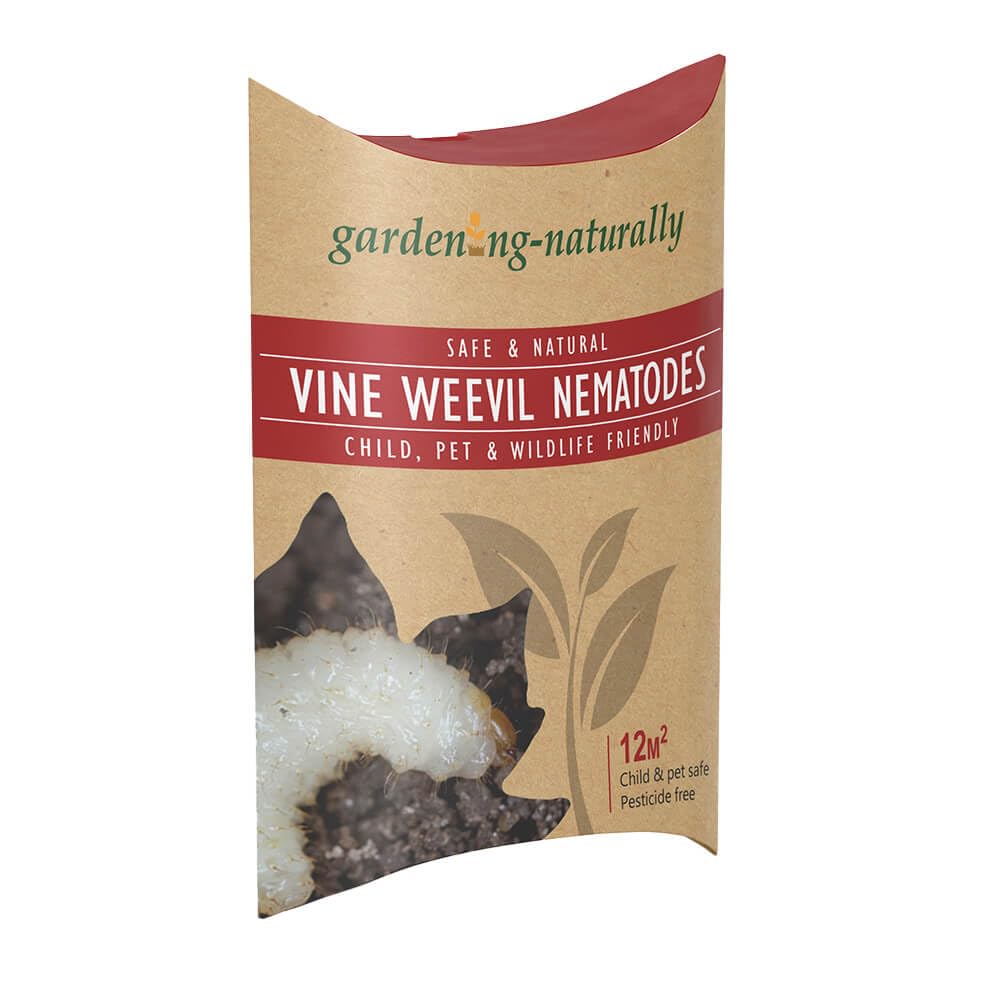
Vine Weevil Nematodes Treatment for Vine Weevil in Pots
A live, organic nematode treatment that targets vine weevil larvae in pots and containers, covering up to 12 square metres and safe around fruit, vegetables and wildlife.
Water Them Into Cold Compost and You Waste the Packet
If one thing separates the happy reviews from the disappointed ones, it is timing. Nematodes only hunt when the soil is warm enough, so watering them into cold compost wastes the whole packet. The usual guidance is a soil temperature of around 12C and above, which across most of the UK means spring, once the ground has woken up, and again in late summer or early autumn when a fresh generation of larvae is feeding.
The snag is that the two-week fridge deadline and the British weather do not always cooperate. One buyer ordered when temperatures were fine, then watched them drop below the threshold before the use-by date ran out. 'This has to be used when temperatures are 12 or above,' the review notes, the nematodes going on a day before the deadline anyway in hope rather than confidence. Another applied in autumn and feared it was 'the wrong time of year', bracing for a wasted packet. So if you are buying vine weevil nematodes for pots, order only when your forecast is settled and mild, and be ready to apply within days rather than weeks.
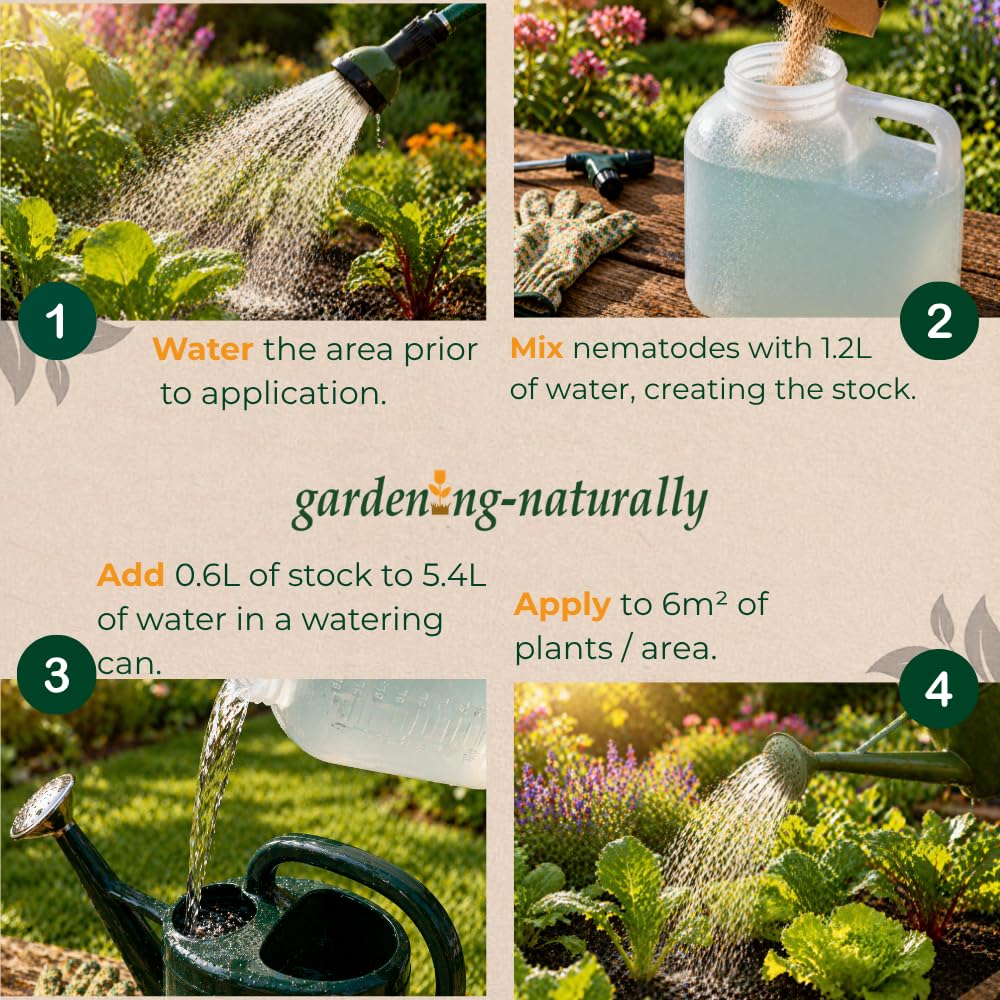
Application itself is refreshingly low-effort, and it is the one thing almost everyone agrees on. You tip the sachet into water, stir, and water it onto damp compost, then keep the pots moist for a couple of weeks so the nematodes can travel. One experienced buyer suggests mixing in a marked 2-litre milk container for accuracy; another treating only a few pots skipped the watering-can rose because the fine holes tend to clog. Keep the compost damp before and after, and that is the job done.
One Dose and a Month Later: What Worked, What Didn't
When it works, the turnaround can be quick. One five-star reviewer describes a rose 'on its last legs' that looked 'amazing' a month after a single dose. Another treated two badly affected rhododendrons and reported them 'fully recovered' with clean new growth. A third found that after applying, 'the vine weevil population seems to have disappeared'. Those are the accounts that make the outlay easier to swallow.
Set against them is a solid block of gardeners for whom nothing changed. 'Used this twice now. Made no difference whatsoever,' runs one one-star review. Another buyer lost more than 20 plants and moved to a chemical treatment that worked. The failures are real and not rare: across the 100 recent reviews the rating averages 4.11, close to the 4.2 lifetime figure but dragged down by a long tail of two and one-star disappointments.
The frustrating part, and the reason so many reviews sit at three or four stars rather than one or five, is that you cannot see nematodes working. One much-upvoted buyer applied them to a bay tree, kept it watered as instructed, and still ended up hand-picking and crushing 'more than 70 weevils' off the plant, with no way to know whether the nematodes killed any. 'Is it effective? Who can say,' shrugs another, before adding that the grubs seem to stay under control and that they will buy again. A long-term user who has fought vine weevil for years is blunt that 'the nematodes do work but not entirely / will definitely not eradicate the problem', and now reapplies twice a year as maintenance rather than a one-off cure.
Does One Pack Really Cover 210 Pots?
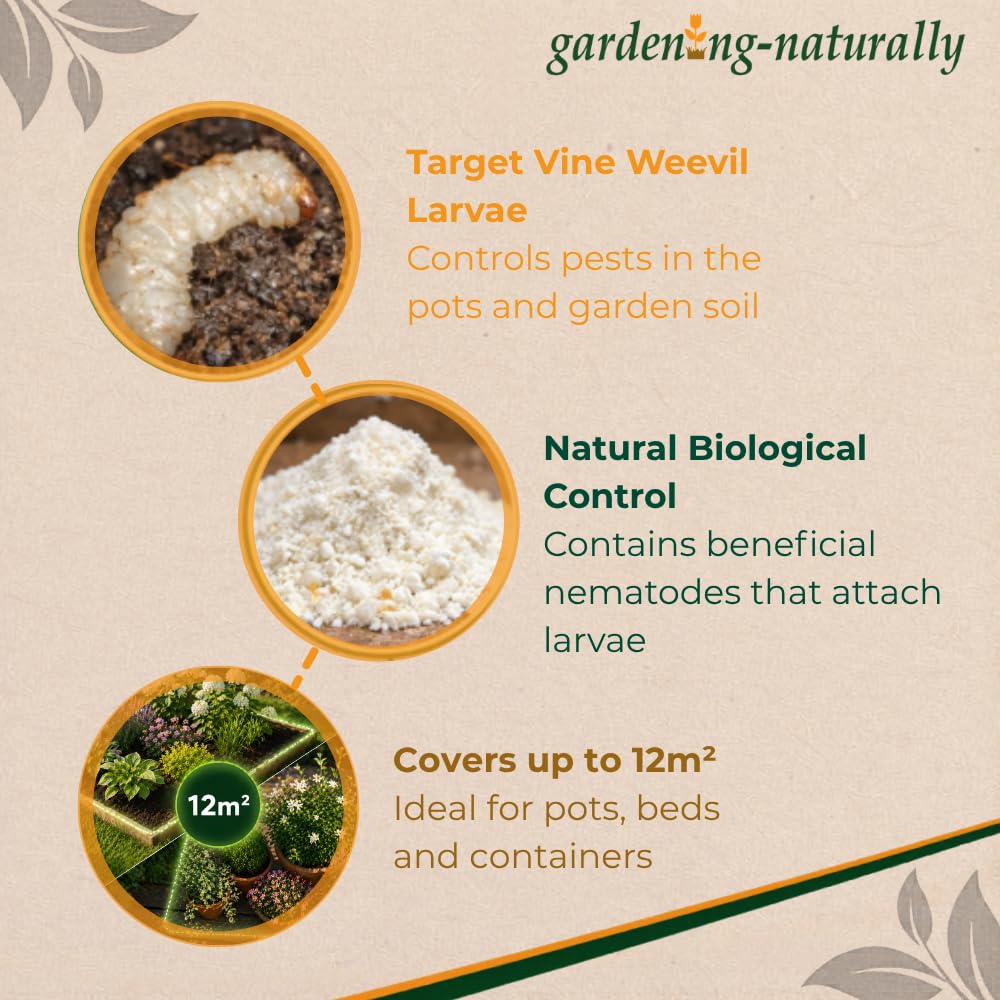
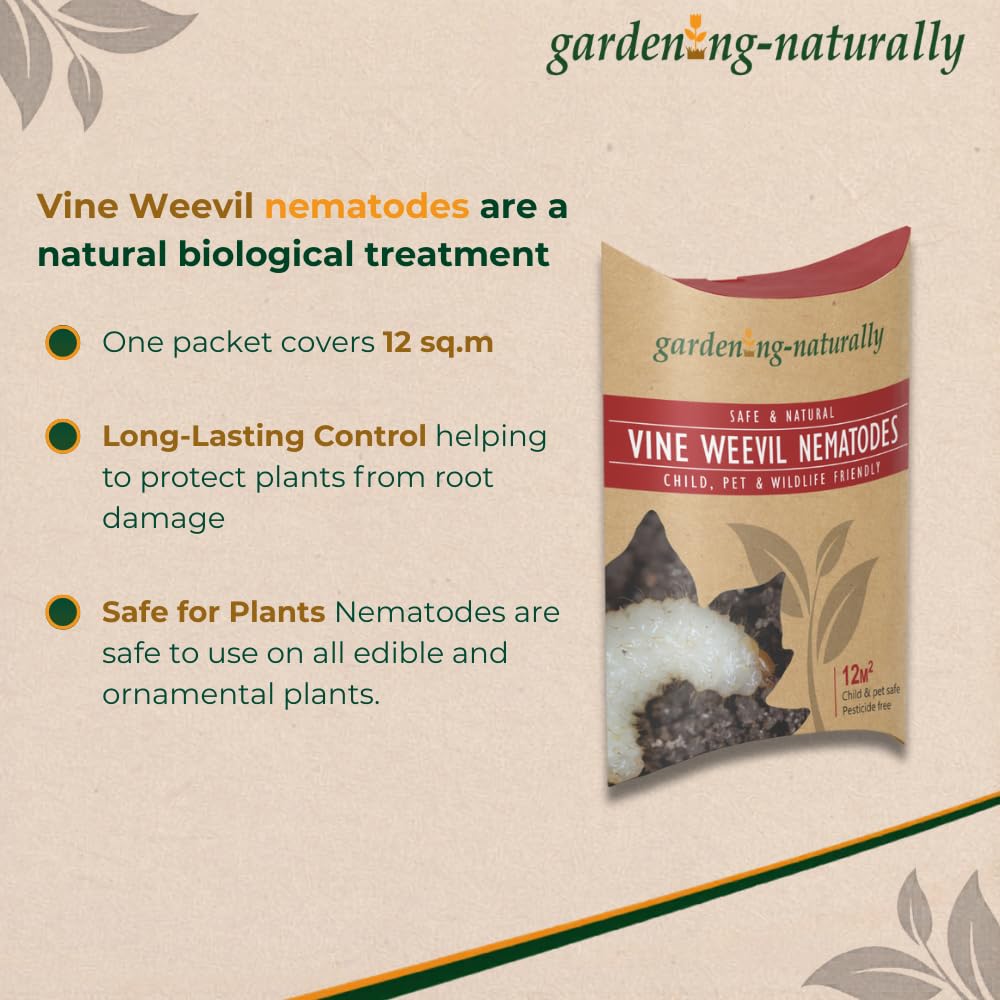
The pack is sold as treating up to 12 square metres, which the listing translates into as many as 210 pots. At least one detailed review pushes back hard on that maths. Mixed up, the sachet 'makes two 6 litre watering cans which would go nowhere near 210 pots', according to a buyer who treated 12 pots and two window boxes and was already rationing the second can. Read 12 square metres of compost surface rather than a literal pot count and you will plan quantities better. For a courtyard of planters and baskets it is ample; for a densely potted patio, buy with the real coverage in mind.
Price is the other running theme. Nobody calls it cheap, and several three and four-star reviews dock a point purely on cost, with comments like 'very expensive for the amount you get'. Others take the opposite view, one pointing out you 'could easily pay more', and plenty of five-star buyers judge it good value because a live control that spares their fruit and vegetables is worth the outlay. Because prices move, check today's price on Amazon before you decide.
One inconsistency worth flagging is the instructions. Some buyers rate them the best they have come across, while several others report opening a plain packet with 'no user instructions' and having to work it out for themselves. It reads like batch-to-batch variation in packaging rather than a change to the product, but if yours turns up bare, the method is simple and covered above.
Is It the Right Fix for Your Pots?
After 499 ratings, a pattern emerges of who does well with this treatment and who ends up frustrated. It suits you if your vine weevil problem is in containers, patio pots or a small border, if you are happy to work with a live product on a tight schedule, and if you want to keep chemicals away from fruit, vegetables and wildlife. Buyers treating strawberries, roses, rhododendrons and pot displays give it the warmest reviews, and several have used it every year for as long as four years.
It is a poorer fit if you need certainty, cannot guarantee applying it within days of delivery, or are hoping to wipe out a heavy infestation in one go. As more than one seasoned gardener points out, nematodes control vine weevil rather than eradicate it, so treat this as ongoing management: apply into warm soil in spring and again in late summer, keep the pots watered, and expect to repeat. Used that way, and refrigerated the moment it arrives, it is one of the more dependable ways to keep the pest in check in UK containers, against something that is otherwise miserable to shift.
Vine Weevil Nematodes Treatment for Vine Weevil in Pots
A live, organic nematode treatment that targets vine weevil larvae in pots and containers, covering up to 12 square metres and safe around fruit, vegetables and wildlife.