
What Order to Do Lawn Care in the UK (Scarify, Feed, Seed - The Right Sequence)
Published 15 June 2026
Scarify, feed or seed first? This guide sets out the correct order to do lawn care in the UK, why each step comes when it does, and how to get new seed to actually germinate.
We earn commission from qualifying Amazon purchases. It costs you nothing and does not affect what we recommend.
Quick Answer
The right order to do lawn care in the UK is: mow and rake, scarify, overseed, feed, then water in. Scarify before you seed so the seed touches bare soil, and feed after sowing so nutrients reach roots and seedlings rather than the thatch you raked out.
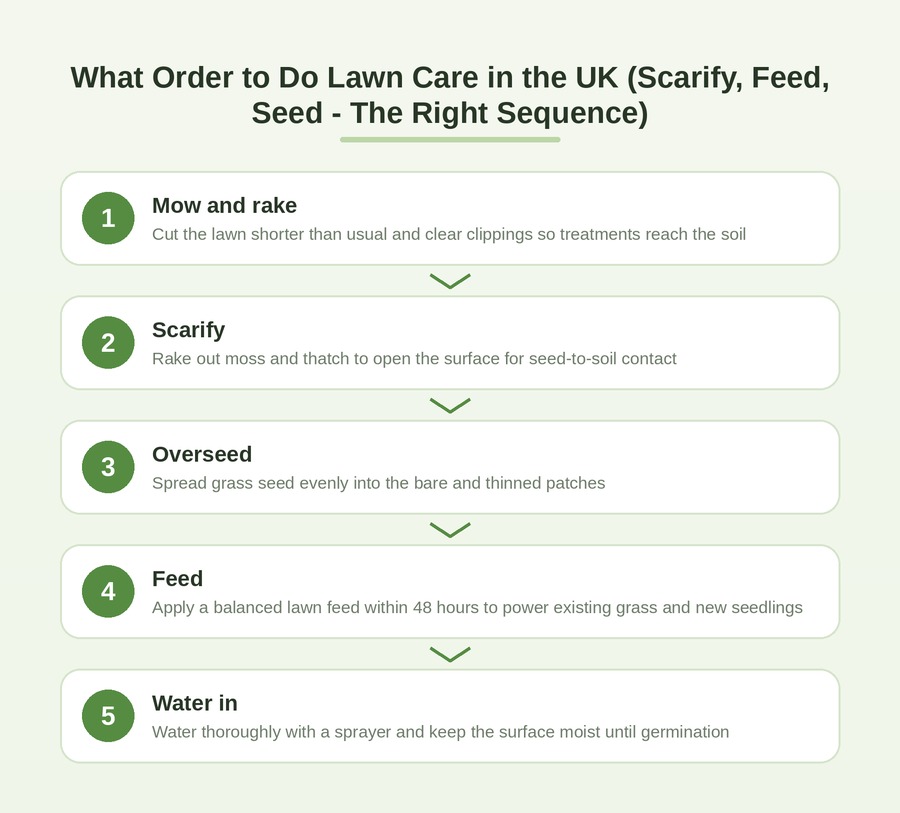
The diagram above lays out the whole sequence at a glance. The order matters because each step prepares the ground for the next one, and getting it wrong is the single biggest reason an afternoon of lawn work ends in bare patches.
The correct lawn care order, step by step
There is one sequence that works, and it follows the logic of the soil. You open the lawn up, get seed in contact with the ground, then feed and water so everything grows together.
1. Mow and rake
Cut the lawn a notch shorter than your usual height and clear away every clipping. Short grass lets the scarifier reach the thatch layer underneath, and bagging the clippings stops them smothering any seed you sow later.
If the lawn is long and tatty, drop the mower height over two cuts rather than scalping it in one pass. Scalped grass takes weeks to recover and gives moss an opening.
2. Scarify
Scarifying drags out the dead moss and thatch that builds up at the base of the grass. That spongy brown layer blocks water, air and seed from reaching the soil, so removing it is what turns a tired lawn into a workable seedbed.
Rake firmly in one direction, then again at right angles. You will pull out a surprising amount of debris, and the lawn will look worse before it looks better. The thin grooves you leave behind are exactly where new seed will root.
3. Overseed
Now the surface is open, scatter grass seed across the bare and thinned areas. Aim for even coverage by hand or with a spreader, and go slightly heavier on the worst patches.
A 2.5kg bag like GroundMaster covers up to 150m2 when overseeding, while a 1.4kg box of Pronto Seed covers around 84m2, so check the area before you buy. Seed sown into freshly scarified grooves germinates far more reliably than seed sitting on top of matted thatch.
4. Feed
With seed down, spread a balanced lawn feed within 48 hours. Feeding now drives the existing grass to thicken and gives new seedlings the nutrients they need as they emerge.
Use a gentle balanced or autumn feed rather than a strong high-nitrogen spring feed when seed is present, as a heavy nitrogen hit can scorch tender seedlings. If you are only feeding an established lawn with no seeding, a spring feed is fine.
5. Water in
Finish by watering the whole area thoroughly, then keep the surface moist until the seed germinates. This is the step most people rush, and it is the one that decides whether you get a lawn or bare soil.
A pressure sprayer or a hose on a fine setting lets you wet the surface without blasting seed into clumps. For the next two to three weeks, light daily watering beats one heavy soak every few days.
Should I scarify or feed first?
Scarify first, every time. Feeding before you scarify means you spread fertiliser over moss and thatch that you are about to rake straight out, so most of the feed leaves with the debris.
Scarifying is destructive by design. It tears the surface, lifts material and disturbs the soil, so any feed applied beforehand is wasted effort. Open the lawn up first, then feed once the seedbed is ready and the seed is down.
The only exception is a moss-killer treatment, which some gardeners apply a couple of weeks before scarifying so the moss is dead and easier to rake out. That is a targeted moss product, not a general lawn feed.
Do you seed or feed first?
Seed first, then feed. Sowing into the open, scarified surface gives seed the soil contact it needs, and feeding afterwards covers both the established grass and the new seedlings in one pass.
Feeding before seeding does not help the seed and risks an uneven, patchy result if a strong feed encourages the old grass to surge ahead of the slower seedlings. Keep the order simple: scarify, seed, feed, water.
If you would rather not feed at all in the same session, that is fine too. Plenty of new lawns establish on watering alone, then get their first feed a few weeks later once the seedlings are up and have been mown once.
What to do after scarifying your lawn
Straight after scarifying, the lawn looks thin and battered. That is normal. The priority now is to fill those gaps before weeds and moss reclaim them.
Overseed the bare patches the same day while the soil is loose, then feed and water in. A light top-dressing of quality compost over the seed helps hold moisture and keeps birds from eating it, a tip that comes up again and again in grass seed reviews.
Keep traffic off the area while the seed establishes. New seedlings are fragile for the first few weeks, and footprints compact the soil they are trying to root into.
Choosing the right grass seed for overseeding
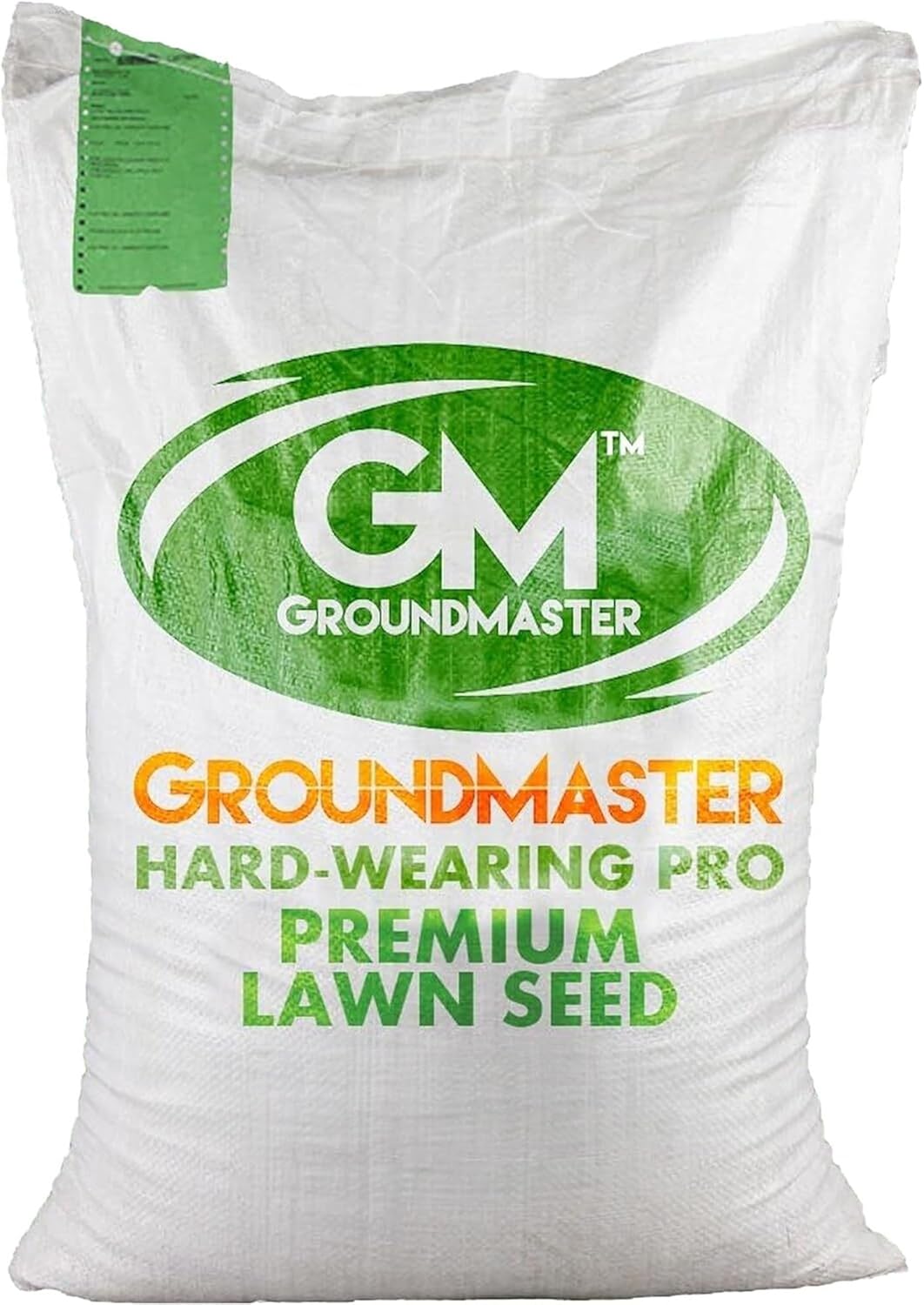
For overseeding, you want even germination and good coverage rather than the fastest possible growth. GroundMaster Premium Lawn Grass Seed is a hard-wearing 2.5kg mix that reviewers spread with everything from a proper spreader to a kitchen colander, and those who prepared the soil and kept it damp daily reported lots of grass coming up in around ten days. The reviews are split almost in half, and the dividing line is preparation: people who scarified, kept the seed moist and stopped birds getting at it succeeded, while those who scattered it on unprepared ground and let it dry out did not. It germinates well when you follow the sequence in this guide.
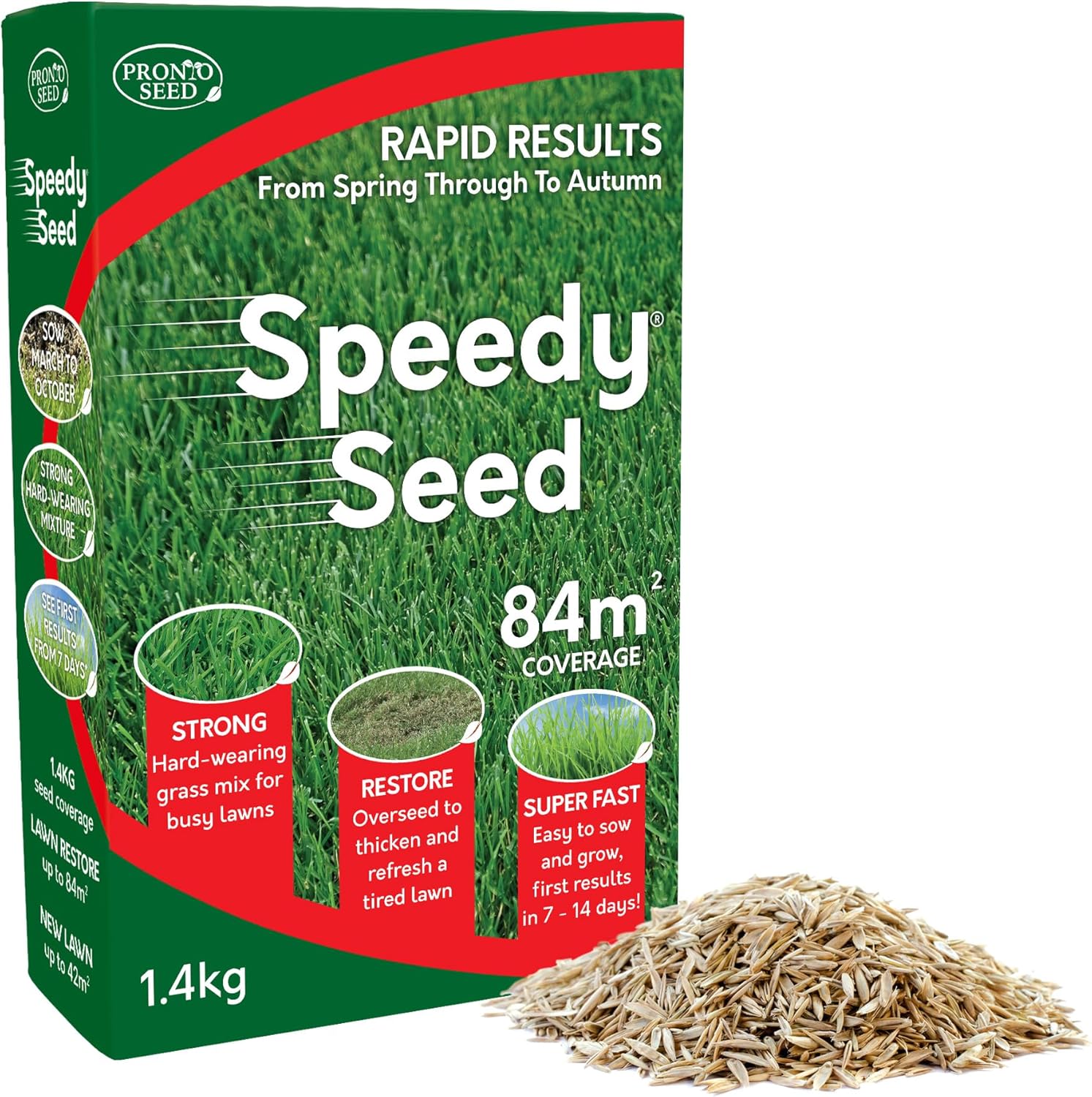
If you want speed, Pronto Seed Premium Grass Seed is a DEFRA-approved 1.4kg mix that claims germination in 7 to 14 days, and most reviewers who prepped properly saw green shoots inside a week or two. It spreads evenly and the bag goes a long way, with one buyer noting new growth coming through within a week of overseeding tired patches. Worth knowing: it leans on fast ryegrass, so a handful of reviewers found the blades coarser and wider than a fine ornamental lawn, and it needs cutting often once it takes. For quick repairs and family lawns that get used, that trade-off is usually fine.
When to do all this in the UK
The two prime windows for a full scarify, seed and feed in the UK are early autumn (September into October) and spring (April into May). The soil is warm and moisture is reliable, which is what seed needs to germinate.
You can also overseed through June if you stay on top of watering, which matters more in summer because the surface dries out quickly. Avoid scarifying hard in the depths of summer drought or in winter when the grass is dormant and cannot recover.
Whatever the season, the order stays the same. Only the watering effort changes: summer sowing simply needs more frequent attention to keep the seedbed moist.
Watering in the right way
Once seed is down and fed, gentle, even watering is what carries the job over the line. The Spear & Jackson 5LPAPS Pump Action Pressure Sprayer is the UK's best-selling garden sprayer for a reason: its 5-litre graduated bottle, adjustable spray-to-mist nozzle and 560mm wand let you wet a freshly sown surface evenly without washing seed into clumps. Reviewers use it for watering in, patio cleaning and applying treatments, and the lockable trigger and shoulder strap make repeat passes over a new lawn easy. Two tips that recur in the reviews: tighten every fitting before you pump it up, and keep one sprayer for water or feed and a separate one for weedkiller so residue never mixes.

Common mistakes that waste the whole job
Most failed lawn renovations come down to a handful of avoidable errors, and nearly all of them are about order or watering.
Feeding before scarifying wastes fertiliser. Sowing seed before scarifying means the rake lifts it back out. Letting the seedbed dry out for even a couple of warm days kills germinating seed in the ground, which is why so many one-star grass seed reviews trace back to inconsistent watering rather than a bad batch.
The other classic mistake is leaving fresh seed uncovered for the birds. A thin layer of compost over the seed, plus keeping the surface moist, solves both problems at once. Follow the sequence, water little and often, and the same seed that frustrated one gardener will give another a thick green lawn.
Frequently Asked Questions
Do you feed or scarify a lawn first?
Scarify first, then feed. Scarifying tears out moss and thatch and disturbs the surface, so feeding beforehand just wastes fertiliser on material you are about to rake away. Open the lawn up, sow any seed, then feed so the nutrients reach the soil and the new seedlings.
Should I overseed before or after scarifying?
Overseed after scarifying. Scarifying exposes bare soil and creates grooves that give seed direct contact with the ground, which is exactly what germination needs. Sowing before you scarify means the rake lifts most of the seed straight back out.
Can you scarify and feed on the same day?
Yes, you can scarify, overseed and feed in a single session, and most UK gardeners do. Work in order on the day: scarify, sow seed, then spread feed, and water everything in at the end. Just avoid a high-nitrogen feed if you have sown seed, as a gentler balanced or autumn feed is kinder to seedlings.
How long after scarifying should I overseed?
Overseed immediately after scarifying, ideally the same day. The freshly opened surface is the perfect seedbed, and leaving it exposed lets weeds and moss move back in. Sow while the soil is still loose and broken up.
Do I water after seeding straight away?
Yes, water gently as soon as you finish sowing and feeding, then keep the surface consistently moist until the seed germinates. New grass seed dies fast if it dries out, so light daily watering for the first two to three weeks matters far more than one heavy soak.
How long does new grass seed take to germinate in the UK?
Most UK lawn seed germinates in 7 to 21 days, depending on soil temperature and how well you keep it watered. Fast ryegrass mixes can show shoots inside a week in warm spring or autumn soil, while cooler conditions or patchy watering push it toward three weeks.