
When to harvest pumpkins in the UK, and how to time it for Halloween
It has turned orange and it is late September. Cut now and it may slump before the 31st; leave it and one frost can end it. Here is how to read the fruit, not the calendar.
We earn commission from qualifying Amazon purchases. It costs you nothing and does not affect what we recommend.
Quick answer
The short answer to when to harvest pumpkins in the UK is late September to mid-October in most gardens, roughly 100 to 120 days from sowing. The fruit overrules the date: cut once the skin has coloured all over, resists a thumbnail and sounds hollow. A frost forecast overrides everything.
A pumpkin turning orange is not the same as a pumpkin being ready. Colour arrives weeks before the skin hardens, and hard skin decides whether a fruit lasts to Halloween or slumps a week early.
Six things the fruit tells you
None of these checks need anything you do not own, and together they take about ninety seconds. Run them as a set: colour alone is what misleads most people.
Colour, including the side you cannot see
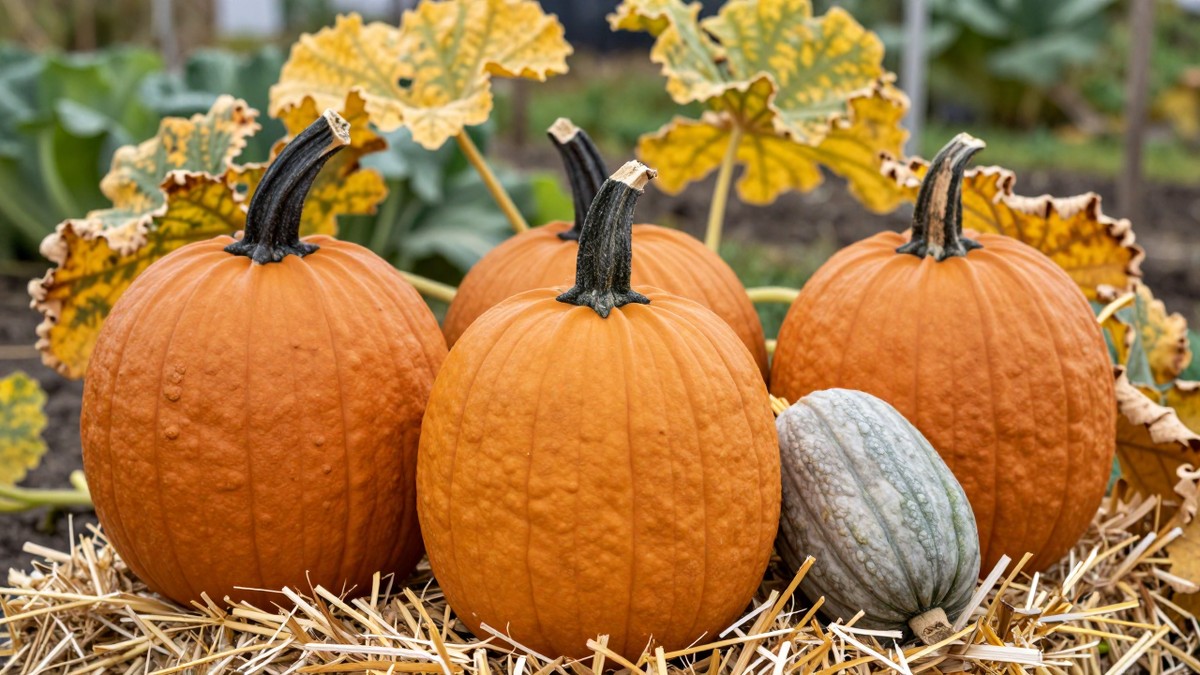
Roll the fruit forward and look underneath. While the ground spot it sits on is still white or green it is still filling; once that patch turns cream, gold or orange it has finished. Read the test as fully coloured for its variety, not orange: Crown Prince stays slate blue.
The stem and the vine behind it
The most reliable sign in the bed, and the one to learn if you learn only one. A stem still fat, green and slightly soft means the plant is pushing sugar into the fruit, so leave it. A ripe fruit has a stem gone dry, ridged and corky, with the vine shrivelling back either side.
The tendril nearest the fruit
The curly tendril at the leaf joint closest to each fruit dries and browns as that fruit finishes, which helps in a tangle of foliage. Treat it as supporting evidence only: drought dries tendrils early and flatters fruit that is not done.
The thumbnail test
Press a thumbnail firmly into the skin on the shoulder, near the stem, so any mark stays hidden. A ripe pumpkin takes a shiny dent and no more; an unripe one lets the nail sink in and the skin breaks. Break it and you have opened a route in for rot, so use that one soon.
The hollow tap
Rap it with a knuckle. A ripe fruit sounds hollow and faintly drum-like as the flesh firms and the seed cavity opens up, while an unripe one gives a dull thud. It is the hardest check to call first time, so tap two fruit and compare.
The frost forecast, which beats the other five
Frost is the one signal that comes from the sky, and it wins every argument. A light air frost flattens the foliage, which the fruit shrugs off, but frost on the fruit damages the skin, so a pumpkin that looked perfect on the day rots in store within a fortnight. If frost is forecast and the fruit is close, cut it and finish it indoors; if it is a way off, buy days with fleece or an upturned box, as in our guide to protecting plants from frost.
Carving types and winter squash are two different jobs
Type matters more than most calendars admit. A carving pumpkin and a butternut sown the same day in the same bed can finish six weeks apart, and in a cool summer the butternut may not finish.
Carving pumpkins
Lantern varieties such as Jack of All Trades and Rouge Vif d'Etampes are the easy end of this, usually ready from the third week of September. The flattened red-orange Rouge Vif runs later and colours unevenly on its shaded side, so judge that one on the stem. Show pumpkins grown for weight often never colour up, so cut those before the first frost regardless.
Crown Prince and the blue-skinned squash
Crown Prince never goes orange, so colour tells you nothing. Judge it on the stem, on a skin a thumbnail cannot mark, and on the dull finish it takes on. It is the best keeper most UK growers plant, holding into spring once cured, and it improves with an extra fortnight outside, so leave it until last.
Butternut, the awkward one
Butternut wants the longest warm season of anything here, and outdoors in an average UK summer it often runs out of time. Wait for the skin to turn from pale green-beige to an even matte tan and to lose its shine: a glossy butternut is not ready. If October arrives and yours is still streaky, cut it, eat it within a fortnight and keep it out of the store.
Uchiki Kuri and Red Kuri
These small onion-shaped squash are the earliest here, often ready from late August once the skin is a uniform orange-red and the stem has dried. They keep months rather than half a year, so eat them first.
Spaghetti squash
Spaghetti squash goes from cream to a solid deep yellow, so a pale ivory fruit is not ready however big it looks. It wants a short warm spell rather than a full cure.
Month by month, August to November
UK dates move two to three weeks between Cornwall and Aberdeen and another fortnight between a warm year and a cold one, so read this as the middle of the range: earlier if you are north, high or inland, later on the south coast.
August
Almost nothing gets cut apart from the earliest kuri types, but this is the month you influence the harvest. Pinch off late flowers and tiny fruit that will never finish, hold each plant to two or three fruit, slide a slate under each one to keep it off wet soil and ease back on watering.
September
Peak month, and where most mistakes happen. Carving types colour through the first fortnight and plenty of people cut them there and then, while the stem is still green and fleshy. Orange skin plus a soft stem means the fruit is still filling, so hold off.
By the last week most have a dry corky stem and pass the thumbnail test. Powdery mildew is normal by then, though once the canopy goes the fruit stops gaining.
October
The deciding month, and it runs on the forecast rather than the date. Most UK plots clear in the first half. First air frosts land anywhere between early October in the north and well into November on the mild south coast, so check a local forecast, not an average.
Our line on the stragglers: leave Crown Prince out while the forecast stays clean, because the extra fortnight makes a real difference to how it keeps, but bring butternut in at the first frost warning. One that is not ready by mid-October never will be.
November
The beds should be empty, and anything still outside is on borrowed time, so cut it and use it rather than store it. The job now is storage: look over the fruit weekly, press gently around the stem and base, and pull anything soft at once, checking whatever it was resting against.
Cutting and curing, step by step
Curing is the step most often skipped and the one that decides whether a fruit keeps three weeks or five months. It hardens the skin, seals scratches and sweetens the flesh.
1. Pick a dry day
Cut after the dew has burned off, ideally after two or three dry days. Fruit taken in wet and stored is the commonest cause of neck rot.
2. Cut the stem rather than tearing it
Leave 5 to 10cm of stem and angle the cut so rain runs off the stub. A mature stem is woody, which is why light snips skid off it; loppers, a pruning saw or a stout serrated blade such as a hori hori knife with a sheath gets through in one stroke.
3. Carry it with both hands underneath
The stem is decoration, not a handle. If it snaps out it takes a plug of flesh with it, and that wound is where rot starts.
4. Brush clean, do not wash
Brush dry soil off and wipe anything stubborn with a barely damp cloth, drying the skin straight afterwards. A wipe with weak disinfectant knocks back fungal spores and does no harm, as long as the fruit dries.
5. Cure for ten to fourteen days
Stand the fruit somewhere warm, dry and airy: a greenhouse bench, a conservatory or a sunny windowsill. Roughly 20 to 27C with air moving is the target, and turning each fruit every few days lets every face harden. Acorn types are the exception, since warm curing costs them flavour.
6. Store cool and spaced out
Move cured fruit to a frost-free room at roughly 10 to 15C, on a shelf or cardboard rather than concrete, spaced so no two touch, and away from stored apples and pears, whose ethylene shortens the life of everything nearby. Same principle as storing potatoes over winter: cool, dry and inspected often.
Timing a carving pumpkin for the 31st
Growers disagree here, and the disagreement is real. One camp leaves fruit on the vine as long as the weather allows, because an attached plant is still hardening and colouring it. The other cuts as soon as the signals are met and cures under cover, because anything gained in October can be lost to one cold night.
Where we come down: for a carving pumpkin with a dry corky stem and a skin that turns a nail in late September, cut it and cure it. Little is left to gain outdoors, and a cured pumpkin keeps for months, so it reaches the 31st in better shape than one taking its chances. If the stem is still green and soft, leave it and watch the forecast, because a soft-skinned fruit cut early is the one that collapses by mid-October.
Then count backwards for the carving. A carved pumpkin sags within three to seven days, faster in a heated room, so carve on the 29th or 30th, not the weekend before.
What goes wrong, and how to recover
Cut too early
The skin dents under a nail and the fruit softens within two or three weeks. Nothing brings back skin that never hardened on the plant, so eat or carve those now.
Frost got to the fruit
Look for water-soaked patches or soft grey areas after a cold night. There is no recovery for storage: use the flesh within days and keep it away from sound fruit, which it will take down with it.
The stem snapped off
Rot starts at the crown within a week or two. Move that fruit to the front of the queue, store it apart and keep the wound dry. Dusting with sulphur is a common precaution, but dryness matters more.
Frequently asked questions
Can I harvest pumpkins that are still green?
You can cut them, but a fully green fruit will not become a keeper. If frost is forecast, cut it and use it within a week or two: small green fruit cooks perfectly well like a marrow. One that has begun to colour will often finish on a sunny windowsill.
Will a pumpkin ripen off the vine?
Partly. Colour keeps developing and the skin hardens further while the fruit cures, so one that is close will improve indoors. What it cannot do is gain flesh or sugar, which needs the vine.
How long do pumpkins keep after harvest?
A properly cured carving pumpkin usually holds two to three months in a cool dry room. Dense squash such as Crown Prince often keeps six months or more, while thin-skinned types like Uchiki Kuri manage a couple. Uncured or damaged fruit is measured in weeks.
What happens if I leave pumpkins out through a frost?
The foliage collapses first, which the fruit survives. Frost on the fruit itself damages the skin and cuts storage life to days or weeks, even when nothing looks wrong at the time. Fleece or an upturned box covers a single cold night.
When should I cut a butternut squash in the UK?
Later than a carving pumpkin, usually through October, once the skin is an even matte tan with no green streaks and has lost its gloss. If frost is forecast and it is still streaky and shiny, cut it anyway and eat it soon, because it will not become a keeper.
Related reading
- How to harvest and cure onions in the UK, the same drying logic on a shorter clock
- How to store potatoes for winter in the UK, on setting up a cool store
- How to prepare a UK vegetable garden for autumn, for the bed once the vines come out