
Blooven Fruit Fly Traps Review: How 30 in a Pack Suddenly Makes Sense
We earn commission from qualifying Amazon purchases. It costs you nothing and does not affect what we recommend.
You water a houseplant, and a little cloud of flies lifts out of the soil. If that scene is familiar, you already know why Blooven's yellow sticky traps have 22,000+ reviews on Amazon UK. What's less obvious is why they come in packs of 30, and why, after reading through 100 recent reviews, that number starts to make a lot more sense than it first looks.
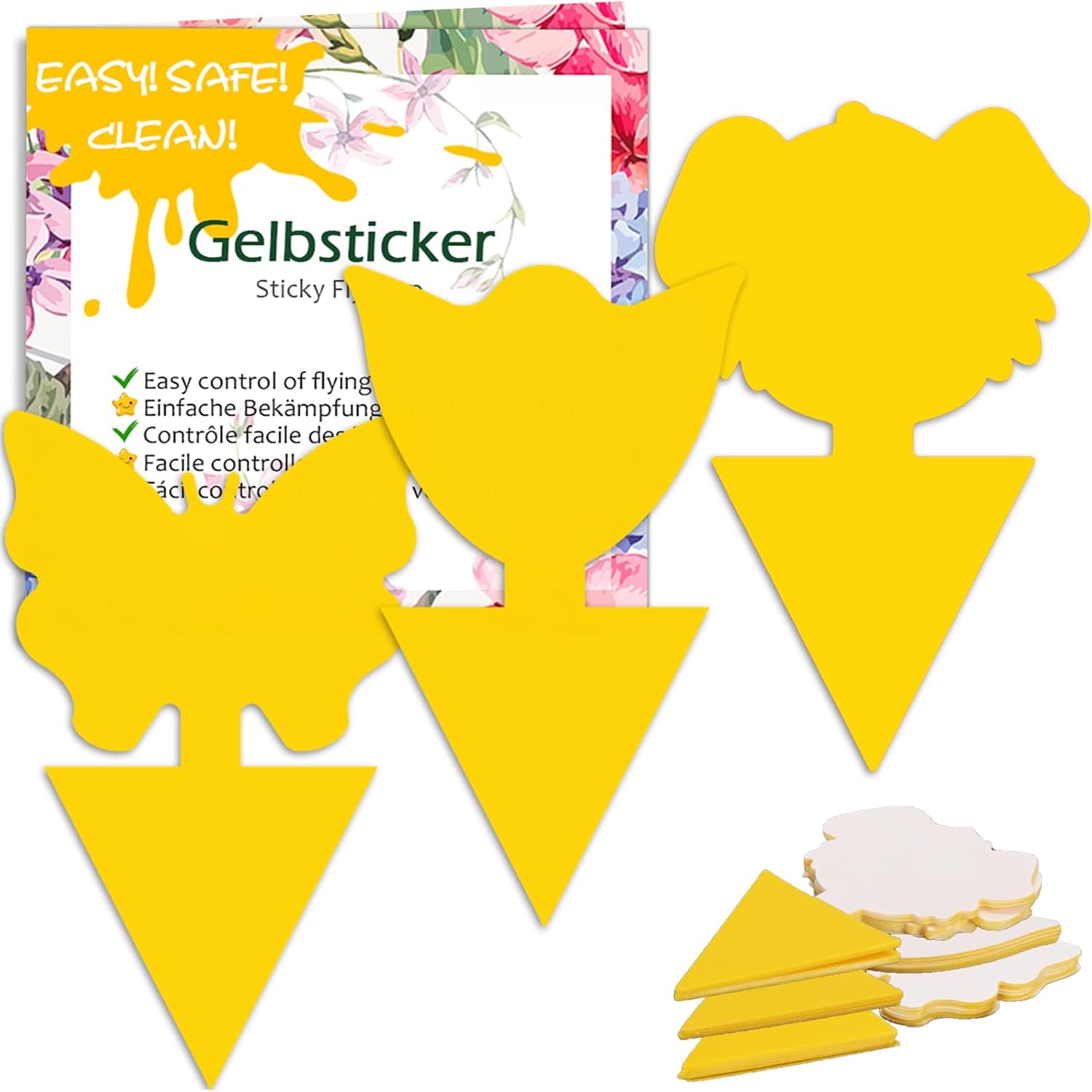
You water a houseplant, tap the pot to settle the compost, and a tiny cloud of black flies lifts straight up out of the soil. If you keep indoor plants in the UK, you have lived this moment. Fungus gnats hatch in damp compost, fruit flies arrive with a bunch of bananas, and suddenly the kitchen is busy with something very small and very annoying.
The Blooven 30 PCS trap pack is aimed squarely at that problem. At £4.99 for thirty double-sided yellow sticky boards, it is cheap enough to be an impulse buy and widely-reviewed enough (22,325 ratings, 4.3 average) that the idea clearly works. What took longer to understand is why the pack size is 30 rather than 10, and who actually ends up using all of them. That is where the 100 recent reviews turn out to tell a more interesting story than the headline rating.
One Pot, One Trap: The Use Case That Explains The Pack Size
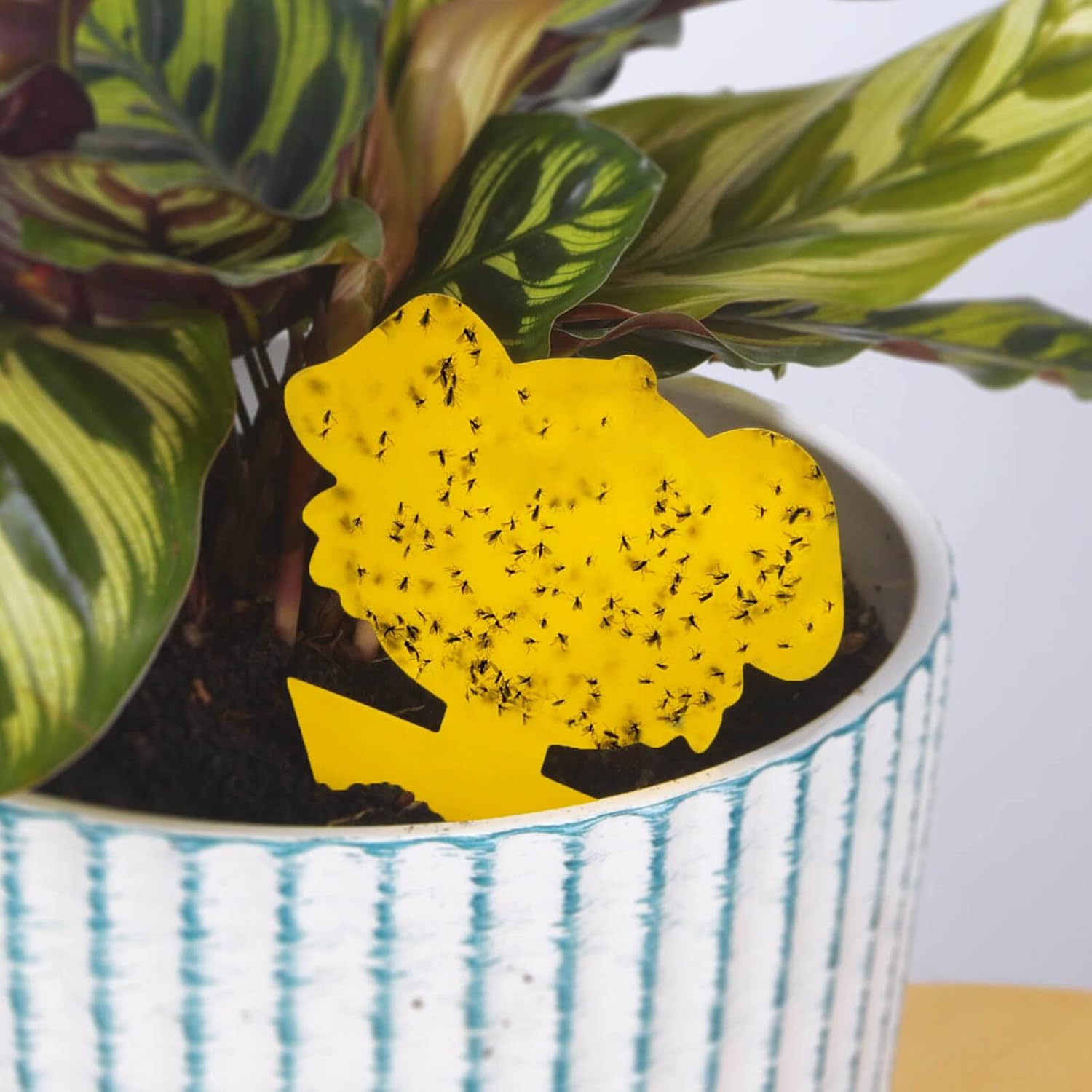
Reading through recent reviews, one pattern jumps out. Almost nobody buys these for a single problem plant. They buy them to station in every pot in the house.
A reviewer who posted on 28 March put it plainly: "Due to my home looking like a geeenhouse!! These do the job at catching the bugs that we have a LOT of (due to in excess of 50+house plants)." Another, from 3 April, wrote: "Every house plant has one and they work so well at catching the flies." A third, on 6 April, said simply: "Used them in all pots."
Once you see it that way, the 30-pack stops looking generous and starts looking like a fairly basic household supply for anyone with a serious houseplant habit. Fungus gnats do not stay in one pot. The larvae feed on fungi and decaying matter in the top layer of compost, and the adults wander between pots laying eggs in anything damp. A single trap in the worst-affected plant catches a few adults, then the population rebounds from the pots you ignored. Placing one in every pot is what breaks the cycle, and reviewers who describe their best results are almost always describing that.
How Quickly They Actually Start Working
The speed-to-first-catch is something recent reviewers keep coming back to, and the timeline is faster than expected for a passive physical trap.
On 6 April, a buyer wrote: "I couldnt figure out how to get rid of my 'fruit flies' as nothing was working. Then realised they were fungus gnats. Purchased these and within seconds it was catching." Another, on 6 April: "Put them in place last night, this morning so many little flies from recent brought potting soil caught." A review dated 8 April reports flies landing on the traps during installation: "I had flies landing on them as I was putting them in the plant pots."
Why so quick? The yellow colour is the whole mechanism. Fungus gnats and fruit flies are drawn to wavelengths in the yellow-green range, which is why every serious sticky trap on the market uses a similar shade rather than, say, blue or white. The adhesive just needs to be there when they land. The product description calls this "a simple physical trap" and that is accurate: there is no lure, no scent, no chemical, just colour plus glue.
The trade-off is that traps only catch adults. A reviewer on 16 April was realistic about this: "It takes time to completely eradicate the problem of future generations but at least the current one is dealt with effectively." If you have a bad gnat infestation, expect the traps to thin out the flying adults quickly while the next round hatches from eggs already in the compost over the following week or two.
Blooven 30 PCS Fruit Fly Traps, Double-sided Fungus Gnat Sticky Catcher
Thirty double-sided yellow sticky traps sized for one-per-pot use across a house full of plants. Non-toxic, odourless, and quick to start catching adult gnats and fruit flies.
Where Reviewers Use Them Beyond Houseplants
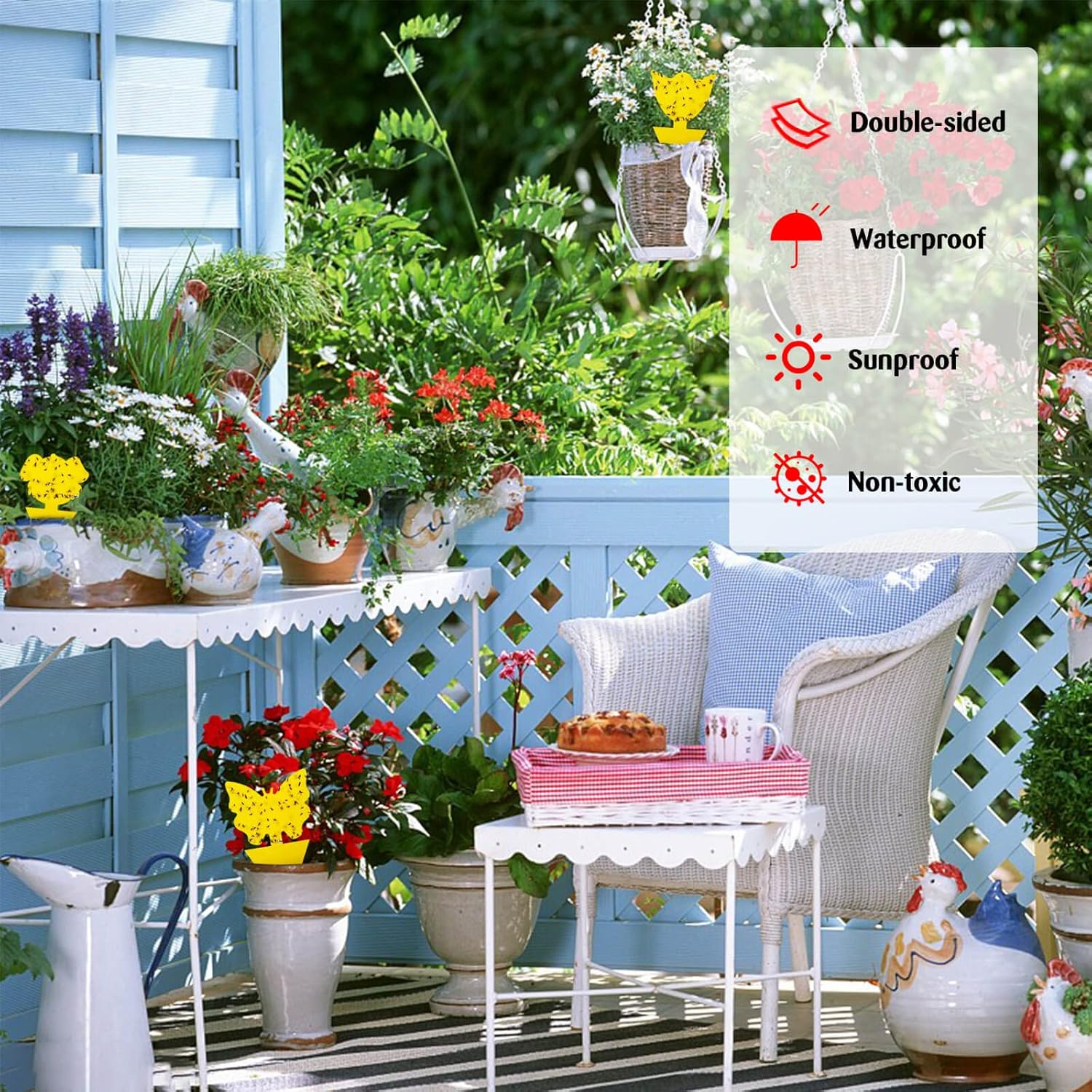
Although Blooven markets these as plant traps and warns against outdoor use (to protect bees), reviewers are using them in a wider range of indoor settings, and the pattern is worth knowing.
Kitchens and under-cupboard lights come up repeatedly. A 11 April review: "I find they also like to hover around my kitchen under-cupboard lights in the evenings/early mornings, you'd be amazed just how many flies and beasties get stuck on these extremely sticky fly traps." Conservatories and greenhouses show up regularly too: "Worked well in my conservatory... very sticky" (12 April), and "my greenhouse full of fungi knats destroying my plants, i was amazed at how many they caught" (17 April).
One reviewer raised a sensible point about using the small pot-sized traps in a greenhouse rather than a hanging ribbon trap: "Far better to use on individual plant pots than a large one hanging in the greenhouse roof with the fear a bee may get stuck!" That is worth a thought if your greenhouse door stands open on warm days. Pot-level traps sit low, inside the plant foliage, and catch the pests that actually live around the plants rather than anything flying through. Whether bees would actually settle on a small yellow card inside a pot is debatable, but the caution is fair.
The one environment reviewers do not rave about is fresh fruit on the kitchen counter. A trap next to the fruit bowl can help, but for a fruit-fly problem driven by ripe bananas, a vinegar-in-cling-film trap will usually outperform it. Use sticky traps for the soil flies and keep vinegar for the ones actually hovering over the fruit.
The Placement Issue: Sticking to Leaves
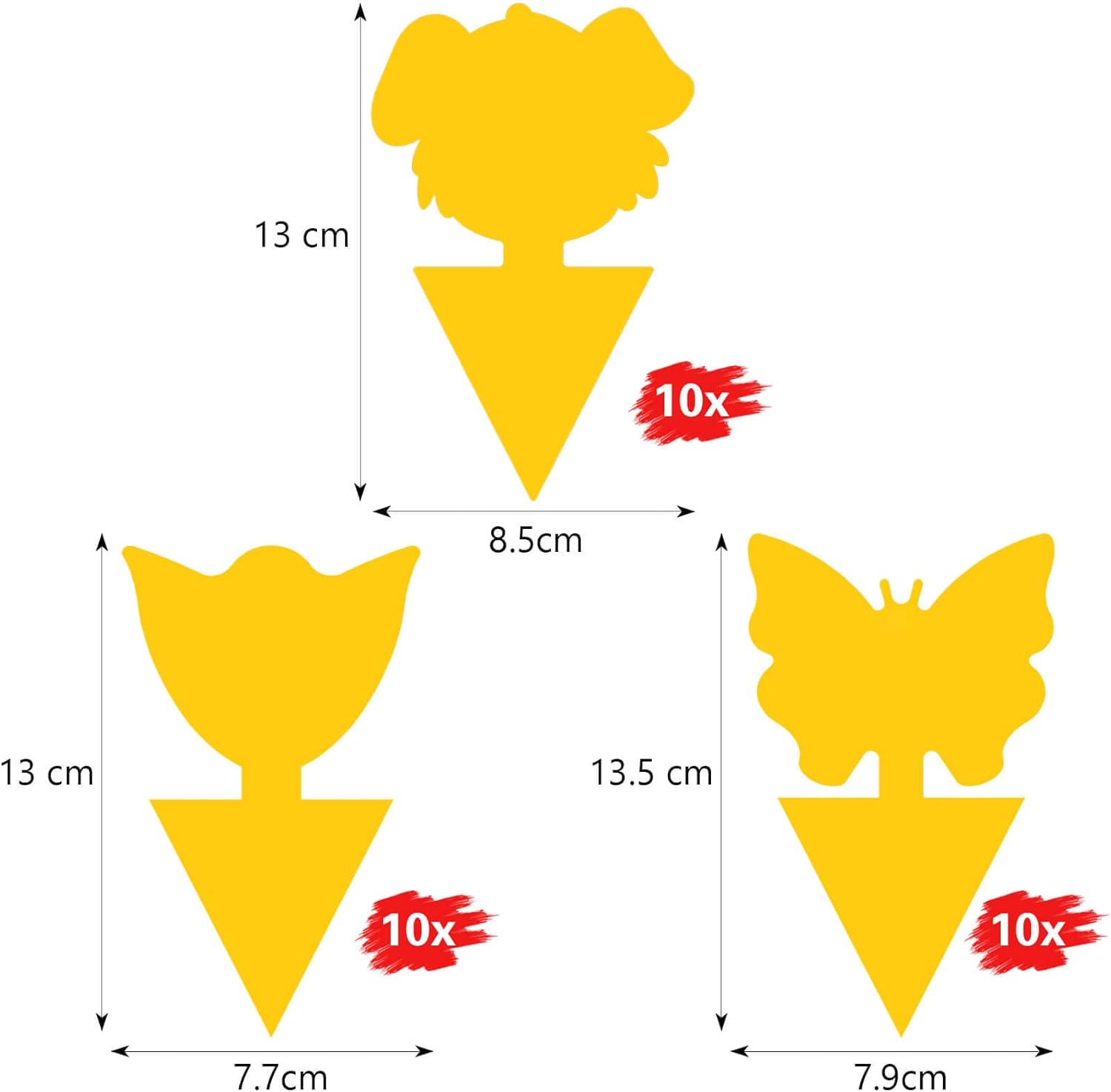
The most useful criticism in the recent reviews is not about stickiness, effectiveness, or price. It is about physical placement.
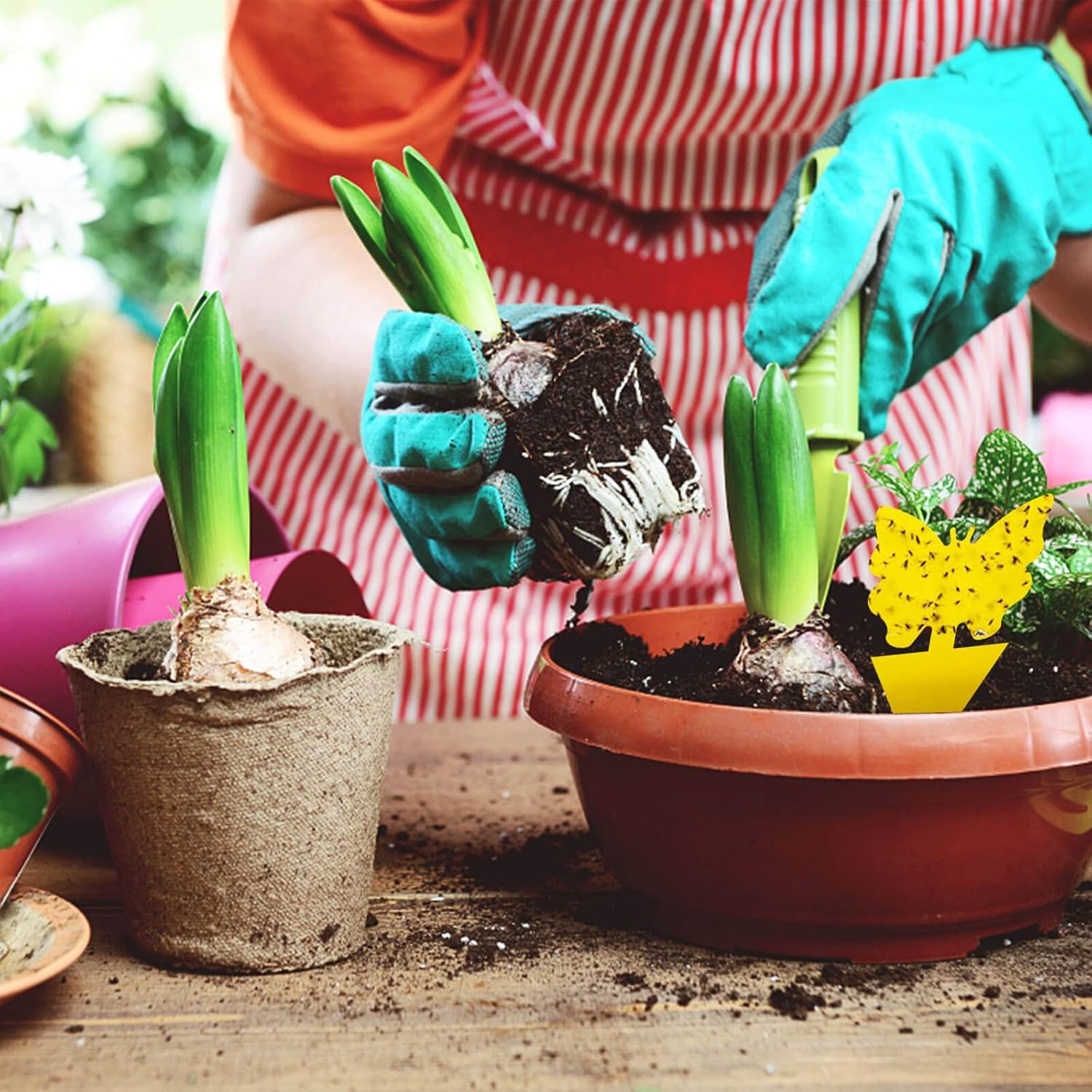
A 1 April review flagged it clearly: "They are to stand in the pots like a plant label, so can annoyingly stick to your growing plant and rip off the leaves." A 10 April buyer ran into a related issue: "Working well, need to find area with less dense roots to enable the stickers bases to penetrate into the soil."
This is real. Both sides of the trap are adhesive, which is the whole point of the double-sided design, but it means any leaf that brushes against the card sticks to it. Pull the card away and you lose bits of the leaf. Three practical habits solve it:
- Slide the trap in at the edge of the pot, not the centre, where the foliage is thinnest.
- For dense plants (ferns, pothos, anything trailing), push a small stake into the soil first, then peel the plastic off only on the side facing away from the plant, leaving the protective film on the plant-facing side.
- On root-bound pots where you cannot push the base in, bend the bottom of the card at 90 degrees and tuck it under the lip of the pot or against the inside wall.
None of these are dealbreakers, and most reviewers do not mention the leaf issue at all, but the point is worth knowing before you buy. A sticky trap is only as good as the place you put it, and with houseplants there is not always an obvious spot.
When They Do Not Work: The Minority Report
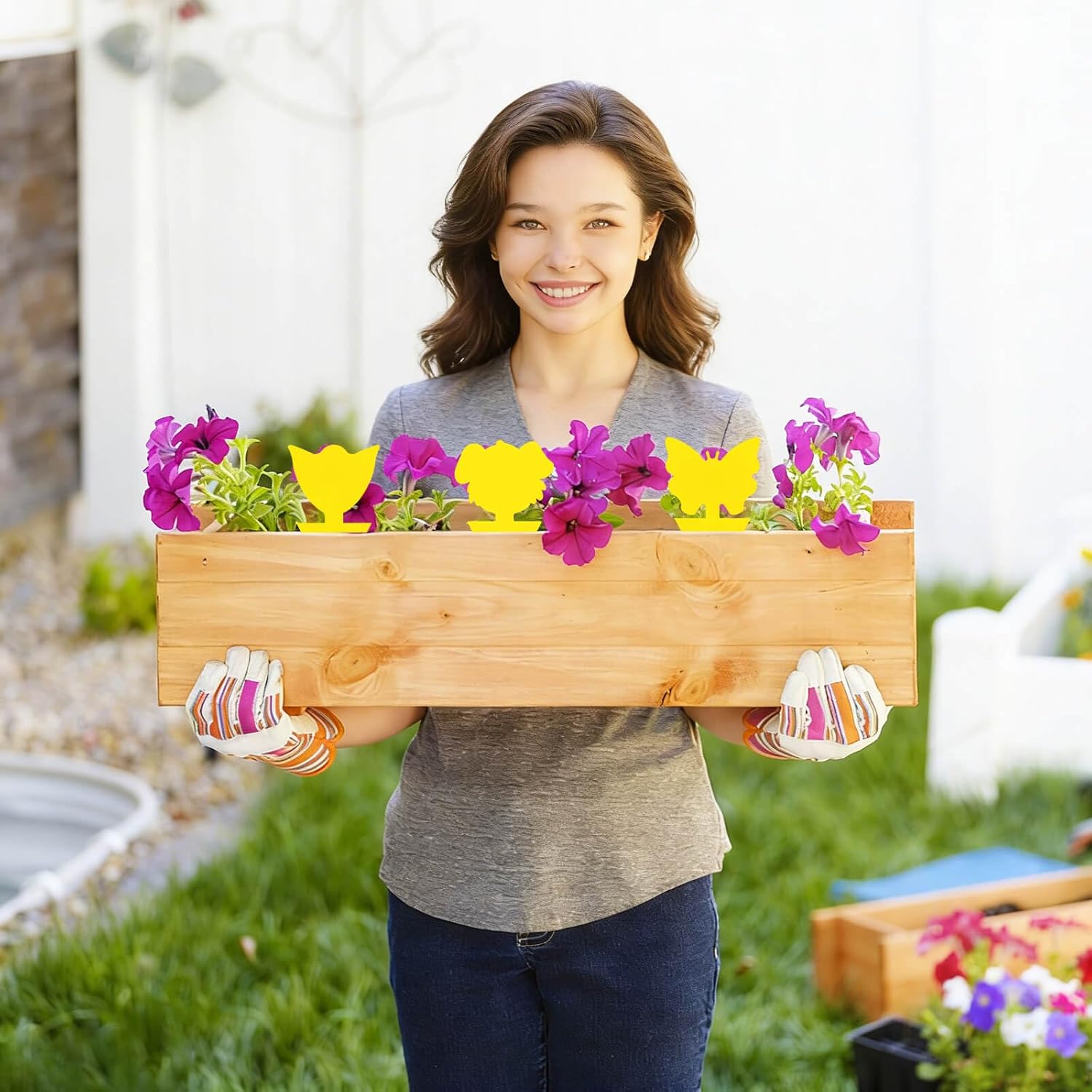
Four of the 100 recent reviews are one-star, and they are worth reading rather than dismissing.
Two are short and unambiguous: "Did not work att all" (1 April) and "Didn't work at all" (30 March). A third, on 16 April, is more diagnostic: "Not as sticky as some others I've used. I saw a fungus gnat actually walk on it and then fly away again!" and is titled "Bad batch?" The fourth simply says "not very useful."
Sticky trap performance is mostly about the adhesive, and adhesive products are more batch-sensitive than buyers tend to assume. Heat in transit, age of stock, and storage conditions all affect how tacky a card is when you peel the plastic off. If yours feel dry or peel without tack, that is a legitimate return, not a product design failure. Most reviewers describe the adhesive as "very sticky" or "extremely sticky", so the one-star cluster looks like a quality-control issue on individual packs rather than a product-wide problem.
There is also a price complaint worth noting. A 2 April review: "Works well, but a bit overpriced... you can probably find similar ones elsewhere for almost half the cost. Overall, effective and convenient, just a bit pricey for what it is." Fair point: generic yellow sticky cards sell on Amazon in larger packs for less per card. What you pay for with Blooven is the specific double-sided design, the printed patterns (which reviewers do mention liking), and a listing that has been reviewed enough times to filter out the obvious duds.
Who This Pack Actually Suits
Based on the reviews, the 30-pack makes obvious sense if you:
- Own ten or more houseplants and want to place one trap per pot
- Have a conservatory or heated greenhouse where gnats breed in damp compost
- Reuse compost or bought a bagged mix that came with gnat larvae (a surprising number of reviewers mention this)
- Want a chemical-free option around pets, children, or food prep areas
It is less obviously the right buy if you have a single affected plant, in which case half the pack will sit in a drawer, or if your main problem is fruit flies on a ripe bowl of fruit rather than soil-dwelling fungus gnats. Sticky cards in a pot will not out-compete a banana.
At £4.99 for 30 double-sided cards, the per-trap cost is around 16p. Paired with letting the compost dry out between waterings (gnat larvae need damp soil), the combination will clear a house of soil flies inside a couple of weeks for most people. That is the use case the pack size is clearly built for.
Blooven 30 PCS Fruit Fly Traps, Double-sided Fungus Gnat Sticky Catcher
Thirty double-sided yellow sticky traps sized for one-per-pot use across a house full of plants. Non-toxic, odourless, and quick to start catching adult gnats and fruit flies.