
Heated Propagator for Chilli Seeds UK: Put the Chillies in the Middle
We earn commission from qualifying Amazon purchases. It costs you nothing and does not affect what we recommend.
Chilli seeds want 25C to wake up. A UK windowsill in March gives them 14C. We read 75 reviews of the EarlyGrow propagator to see whether its warm-but-uneven tray closes that gap, and where growers put the chillies.
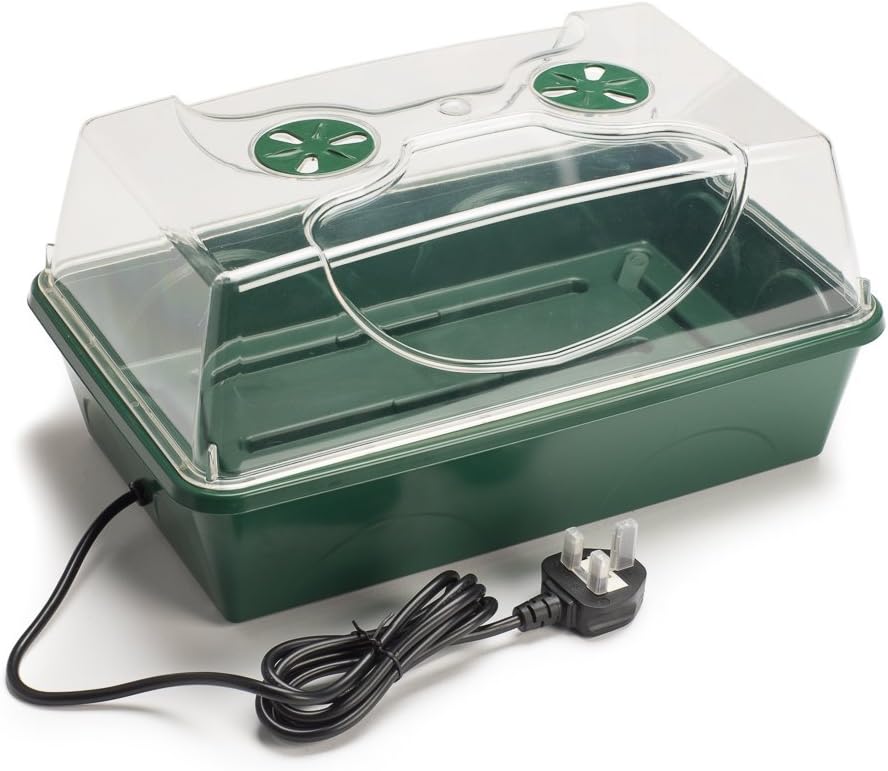
Chilli seeds are fussy about warmth. Most varieties want a steady 18 to 28C to break dormancy, and a UK windowsill in February or March rarely holds past 12 to 15C once the sun moves off it. Sow them cold and they sit in the compost for weeks, then rot. Chillies also need a long season, so UK growers start them in late winter, weeks before it is warm enough outdoors, which makes reliable indoor heat the whole game. That is the exact gap the EarlyGrow heated propagator is built to close: a 9W element warms the tray from below and gives seeds the bottom heat the room cannot.
We have not had this one on our own windowsill. We read the 75 most recent UK reviews on Amazon, counted the stars, and pulled out what chilli and pepper growers actually reported. The headline is strong: 62 of those 75 buyers left five stars and only three left one, for a recent average of 4.67 against the listing's lifetime 4.4 across 374 ratings. The surprise is in the detail. Several buyers with thermometers found the centre of the tray reaching 30C while the edges sat near 22C, and one chilli grower turned that quirk into a planting plan. Our verdict lands at 4.4 out of 5, a firm recommend with one condition we will come to.
Why Chilli Seeds Stall on a Cold UK Windowsill
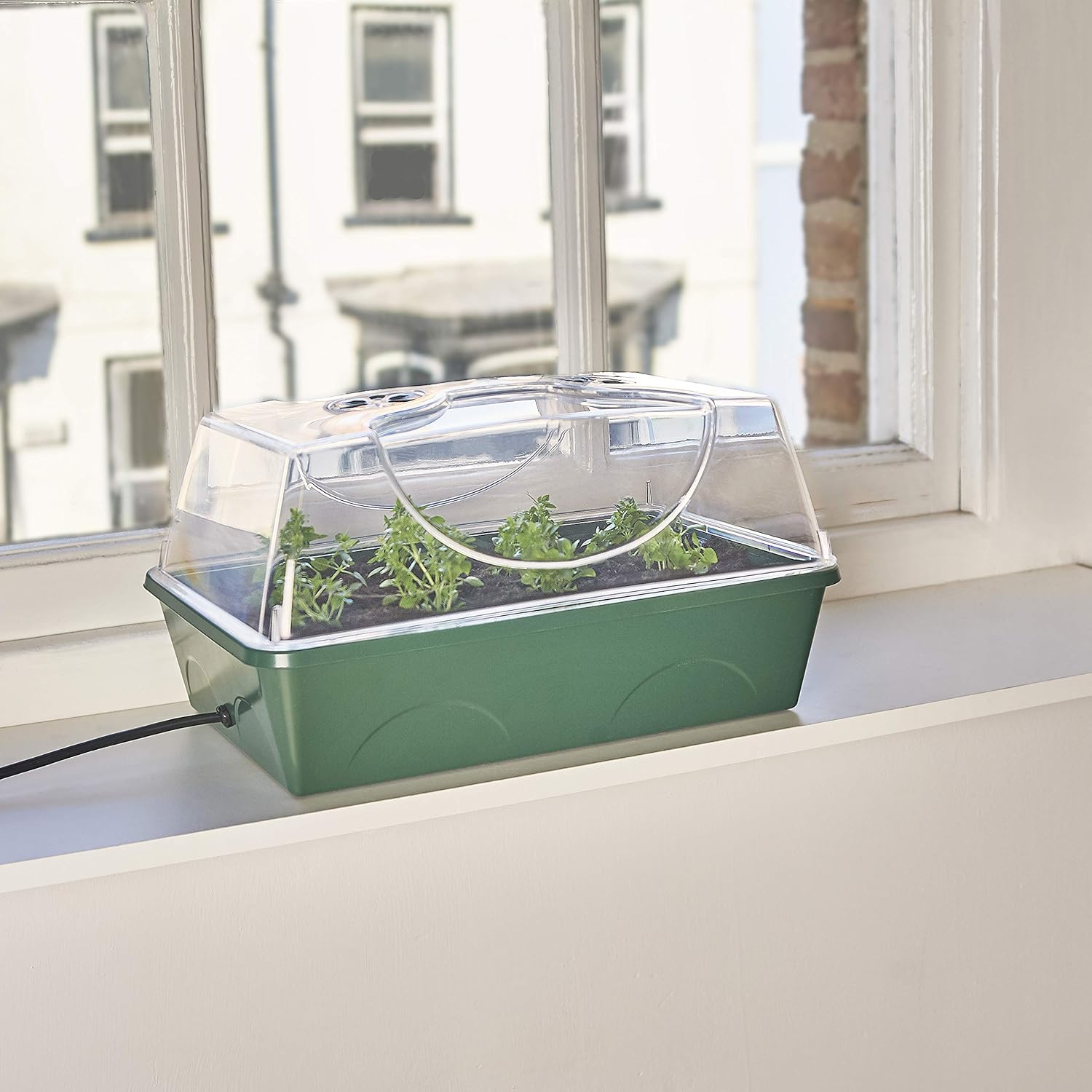
Warmth is the single biggest reason chilli and pepper seed fails indoors, and it is compost temperature, not air temperature, that triggers germination. A bare pot or an unheated propagator on the sill simply tracks the room, so in a cool spare bedroom the compost can sit at 15C when the chillies want closer to 25C. The EarlyGrow fixes this the simple way, warming the base from beneath rather than relying on a separate heat mat.
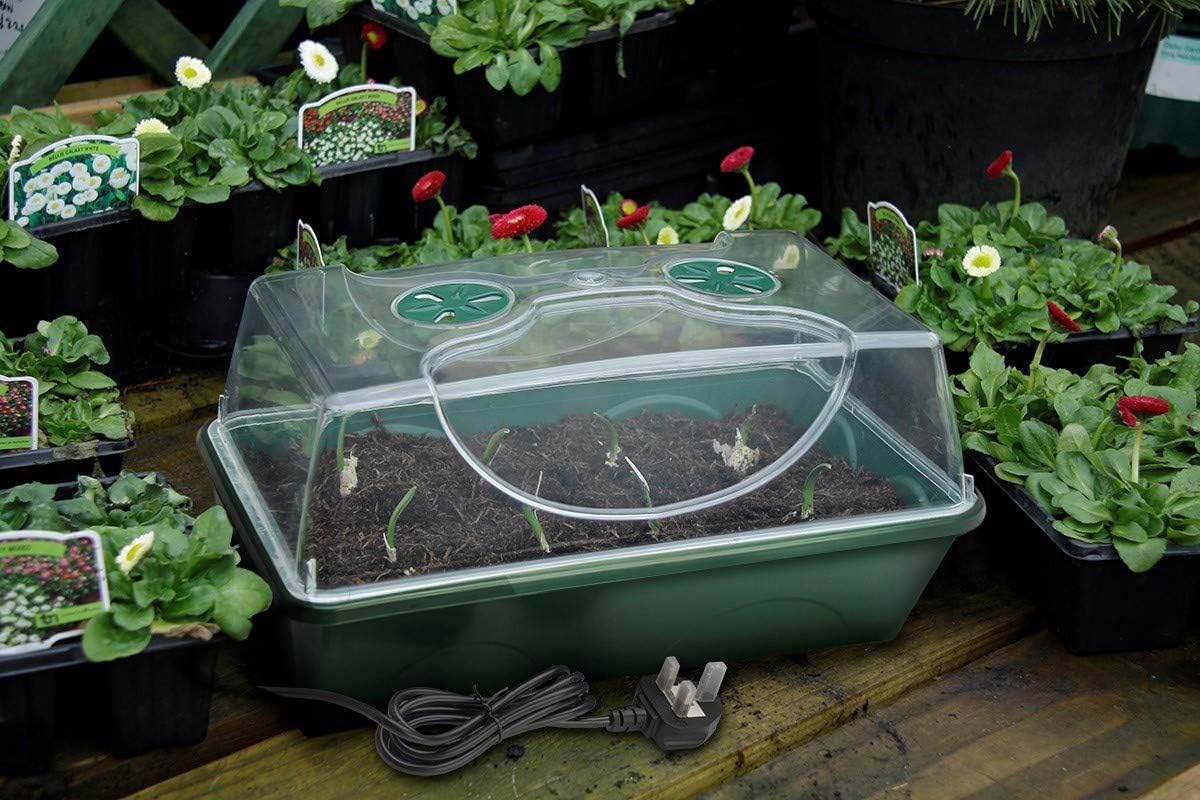
The specification is modest and worth knowing before you buy. The tray is rated to lift the soil to roughly 16 to 21C from a cold start, driven by a 9W heating element, and the whole unit measures 38 x 24 x 20 cm. It ships with a UK Type G three-pin plug on a captive lead, and it is made in the UK rather than imported, a point one North Yorkshire buyer was pleased to note. The clear, shatter-resistant lid carries two adjustable vent wheels and a carry handle moulded into the dome.
What you get is a plug-in warm box for early sowing, and buyers stretch it well beyond chillies. It suits the whole early range, peppers, tomatoes, courgettes, squash and sweet peas, each batch lifted out as it germinates and the next sown in its place. Others use it for cuttings, with one reporting "all cutting rooted," and a few keep it running through winter to hold tender plants. Chillies are the hardest of that group to start from seed, which is why they are the use case the propagator is most worth buying for. Get the warmth right for them and the rest of the spring list falls into place.
The 22C Edge, 30C Centre Debate
This is where the reviews split, and it is the most useful thing to understand before ordering. The propagator has no thermostat, so how hot it runs depends on your room, your compost depth and how long it stays on. Five of the 75 buyers we read describe the tray reaching 30C or hotter, or heating unevenly across the base. Karl, a one-star reviewer, wrote that "they state that the temperature range is no higher than 24 degrees when it is actually over 30 degrees." Another buyer ran a thermometer inside it and reported "the temps soon went up to 32c," then wired in a separate thermostat to hold it at 25C.
Several others call the warmth gentle, or too low for tropical seed. One of the most-upvoted reviews, with 14 helpful votes, put it plainly: "The floor temperature is very low so no chance of overheating." Elinvar found it produces "quite a gentle heat," fine for annuals headed outdoors but not enough for tropical species such as Adenium. The difference comes down to how deep the compost is over the element and how warm the room already is.
Both camps are right, because the heat is not even. The clearest account came from a buyer using a probe thermometer, who measured "the edges to be at 22C and the centre is at 30C" and called both "in the sweet zone for effective germination." That eight-degree gradient across a single tray is the fact the listing does not mention, and it can bite: 923martin, at three stars, lost most of a sowing to it, finding it "too hot in the edge and the centre. So not equally dispersed heat." Sow one uniform tray of fragile seed and that unevenness is a nuisance; know it is there and it becomes useful.
EarlyGrow Heated Medium Propagator
Bottom heat that gets stubborn chilli and pepper seeds up in days on a cold UK windowsill.
Five to Seven Days for Peppers, or Nothing at All
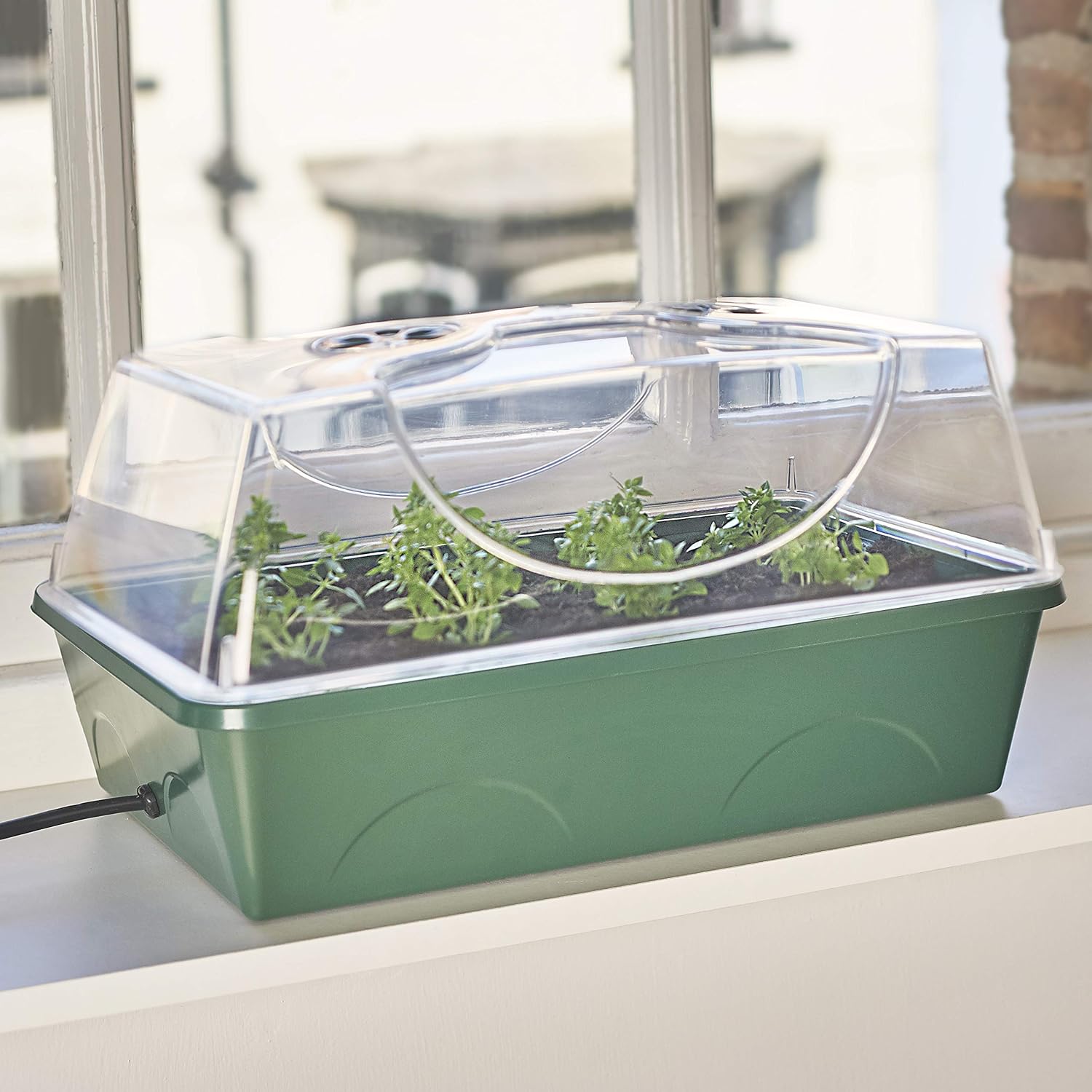
When the warmth suits them, germination is quick, and that is what most of the 62 five-star reviews come back to. Four of the 75 reviews we read come from chilli or pepper growers specifically, and all four report faster starts than a bare windowsill or a plain pot gave them. One who grows peppers from seed every year said that before the propagator "germination took ages - if it occurred at all," and with it "germination was very speedy (typically within 5-7 days)." Others put emergence at just two to three days once the box was warm. Jennifer Ingram was unsure hers felt warm enough, yet her seeds "popped up in very good time," and she noted these were "chillie seeds which do need heat."
The placement trick is the takeaway for chilli growers. Because the centre runs hottest, the same probe-thermometer buyer steers the sowing so "the chillies go towards the centre and the tomatoes ... go around the edges." Chillies and peppers take the 25 to 30C core; tomatoes, aubergines and sweet peas take the cooler margins near 22C. That turns the uneven heat from a fault into a feature.
Worried about cooking fragile seed? One buyer with nine helpful votes shared a fix: "I have put a saucer on the bttom" (sic) under the pots to lift them off the hottest spot, and cracked the vents open. Her follow-up was that "every one of my tomato seeds came up in double quick time." Between a considered layout and a saucer or two, the heat spread stops being a problem.
No Dial and No Off Switch
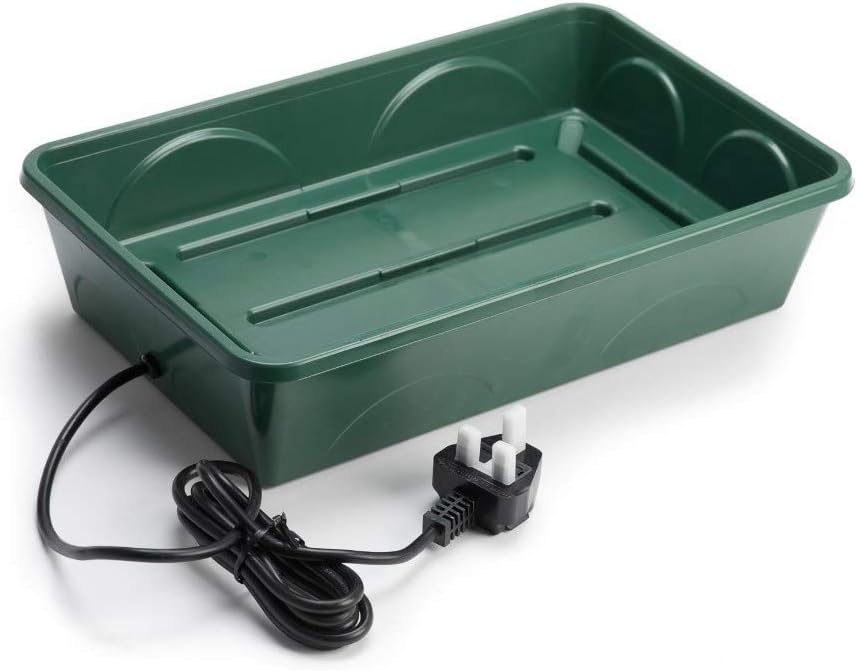
The flip side of that simplicity is the one condition on the recommend. This is a single fixed-temperature tray: no thermostat, no dial, no gauge. Four of the 75 reviews we read note the fixed temperature or wish for a way to set it. John, a four-star buyer, praised the build but flagged "no control or temperature gauge." Mr F. Simpson took the pragmatic line: "Although it's a fixed temperature, it helped my vegetable seedlings to start off well."
There is not even an on/off switch. As one tropical-pepper grower put it, the only con was "not being able to turn off the propagater (sic) without plugging it out." If you want to hold a set temperature, the fix several buyers reached for is a cheap plug-in thermostat or a timer socket. The buyer who measured 32C wired one in and held the tray steady at 25C afterwards, and trusted it fully.
For a chilli grower this matters less than it sounds. Chillies are content anywhere in the 20 to 30C band this tray produces, so precise control is a nice-to-have rather than a need. At just 9W the element costs almost nothing to leave on, roughly the draw of a phone charger, so an overnight run is no burden on the electricity bill. It is fragile or heat-sensitive seed, and long unattended spells, where the missing cut-off starts to bite. Put the plug on a timer to warm overnight and switch off by day, and you claw back most of the control the unit itself leaves out.
Built to Replace a 30-Year-Old One
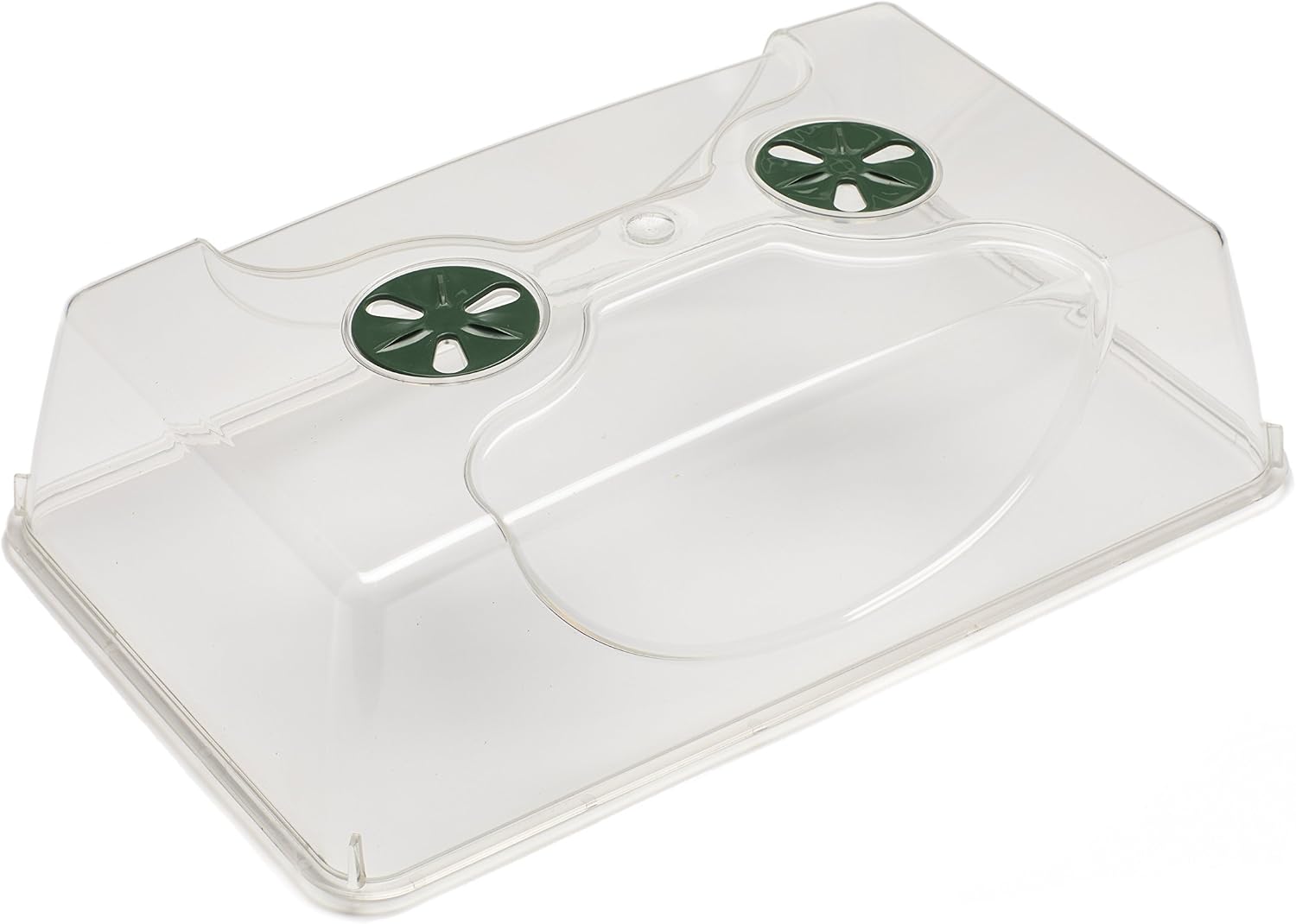
If the heat divides opinion, the build does not. More than a dozen of the 75 reviews we read single out how solid the moulding feels, and the theme runs right across the years. The tray is injection-moulded in one piece from thick green plastic, the clear lid is shatter-resistant, and the two vent wheels with a close-fitting dome hold humidity well. Ricky, in the most-upvoted review of the set at 16 helpful votes, valued that the dome "fits closely" and is "also not tapered in to restrict the useable space," so seedlings get full width to grow into. Another buyer was equally happy with the build: "Robust and well fitting plastic lid."
The longevity stories stand out. Mrs M. J. Murray bought this to sit beside an older propagator that "must be nearly 30 years" old and "is still soldiering on," and reckoned the new one, with its taller cover and clearer plastic, "will see me out." It is made in the UK, too, and the- baking_ lady was pleased to find hers was moulded "up the road from us in North Yorkshire."
The lid takes one small knock. Elinvar noted the "scalloped design impedes visibility," so the shaped dome that gives seedlings headroom also blurs the view of them a little. It is a fair trade for the height, which leaves room for fast seedlings before they touch the lid. The top vents open and close by hand to release excess humidity, the same control that stops the box turning into a sauna on a sunny sill.
Small Footprint, Big Enough for Two Trays
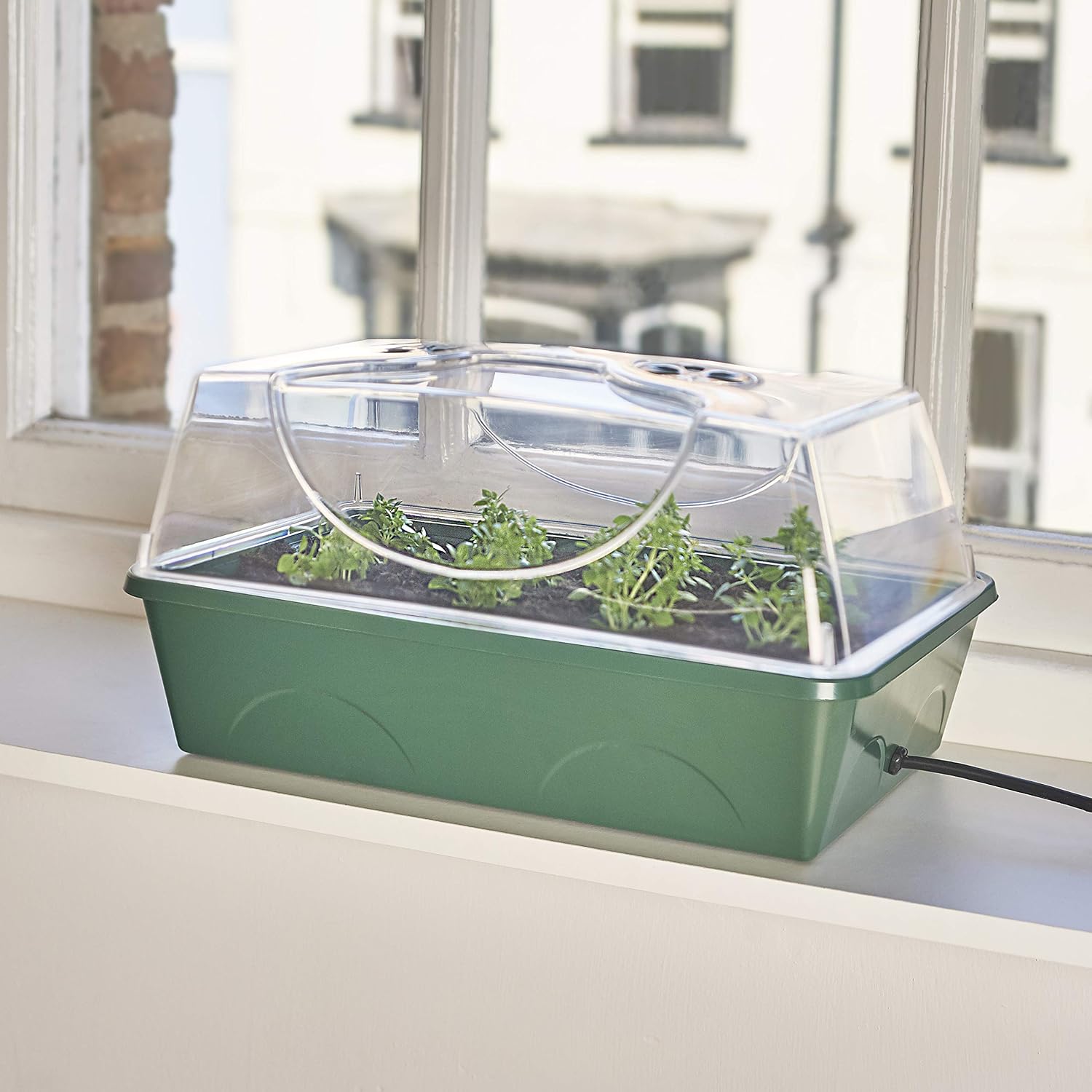
The last thing to weigh is size, and it is the most common gripe. At 38 x 24 x 20 cm this is a medium-to-small propagator, and three of the 75 reviews we read expected something larger. The sharpest warning came from bullrush, who found the base too tight for a standard cell tray and advised buyers to "take 5cm off length and width to get a cell tray that fits." Ann put the footprint plainly: "This is not a large propagator," and added that the postage "cost almost as much as the item." Measure your sill and your trays before ordering.
For most, the size is right. Sherry T. found the box "just the right size to house two trays of seeds" and balanced a grow light above it to stop the seedlings going leggy. Its uses stretch past seed, too: one buyer with 15 helpful votes uses it to bring carnivorous plants out of dormancy, finding it "builds a really high humidity easily even with the ventilator windows open." Setup is as plain as it looks: fill with compost, sow, fit the lid, plug in. There is no assembly and no leaflet, which one buyer wished came in the plain box, though the unit needs little explaining. The mains lead is on the short side, a point one buyer raised while calling it "fairly standard," so a nearby socket helps.
So where does it land? Across the 75 reviews we read the average is 4.67, ahead of the 4.4 lifetime badge over 374 ratings, with 62 five-star ratings and just three ones; only one buyer reported a unit that would not heat at all. For a UK chilli or pepper grower fighting a cold windowsill, this is a straightforward recommend at 4.4 out of 5. Put the chillies in the warm centre, the tomatoes and aubergines at the edges, add a plug-in thermostat if you want precision, and it will get your hottest crops off to the fast start they need. Buyers after a large bench propagator, or exact temperature control out of the box, should look elsewhere. You can check the current listing on Amazon for stock and today's price.
EarlyGrow Heated Medium Propagator
Bottom heat that gets stubborn chilli and pepper seeds up in days on a cold UK windowsill.