
How to Fix a Leaking Garden Hose Connector (UK Guide)
Published 26 August 2026
Most leaking hose connectors need nothing more than a fresh washer, a new O-ring or a re-cut hose end. This step-by-step UK guide shows how to find the leak point and fix it for good.
We earn commission from qualifying Amazon purchases. It costs you nothing and does not affect what we recommend.
Quick Answer
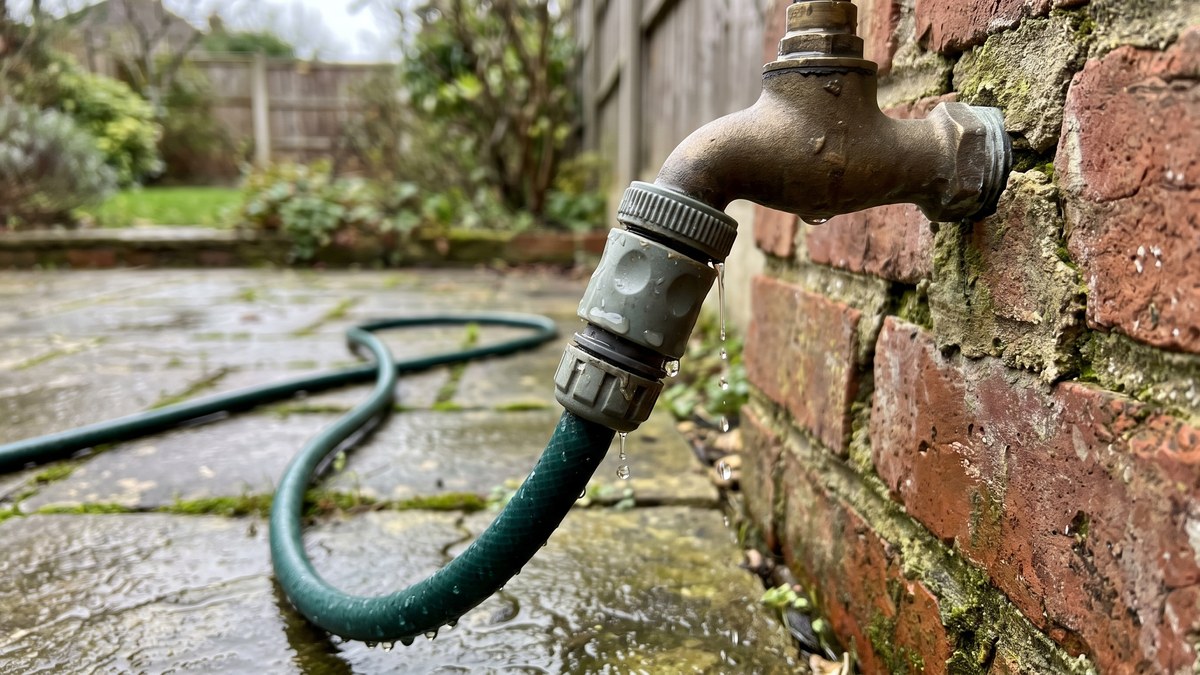
Most leaking garden hose connectors are fixed in under ten minutes by replacing the small rubber washer or O-ring inside the fitting, which costs pennies. If the leak is where the hose enters the connector, cut 3 to 5cm off the hose end and refit it on a clean, square cut. Only replace the whole connector if the plastic is cracked or it no longer clicks in securely.
A dripping hose connector is easy to ignore until the patio is permanently wet, the spray gun loses pressure and the water meter ticks over for nothing. It is one of the most common faults in a UK garden watering setup, and one of the cheapest to put right. In almost every case the fault lies in a worn rubber seal, a tired hose end or a cracked fitting, not in the hose itself.
This guide works through the repair in the order that cures most leaks fastest: pin down the exact leak point, sort the tap connection, swap the seals, re-cut the hose end, and only then spend money on a new connector. You need a sharp knife, a cloth, a few spare washers or O-rings and ten to twenty minutes.
Find the Exact Leak Point First
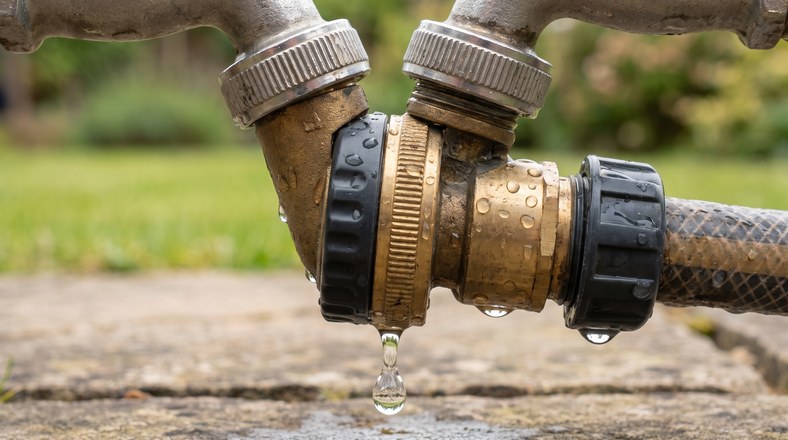
Leaks rarely come from where you think. Before replacing anything, dry every joint with a cloth, turn the tap on about a quarter of the way and watch closely. The first bead of water marks the true leak point; everything after that is run-off tracking along the hose.
Check the four usual suspects in order, working away from the tap:
- The tap thread - water weeping from where the threaded adaptor screws onto the outside tap.
- The click joint - a fine spray or steady drip from the joint between the tap adaptor and the snap-on connector.
- The hose entry - water creeping out from under the collar where the hose enters the connector.
- The accessory end - a drip where the connector meets the spray gun or sprinkler.
Each point has a different fix, covered in the steps below. One more check before you start: run your fingers along the first 30cm of hose. A hairline split near the fitting can look exactly like a connector leak, and no number of new washers will cure that.
Fix a Leak at the Tap Connection
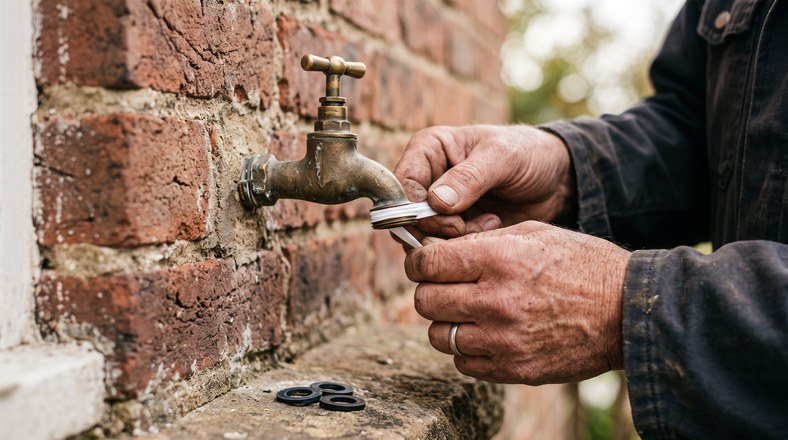
If the weep is at the tap itself, unscrew the threaded adaptor and look inside. A flat rubber washer should sit squarely in the base. If it is flattened, cracked, hardened or missing altogether, that is your leak: fit a new washer and the drip usually stops on the spot.
While the adaptor is off:
- Clean the tap thread. Grit, moss and limescale all stop the washer seating properly, and in hard water areas (much of southern and eastern England) scale builds surprisingly fast.
- Refit by hand only. Plastic adaptors distort if you lean on them with grips, and a distorted fitting never seals again.
- For a stubborn weep, wrap PTFE tape two or three times around the tap thread in the same direction the adaptor screws on, then refit.
Most UK outside taps have a 3/4 inch BSP thread and almost every tap adaptor sold here fits it, usually with a reducer for smaller taps. If the tap drips from the top of the spindle when turned on, that is a worn gland inside the tap itself - a separate repair, not a connector problem.
Replace the O-Ring or Washer Inside the Connector
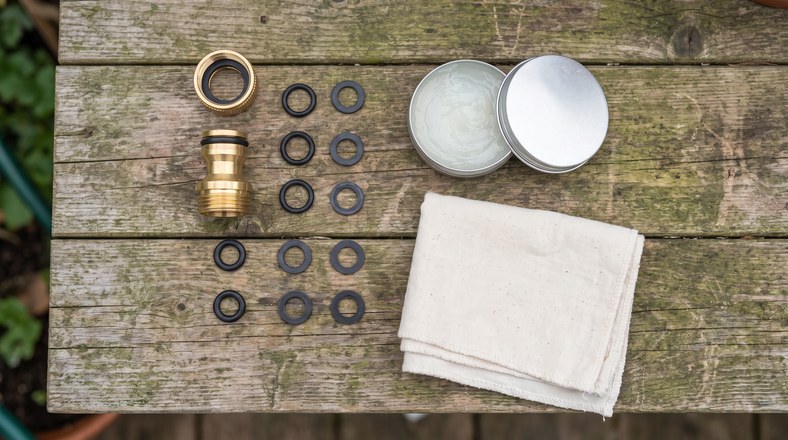
Click-fit connectors seal in two places: a small O-ring around the male end of the fitting and a flat washer inside the female connector. Rubber hardens after a couple of summers outdoors, and once it loses its springiness the joint mists or drips under pressure.
Unclip the connector and inspect both seals. Replace anything that looks split, flattened, perished or has gone missing - a mixed pack of hose O-rings and washers costs a couple of pounds from any DIY shop and will keep you going for years. Before reassembling:
- Rinse the inside of the fitting. A single piece of grit sitting against the washer is enough to cause a fine spray.
- Make sure the new washer sits flat. Pinched or twisted seals leak just as badly as worn ones.
- Smear a little silicone grease on O-rings to keep them supple and help the fitting click home. Never use oil, WD-40 or petroleum jelly, which attack rubber over time.
Re-Cut the Hose End and Refit the Connector
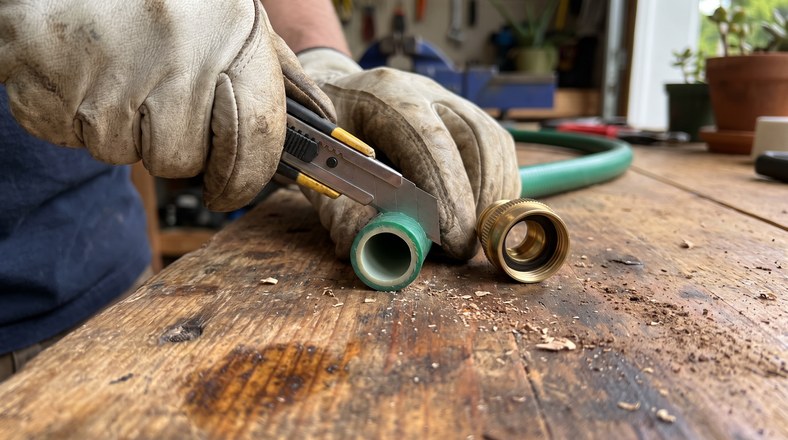
Water creeping out from under the screw collar means the hose end itself has failed. Ends stretch, split and go oval after years of being pushed on and pulled off, and once the hose wall is damaged the connector cannot grip or seal no matter how hard you tighten it.
- Turn the tap off and squeeze the spray gun trigger to release the pressure.
- Unscrew the collar and pull the hose off the fitting.
- Cut 3 to 5cm off the hose with a sharp knife or hose cutter. The cut must be square and clean - a ragged or angled end is a leak waiting to happen.
- In cold weather, stand the hose end in warm water at around 40°C for a minute to soften it.
- Push the hose fully home onto the fitting, right up to the shoulder, then tighten the collar firmly by hand.
Check the sizing while you are there. Standard UK hose is 12.5mm bore, but 15mm and 19mm hoses are common on longer runs, and a connector that is the wrong size will always weep or blow off. If the old connector's collar or grip has seen better days, fit a new hose end connector at the same time - a twin pack sorts both ends of the hose in one go.
Replace the Connector If It Is Cracked or Worn
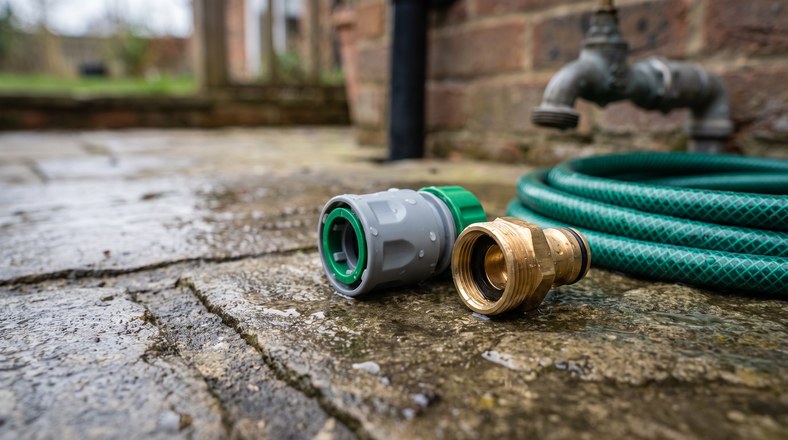
Sometimes the connector is simply done. Plastic fittings crack when they are trodden on, over-tightened, left in strong sun or caught by frost, and hairline cracks around the collar or threads often show up only under pressure. Worn locking teeth are the other giveaway: the connector clicks on but pops off when the tap is opened, or never clicks positively at all.
Replacement is quick and cheap:
- A standard click-fit connector costs a few pounds and swaps over in under a minute.
- For the tap end or anything that gets heavy use, consider brass. Metal fittings shrug off frost and knocks far better than plastic, though they still rely on rubber washers to seal.
- After fitting, click the connector on, give it a firm tug to confirm it is locked, then open the tap slowly and check every joint.
If the spray gun end is the trouble spot and the gun's own fitting is worn, the same logic applies: replace it rather than fighting it every time you water.
Stop Hose Connector Leaks Coming Back
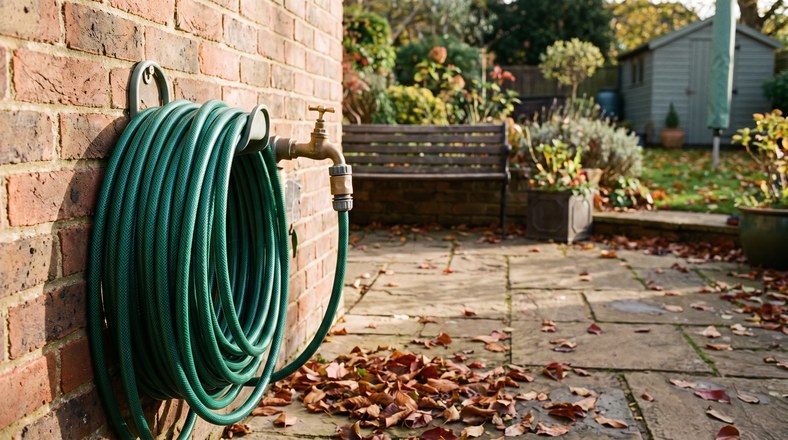
Most connector failures are set up months earlier by frost, sun and strain. A few habits keep the seals sound:
- Disconnect before frost. Water trapped in a connector expands as it freezes and splits plastic from the inside. In most of the UK that means unclipping and draining the hose from late October, and storing connectors and spray guns in the shed over winter.
- Keep it out of the sun. UV makes plastic brittle and dries out rubber seals. Store the hose on a reel or hook rather than leaving it baking on the patio all summer.
- Take the strain off the fitting. Leave some slack by the tap and avoid dragging the hose round corners at full stretch. Sideways pull distorts connectors and breaks the seal long before the rubber wears out.
- Turn the tap off after use. Leaving the system under pressure all day stresses every seal and invites blow-offs in warm weather.
- Do a spring check. Once a year, before the first proper watering session, look over the washers and O-rings and run the tap gently while you inspect each joint.
If the same hose keeps splitting at the ends every season, the hose itself has had it. Replacing it costs less than a summer of chasing leaks, and a lightweight expandable hose puts far less drag on the tap fitting than a heavy traditional pipe.
Frequently Asked Questions
What size connector do I need for a UK garden hose?
Most UK garden hoses have a 12.5mm (half inch) bore, and standard click-fit connectors are made for exactly that. Longer runs sometimes use 15mm or 19mm hose, which needs a matching larger connector. If you are not sure, measure the internal diameter of the freshly cut hose end before you buy - a mismatched connector will either weep constantly or blow off under pressure.
Can I use PTFE tape to stop a hose connector leaking?
Only on threaded joints, such as where the tap adaptor screws onto the outside tap. Wrap it two or three times around the thread in the same direction the fitting screws on. It does nothing for click-fit joints, which seal with an O-ring - if a push-fit connection leaks, replace the O-ring instead.
Why does my hose connector only leak when the spray gun is switched off?
With the trigger closed, pressure inside the hose is at its highest, so a marginal washer or O-ring that holds during watering starts to weep. Replacing the seals normally cures it. It also helps to turn the tap off when you finish rather than leaving the hose pressurised all day, which stresses every joint in the system.
Are different brands of click-fit hose connectors compatible?
Mostly, yes. The common UK quick-click connectors follow the same basic profile, so different brands usually snap together without fuss. Tolerances vary slightly though, and very cheap unbranded fittings are a frequent cause of weeping joints. If a mixed pairing keeps leaking, use the same system at both ends of the joint.
Related Reading
- Hozelock Soft Touch Hose End Connector review
- Hozelock Standard Hose Connector review
- HOMOZE 50ft Expandable Hose review
- How to Keep Pots Watered While on Holiday in the UK
- How to Protect Plants from Frost in the UK
Disclaimer: This article contains Amazon affiliate links. We may earn a small commission from qualifying purchases at no extra cost to you.