
How to Stop Flies Around a Compost Bin (UK Guide)
Published 26 August 2026
Clouds of flies around your compost bin mean exposed scraps and a wet mix, not a lost cause. Five practical steps for UK gardeners: identify the fly, bury and cover, rebalance and turn, trap the adults, then fly-proof the setup for good.
We earn commission from qualifying Amazon purchases. It costs you nothing and does not affect what we recommend.
Quick Answer
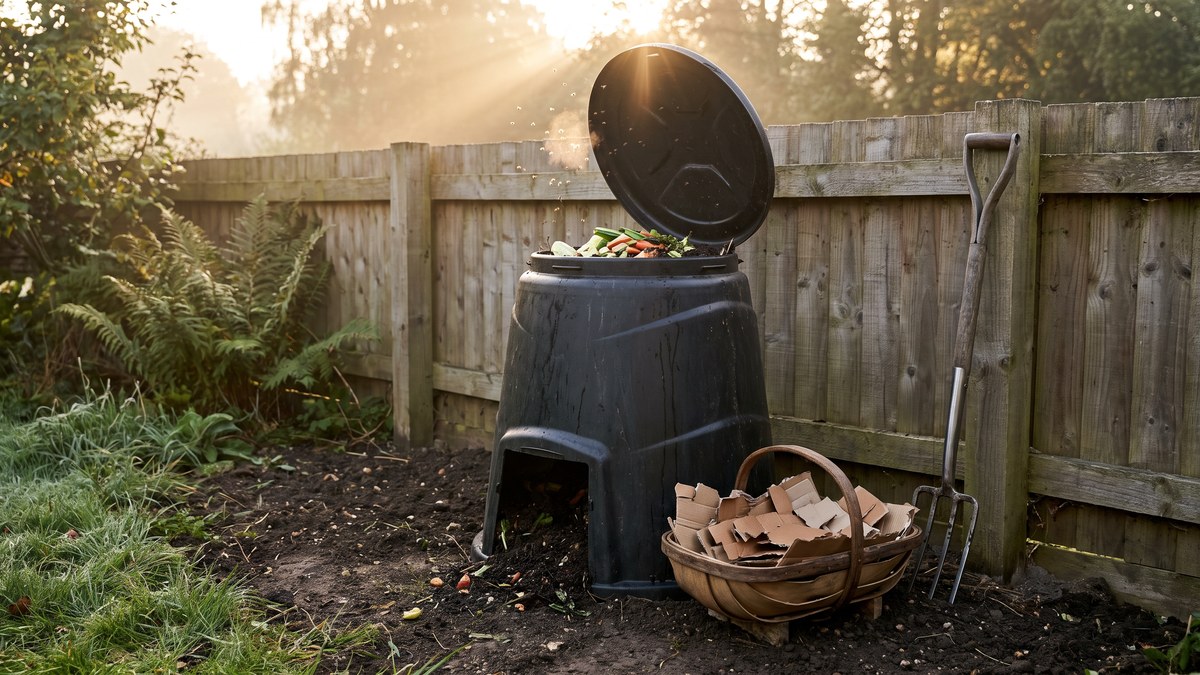
Flies around a compost bin almost always mean fresh food waste is exposed and the mix is too wet. Bury every addition in the centre of the heap, cover it with 5 to 10cm of browns such as torn cardboard, and turn the bin weekly so it heats up and the breeding cycle breaks. Traps clear the remaining adults, and a sealed tumbler or fine mesh over the vents keeps flies out for good.
Lift the lid on a compost bin in a warm British summer and you can be met by a cloud of tiny flies before you have even tipped the caddy. It is easily the most common composting complaint in UK gardens, and it peaks between June and September, when heat, humidity and soft fruit scraps line up perfectly for fruit flies.
The good news is that flies are a symptom, not a fate. They tell you two things: there is exposed food to lay eggs in, and the heap is damp and slow enough for larvae to thrive. Fix those two conditions and the flies go, without a single squirt of fly spray. The five steps below take you from identifying what is buzzing around your bin to a setup that stays fly-free next summer, using nothing more exotic than cardboard, a garden fork and, if you want faster results, a couple of cheap traps.
Identify the Flies and What Is Attracting Them
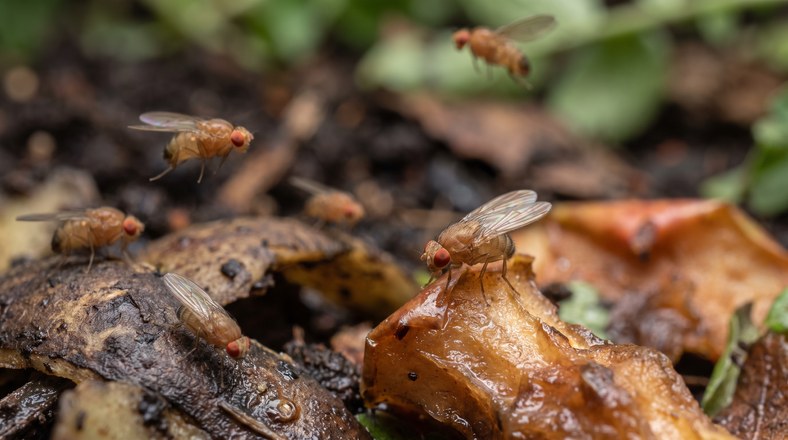
Before changing anything, spend a minute working out what you are dealing with, because each fly points to a slightly different problem.
- Fruit flies (vinegar flies). Tiny tan insects, 2 to 3mm long, that rise in a cloud when you lift the lid. They breed in fermenting fruit and veg scraps and are by far the most common compost bin fly in the UK, peaking from June to September.
- House flies and bluebottles. Larger flies, the bluebottles with a metallic sheen. If these are gathering, something is in the bin that should not be: cooked food, meat, fish, dairy or pet waste.
- Fungus gnats. Slender, dark flies that drift rather than dart. They point to a cold, wet, mouldering heap rather than an active one.
Whichever you have, the underlying causes are nearly always the same two: fresh scraps sitting exposed on the surface, and a mix that is too wet and too rich in soft green material. A soggy, airless heap breaks down slowly, starts to smell sour and becomes a perfect fly nursery. In a hot, working bin the conditions are simply too fierce for flies to get established.
Keep some perspective too. A few flies are normal in any open bin, and their larvae genuinely help break material down. The goal is a bin you can open without flinching, not a sterile one.
Bury Fresh Scraps Under a Thick Brown Layer
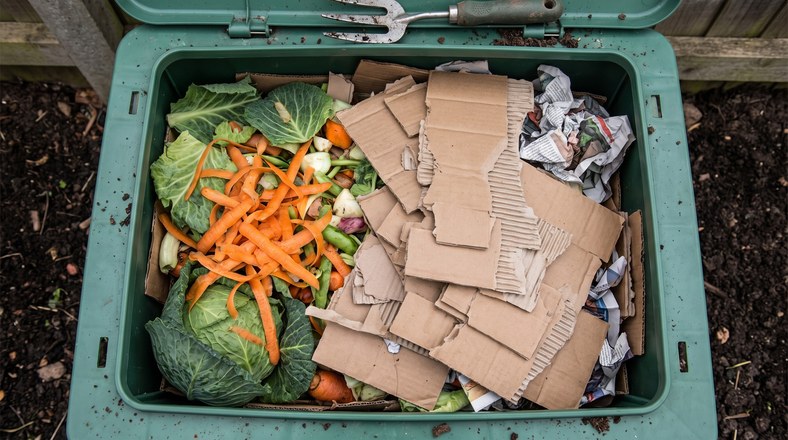
Exposed food waste is the single biggest fly magnet, so this step delivers most of the improvement on its own. Never leave peelings, cores or teabags sitting on the surface.
- Tip your caddy into the bin, then pull back the top few centimetres of material and drop the fresh scraps into the middle, where the heap is warmest.
- Cover every addition with 5 to 10cm of browns: torn cardboard, egg boxes, kitchen roll tubes, scrunched newspaper, straw, wood shavings or autumn leaves.
- Finish with a dry cap. Keeping the top 2 to 3cm of the bin dry creates a barrier that egg-laying females will not settle on.
The easiest way to make this stick is to keep a lidded container or an old compost sack of dry browns right next to the bin, so covering scraps takes seconds rather than a trip to the garage. In the UK dry leaves are scarce until autumn, so cardboard is your friend for most of the year - a couple of delivery boxes torn into palm-sized pieces each week roughly matches a household's caddy output.
Anything particularly smelly, such as melon rind or sweetcorn cobs, should go a full spade's depth into the centre of the heap.
Rebalance the Mix and Turn It Every Week
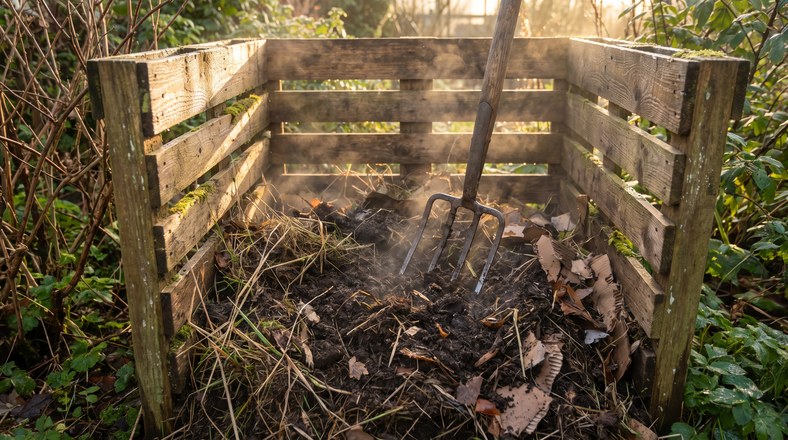
Burying scraps deals with the food source; rebalancing deals with the breeding ground. Fruit flies need warm, damp, slowly rotting material, and in a British summer a bin overloaded with grass clippings provides exactly that.
Start with the squeeze test. Grab a handful from the middle of the heap and squeeze it. It should feel like a wrung-out sponge. If water drips out, fork in dry cardboard or sawdust until it does not. A healthy bin can run at roughly half greens and half browns, but a bin with a fly problem should be drier - work towards two parts browns to one part greens by volume until the flies are gone.
- Mix summer grass clippings with an equal volume of torn cardboard before they go in, or leave them on the lawn to dry for a day first.
- Turn or stir the heap once a week with a garden fork or compost aerator. Fruit flies can go from egg to adult in as little as eight to ten days in warm weather, so a weekly turn keeps interrupting the cycle before a new generation takes off.
- Turning adds air, and air makes the heap heat up. Above roughly 45°C fly eggs and larvae are killed outright, which is why active heaps rarely have fly trouble.
Expect a visible difference within a week of the first proper turn, and a bin you can open comfortably within two to three.
Trap the Adult Flies While the Bin Recovers
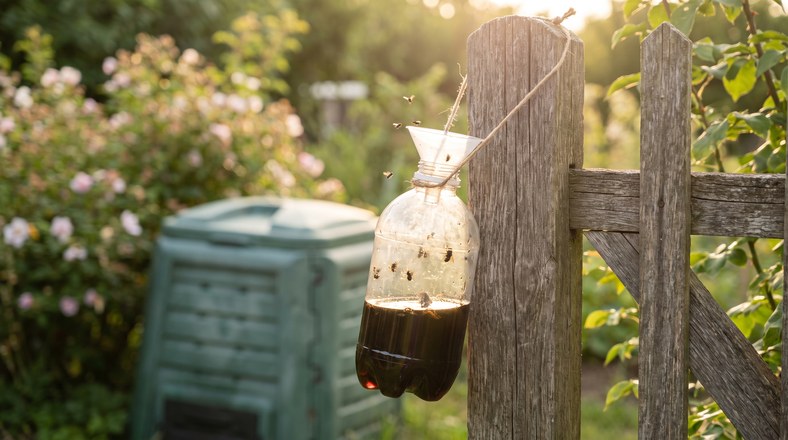
Steps one to three stop new flies breeding, but adult fruit flies live for two to four weeks, so trapping clears the backlog while conditions inside the bin improve.
- Sticky traps for fruit flies. Double-sided yellow sticky traps cost around £5 for a multipack and work well beside the kitchen caddy, the fruit bowl or a greenhouse door, catching adults before they ever reach the bin. Do not hang them inside the bin or directly over the heap, where they will catch beneficial insects as well.
- A baited outdoor trap for bigger flies. If house flies or bluebottles are the problem, hang a ready-baited outdoor fly trap three to five metres from the bin, downwind and well away from seating, because the bait has a strong smell. It draws flies away from the bin rather than towards it, and one trap keeps working for several weeks in summer.
- A homemade fruit fly trap. Pour 2 to 3cm of apple cider vinegar into a jam jar with one drop of washing-up liquid, cover with cling film secured by an elastic band, and pierce a few small holes. Flies get in and cannot get out. Refresh it weekly.
One thing not to do: never spray fly killer or any other insecticide into or onto the heap. It kills the worms and decomposer insects doing the composting, and it contaminates compost you will later spread on beds and borders.
Fly-Proof Your Setup for the Long Term
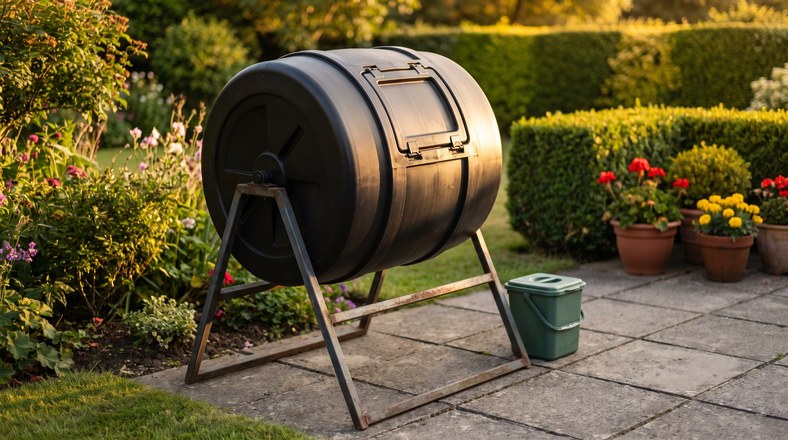
Once the current flies are under control, a few changes to your setup make them a non-event next summer.
- Move fresh scraps to a sealed tumbler. A sealed, off-the-ground compost tumbler simply denies flies access to fresh material, and because you rotate it with a handle every couple of days, the contents heat up fast. A compact model at around £50 suits most small UK gardens and takes the weekly fork-turning chore off the list entirely.
- Tighten up caddy hygiene. Use a lidded kitchen caddy, empty it every day or two in summer and rinse it weekly. Fruit flies often start indoors around the caddy rim, then follow the scraps out to the bin.
- Freeze fruit waste in summer. Fruit fly eggs are often already on banana skins and soft fruit when you buy them. A night in the freezer kills the eggs and reduces the smell as the waste breaks down.
- Mesh the vents. On a standard cone-shaped plastic bin, a strip of fine insect mesh fixed over the vent holes and around the lid rim lets air through and keeps egg-laying females out.
- Keep the wrong things out. Cooked food, meat, fish and dairy belong in the council food waste collection or a sealed bokashi bin, never in an open garden compost bin.
Combine a sealed tumbler for kitchen waste with an open bin for garden material and you get faster compost and next to no flies, whatever the British weather does.
Frequently Asked Questions
Are maggots in my compost bin a problem?
Usually no. Most larvae in a UK bin are fly or beetle young that break material down and do no harm, so you can simply turn them into the heap. The exception is masses of maggots in cooked food or meat, which means something went in that should not have. Remove what you can, bury the rest deep and get the heap hot, which kills eggs and larvae.
Should I leave the lid off my compost bin to stop flies?
Not in the UK. The lid is not what attracts flies, and an open bin soaks up rain, making the wet conditions flies love even worse. An open heap does let in predatory beetles that eat fly larvae, but in a rainy climate the trade-off rarely pays off. Keep the lid on, manage moisture with dry browns, and prop the lid open on a dry day if the heap needs to vent.
Does vinegar really work for compost bin flies?
A vinegar trap catches adult fruit flies very effectively, because they are drawn to the smell of fermentation. What it cannot do is stop them breeding, so use it alongside burying scraps and adding browns rather than instead of them. Apple cider vinegar with a single drop of washing-up liquid works best.
How long until the flies disappear?
Once scraps are buried, the mix is drier and the heap is turned weekly, breeding stops quickly, but the adults already present live for two to four weeks. Most gardeners see a clear drop within a week and a more or less fly-free bin within two to three. Traps shorten that tail considerably.
Related Reading
- Blooven Fruit Fly Traps review
- Zero In Outdoor Fly Trap review
- Dripex Compost Tumbler review
- How to Repair Bare Lawn Patches in Autumn (UK Guide)
- How to Winterise an Above Ground Pool in the UK
Disclaimer: This article contains Amazon affiliate links. We may earn a small commission from qualifying purchases at no extra cost to you.