
How to Winterise an Above Ground Pool in the UK
Published 11 August 2026
A UK-specific guide to closing an above ground pool for winter: when to do it, whether to store or winterise in place, the chemicals that matter and how to keep frost from wrecking your pump.
We earn commission from qualifying Amazon purchases. It costs you nothing and does not affect what we recommend.
Quick Answer
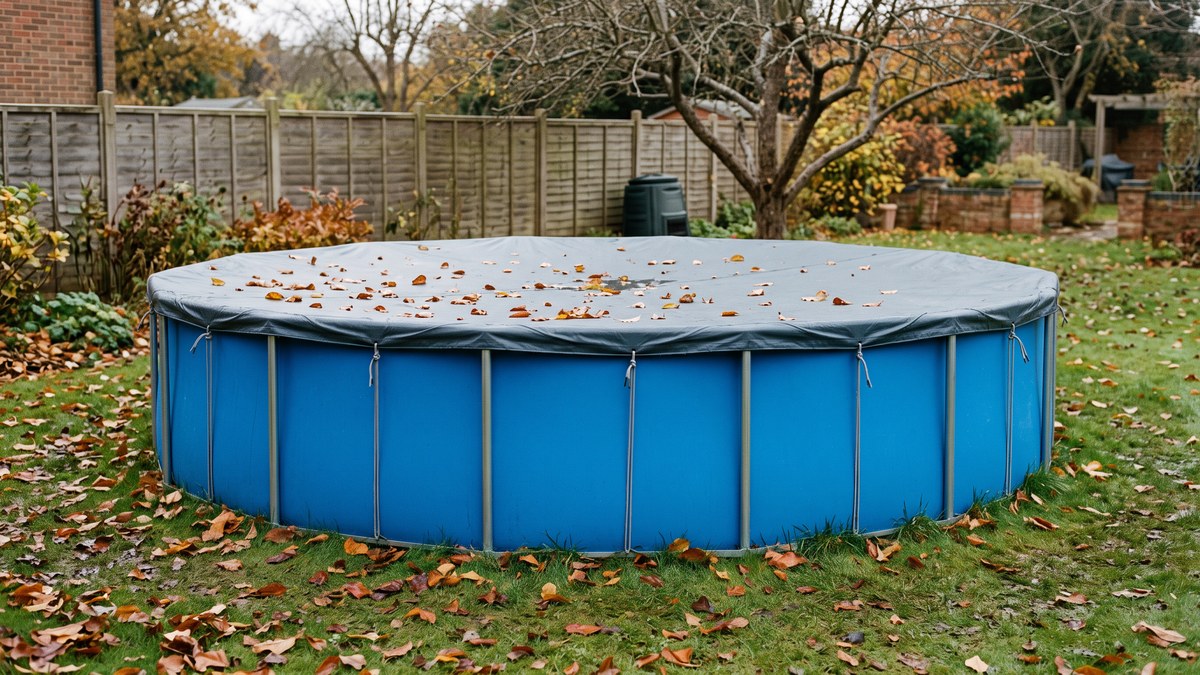
In the UK, winterise an above ground pool between late September and mid October, once the water stays below about 15C. Small Easy Set pools should be drained, dried and stored indoors, while metal frame pools are better closed down in place: deep clean, balance and shock the water, add winter algaecide, drain and store the pump and filter, lower the water below the fittings and fit a tight winter cover. Check it monthly until spring.
- Decide Whether to Store the Pool or Winterise It in Place
- Give the Pool a Final Deep Clean
- Balance the Water and Add Winter Chemicals
- Protect the Pump, Filter and Pipework from Frost
- Lower the Water Level and Fit a Winter Cover
- Check the Pool Monthly Until Spring
- Frequently Asked Questions
- Related Reading
Most advice on closing a pool is written for climates with deep-frozen winters, which is why so much of it tells you to drain everything or buy ice pressure pads. A UK winter is a different animal: mild, wet and windy, with the odd sharp frost that arrives overnight and cracks any pump left connected. Winterising an above ground pool here is less about surviving months of ice and more about managing rain, debris and algae, and protecting the one component that genuinely hates frost.
This guide covers both routes: draining and storing a small Easy Set pool, and closing a larger metal frame pool down in place with the water still in it. The right window is late September to mid October, once the water sits below about 15C, so if you are reading this in August you have time to get the chemicals and cover in before the rush. Work through the steps in order and the pool that greets you in April will need an afternoon, not a fortnight, to reopen.
Decide Whether to Store the Pool or Winterise It in Place
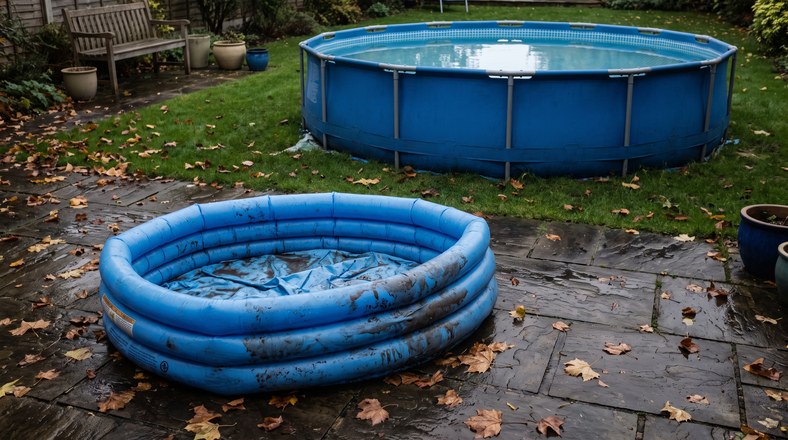
The right method depends almost entirely on which type of pool you own, and the two most common types in UK gardens need opposite treatment.
Easy Set and other inflatable-ring pools: take them down
A 6ft or 8ft Easy Set holds under about 2,000 litres and comes down in half an hour. The thin vinyl and inflatable top ring are not built to sit through four months of UK rain, frost and winter UV, and leaving one up is the quickest way to find a perished ring in spring. Storing is simple:
- Stop dosing chlorine about a week before, so levels fall below 1 mg per litre, then drain through the valve. Most UK water companies ask you to send pool water to a foul drain rather than a surface drain; a small dechlorinated pool can also be released gradually over the lawn in stages.
- Wash the liner with warm water and a little mild soap, rinse, and dry it completely. Pick a dry, breezy day and towel off the seams, because a damp fold will grow mould by Christmas.
- Dust the dry liner with talcum powder to stop the PVC sticking to itself, fold it loosely and store it off the ground somewhere dry that rodents cannot reach. Mice chew stored pool liners surprisingly often.
Metal frame pools: winterise in place from around 10ft up
A 10ft to 15ft frame pool holds anywhere from 4,000 to 15,000 litres. Taking that down means a half-day dismantle, a liner that wears a little with every fold, and roughly £15 to £50 of metered water to refill in spring. Closing it down full is quicker, kinder to the liner and gives you a head start in April.
Two caveats before you commit. Leaving an Intex or Bestway pool up over winter usually voids whatever remains of the warranty, which matters most in the pool's first year or two. And one rule is absolute: never leave a frame pool standing empty outdoors. Without the weight of water the liner goes brittle in the cold and a winter storm can lift or twist the frame. Full and treated, or down and stored - nothing in between.
Give the Pool a Final Deep Clean
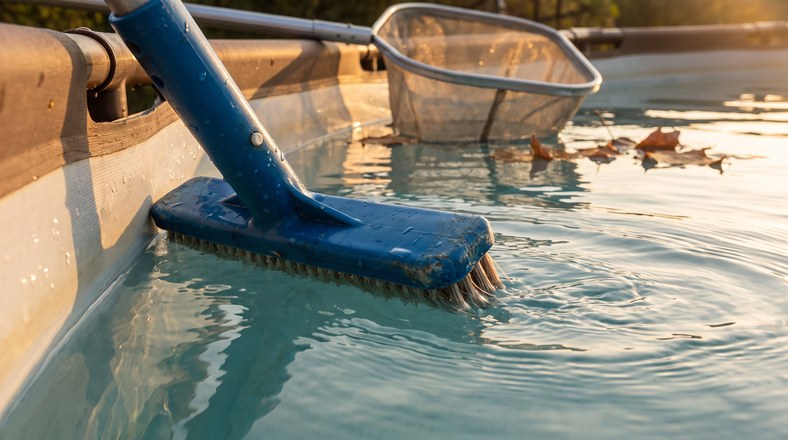
Whatever is in the water when the cover goes on stays there until spring, and every leaf and dead insect is food for algae. Aim to close before the main leaf fall in your garden if you can, and give yourself a dry afternoon.
- Net out leaves and floating debris, and empty the skimmer basket.
- Brush the walls and floor firmly to lift the invisible biofilm that algae grows from. Give the waterline extra attention, where sun cream and grime build a scum ring; a soft cloth and a pool surface cleaner will shift it. Avoid household cleaners, which foam and upset the water balance.
- Vacuum the floor, either with a manual vac head on a telescopic pole or a rechargeable pool vacuum.
- Run the filter for 8 to 12 hours afterwards to capture everything you have stirred into the water.
The pool should look ready to swim in before you move on. If it is cloudy or green now, fix that first with a shock dose and a long filter run, because winterising dirty water just refrigerates the problem until spring.
Balance the Water and Add Winter Chemicals
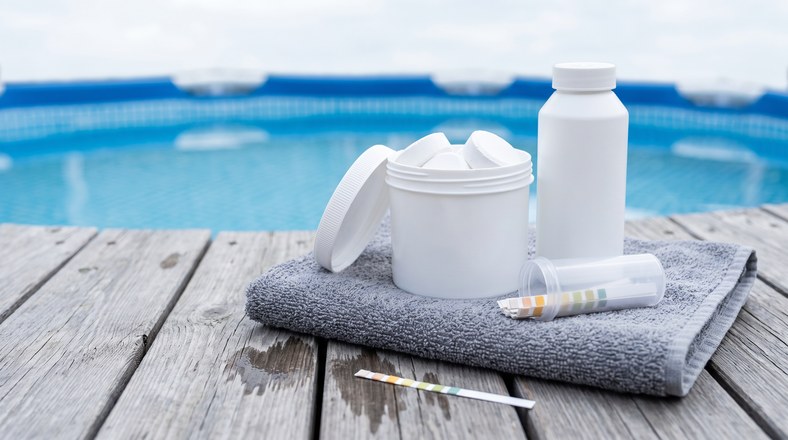
Once the water is clean, set its chemistry so it can sit untouched for months. Test before you dose anything - dip strips give you pH, chlorine and alkalinity in ten seconds.
- pH 7.4 to 7.6. Aim at the top of the normal range. UK winter rain is slightly acidic and will nudge pH down over the months, so starting high leaves room to drift.
- Total alkalinity 80 to 120 mg per litre. This buffers the pH against exactly that rain.
- Shock the pool. Add a shock dose of chlorine granules in the evening and run the pump overnight, lifting free chlorine to 5 to 10 mg per litre to kill everything the brush loosened. If you dose with multifunction tablets through the season, keep one in the floating dispenser right up to closing day, but take the dispenser out before the cover goes on so it cannot rest against the liner and bleach it.
- Wait 24 to 48 hours until chlorine falls back below about 5 mg per litre, then add winter algaecide at the dose rate on the bottle, poured slowly around the edge, and run the pump for a final hour to mix it. Algaecide is the single most important winter chemical in the UK, because our mild spells in February are warm enough to wake algae long before you are thinking about the pool.
One extra check if you have used stabilised chlorine tablets all summer: cyanuric acid. If your test kit measures it and it reads above about 50 mg per litre, plan to drain a little extra at the lowering stage and top up with fresh water in spring, which dilutes it back down.
Protect the Pump, Filter and Pipework from Frost
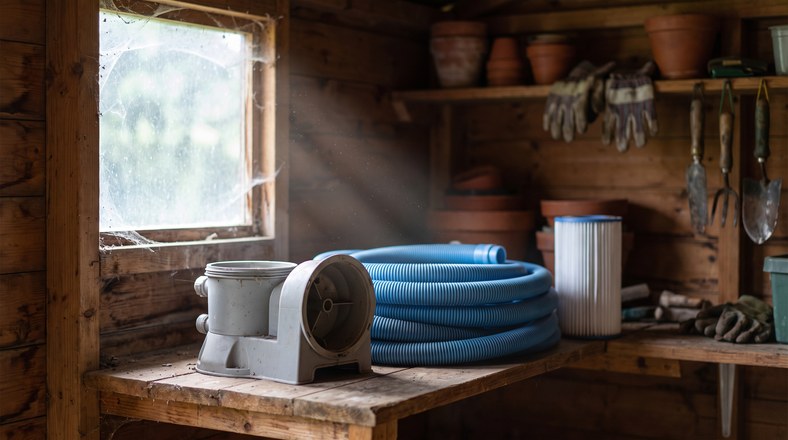
This is the step UK owners most often skip, and the one that costs the most when they do. Intex and Bestway pumps are not frost rated. Water trapped in the pump housing or hoses expands on the first minus 2C night and cracks the casing, and a replacement pump costs more than every winter chemical on this page combined.
- Switch off and unplug the pump at the mains.
- Fit the stopper plugs into the pool's inlet and outlet from inside the pool - the black plugs supplied with most Intex pools - or close and remove the stopcock valves on larger fittings and store them indoors. Then disconnect the hoses, tip them out until no water runs, and leave them somewhere they can drain fully.
- Open the pump's drain screw if it has one, tip out every drop of water, and remove the filter cartridge. A season-old cartridge is usually only fit for the bin; replacements cost a few pounds, so start spring with a fresh one rather than storing a damp, dirty cartridge for six months.
- If you run a sand filter, drain the tank through its bottom plug and leave the plug out so air can circulate through the tank over winter.
- Store the pump, hoses, ladder and any clip-on surface skimmer somewhere dry and frost free: a garage, shed or utility cupboard is ideal. Keep chemicals in their sealed tubs, off the floor, dry and locked away from children and pets, and never in an unheated greenhouse where a hard frost can split the bottles.
Lower the Water Level and Fit a Winter Cover
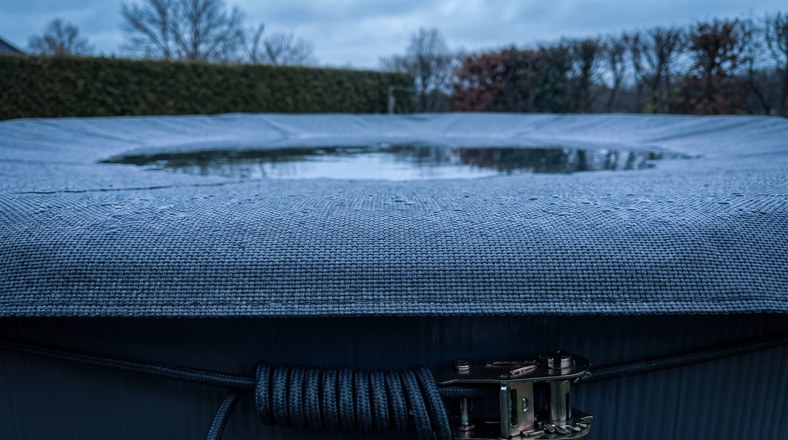
With the fittings plugged, drop the water level to about 10cm below the lowest fitting. Connect a hose to the drain valve or use a submersible pump, and remember the disposal advice from the first step if you are moving a lot of water. Do not go lower than you need to: the remaining water is what holds the liner in shape and keeps the frame stable in winter gales.
Then cover it. A winter cover earns its keep three times over in the UK: it keeps leaves out, blocks the light algae needs, and stops the worst of the rain diluting your chemicals.
- Choose a solid cover sized for your pool, pull it drum tight and tension the cord under the rim. A loose cover flogs itself to pieces in the first named storm of the autumn.
- Most fitted Intex and Bestway covers have small drainage holes, so rain passes through rather than ponding dangerously on top. Expect the water balance to need a small correction in spring; that is a fair trade for a cover that never turns into a sagging water bag.
- If your cover is fully sealed, float an air pillow under the centre before tensioning so rain and snow shed to the edges, and push standing water off after heavy rain.
- On exposed sites, add cover clips or bungee straps around the rim. UK winter wind does more damage to above ground pools than ice ever does.
Ice pressure pads, standard advice on the continent, are rarely needed for a UK above ground pool because flexible walls tolerate our short, shallow freezes. If a hard freeze is forecast, float two or three part-filled plastic bottles weighted with a handful of gravel in the water; they compress instead of the pool walls and cost nothing.
Check the Pool Monthly Until Spring
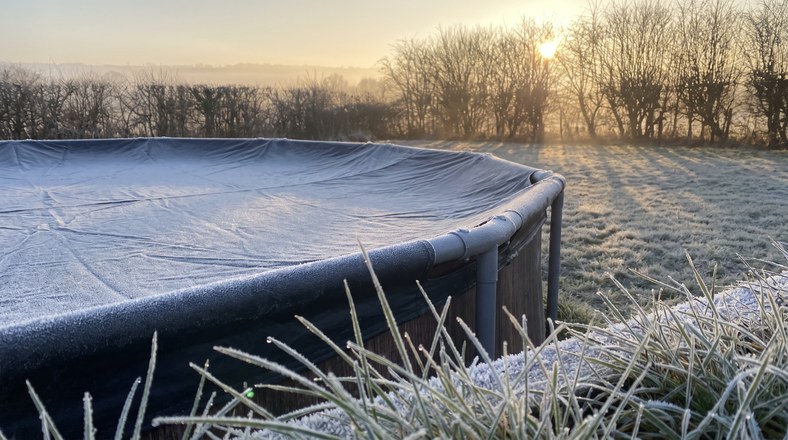
A UK winter pool is not sealed and forgotten, because our weather refuses to stay winter. Ten minutes a month keeps everything on track:
- After every named storm, check the cover tension and clear leaves and branches off the top.
- Tip or siphon standing rainwater off sealed covers before the weight strains the seams.
- If weeks of rain lift the water level back towards the plugged fittings, drain a little back down.
- In a mild spell, lift a corner of the cover and look at the water. If it is starting to turn, brush the walls, dose algaecide again and broadcast a small top-up of chlorine granules. Catching algae in February takes ten minutes; catching it in May takes a weekend.
From late March, once the water climbs back above about 10C, run the process in reverse: cover off and cleaned, pump reconnected with a fresh cartridge, a shock dose, then test and rebalance. Close the pool properly in October and that spring reopening takes a single afternoon, with water clear enough to see the liner pattern from day one.
Frequently Asked Questions
When is the best time to winterise an above ground pool in the UK?
Once the water temperature sits consistently below 15C, which in most of the UK means late September to mid October, and a week or two earlier in Scotland and the north. Close sooner, while the water is still warm, and algae will bloom under the cover; leave it much later and the first frost may catch your pump still connected.
Should I completely drain my above ground pool for winter?
Only if you are dismantling and storing it. A frame pool that stays up must stay essentially full: the water supports the liner and anchors the frame against winter wind, and an empty liner left standing goes brittle and cracks. Lower the level to just below the fittings and no further.
Can I leave an Intex Easy Set pool up over winter in the UK?
It is a bad idea. The inflatable top ring and thin vinyl degrade quickly in frost, rain and winter UV, and a small pool only takes half an hour to drain, dry and store. Fold it loosely with a dusting of talcum powder and keep it somewhere dry and mouse proof until spring.
Do I need to keep the pump running over winter?
No. Running the pump for a few hours a day, sometimes called active winterising, only makes sense where the pump sits protected indoors and temperatures rarely dip below 5C. For a typical UK above ground pool with the pump outside, full shutdown is safer: drain it, dry it and bring it indoors, because one frozen night can crack the casing.
Related Reading
- Clearwater Pool and Spa Test Strips review
- Clearwater 4-in-1 Chlorine Tablets review
- Clearwater Algaecide review
- Bestway Pool Filter Cartridge Type I review
- Bestway Round Pool Cover review
- Intex 8ft Easy Set Pool Cover review
- Keep a Pool Clean Without a Pump UK: Chlorine, Testing and Algae Control
- How to Protect Plants from Frost in the UK
Disclaimer: This article contains Amazon affiliate links. We may earn a small commission from qualifying purchases at no extra cost to you.