
How to Get Rid of Moss in a Lawn in Autumn (UK Guide)
Published 26 August 2026
A step-by-step autumn plan for clearing lawn moss in the UK: kill it with iron sulphate, scarify it out, aerate, overseed and fix the conditions that invited it in.
We earn commission from qualifying Amazon purchases. It costs you nothing and does not affect what we recommend.
Quick Answer
In early autumn, apply an iron sulphate based moss killer, wait 7 to 14 days for the moss to blacken, then scarify it out while the soil is still warm. Straight afterwards, aerate compacted areas, overseed the bare patches and apply an autumn lawn feed so grass fills the gaps before winter. Moss returns wherever a lawn stays thin, damp, shaded or compacted, so changing those conditions is what makes the clearance stick.
Moss loves a British autumn. The nights draw in, the dew hangs around all morning and the grass slows down just as conditions turn perfect for moss to spread. Some UK lawn care firms estimate that around six in ten lawns are affected at some point, and with more than 700 moss species growing in the UK there is always one suited to your particular damp corner.
The good news is that early autumn is also the best moment in the whole year to deal with it. The soil is still warm, moisture is back after summer and grass recovers quickly, so September and October are ideal for the full routine: kill the moss, scarify it out, aerate, then overseed and feed so grass fills the gaps before winter.
The step most guides skip is the last one. No product kills moss permanently, and if your lawn stays shaded, compacted, soggy or shaved too short, the airborne spores simply move back in. This guide walks through the full autumn sequence with honest rates and timings, then finishes with the changes that stop you repeating the whole job next year.
Work Out Why Your Lawn Grew Moss
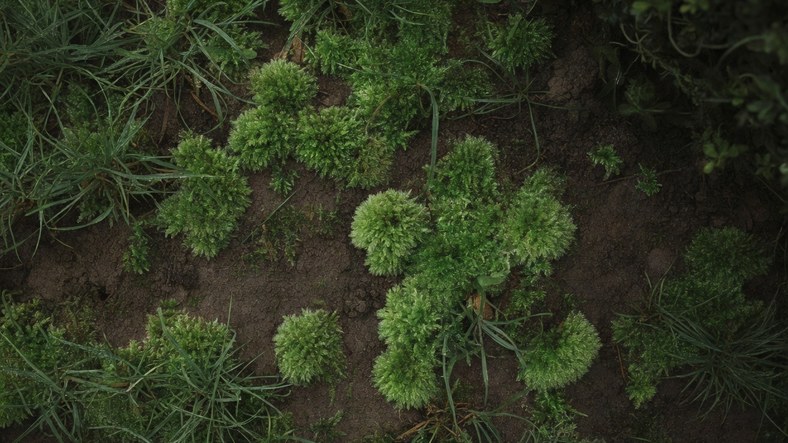
Moss is a symptom before it is a problem. It has no true roots, just tiny anchoring threads called rhizoids, so it cannot out-dig or out-feed a healthy lawn. It simply colonises the space that struggling grass leaves open. Kill the moss, rake it out and change nothing else, and the spores, which can travel for miles on the wind, will re-colonise the same spots. So before reaching for any product, spend ten minutes diagnosing. The usual culprits:
- Shade. Most lawn seed mixes want around six hours of light a day. Under trees, hedges and north-facing walls the grass thins and moss takes over.
- Compaction. Trampled routes, children's play areas and heavy clay squeeze the air out of the soil. Grass roots suffocate; surface-hugging moss does not care.
- Poor drainage. If the lawn squelches well into spring, moss has an ideal damp seedbed.
- Mowing too short. Scalping weakens grass badly, and the RHS lists cutting the grass too short as a direct cause of moss.
- Thin, hungry grass. Sparse or patchy growth from summer drought stress, heavy wear or a lawn that never gets fed leaves gaps that moss will fill.
- Acidic soil. Many mosses do prefer acid conditions, but this is the most over-blamed cause on the list. Shade, compaction and damp usually matter more, and liming a lawn to cure moss is often the wrong first move. Only consider it if a soil pH kit shows genuinely acidic soil and the other causes have been ruled out.
Walk the lawn and note where the moss actually is: under the tree, along the trodden path to the shed, in the hollow that stays wet. That map tells you which of the later steps deserve the most effort.
Kill the Moss Before You Rake
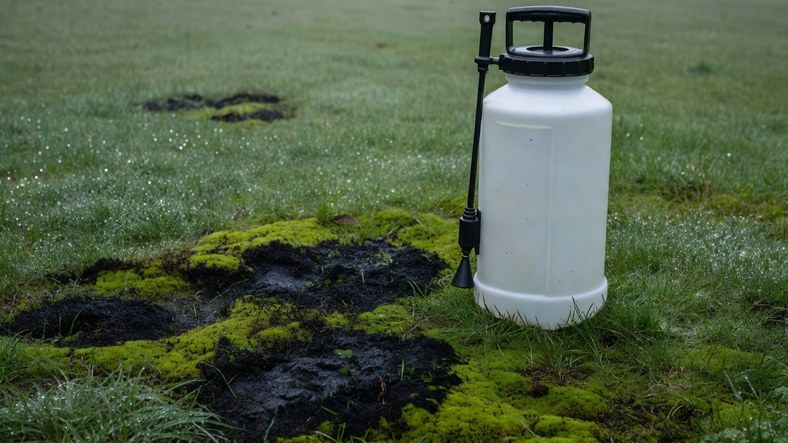
You can scarify live moss straight out, but killing it first makes the whole job easier: there is less bulk to rake, you are less likely to spread living fragments around the lawn, and dead moss turns black or brown so you can see exactly what still needs to come out.
Iron sulphate is the standard treatment
The main autumn moss killer in the UK is iron sulphate, also sold as ferrous sulphate or sulphate of iron, and the active ingredient in most lawn sand. It works by drawing the moisture out of the moss, which blackens and dies over 7 to 14 days, and as a side effect it deepens the green of the grass. Buy a product actually sold and labelled as a lawn moss killer: the RHS points out that plain iron sulphate marketed as a fertiliser is not approved for moss control, while a proper HSE-approved product carries the timing and rate instructions you need. Typical rates and methods from UK suppliers:
- Soluble powder is commonly applied at around 4g per square metre dissolved in water. Iron mixed into lawn sand goes on far more heavily, around 70g per square metre, and iron mixed into a lawn fertiliser at around 30g per square metre, because in those products the iron is only a small part of the mix. Always follow your label.
- With a watering can, mix into roughly 1 litre of water per square metre and apply through a fine rose or a sprinkle bar.
- A pump-action pressure sprayer covers the same area with far less water, at least 200ml per square metre and never less, which makes even coverage much easier on anything bigger than a pocket lawn. Our reviewed Spear and Jackson pressure sprayer is exactly this kind of tool.
Get the conditions right
- Apply on a cool, damp day with moisture in the soil; a dewy autumn morning is ideal. Skip frosty mornings and hot, bright spells, and avoid applying just before heavy rain, which can wash the treatment off before it acts.
- Mix with tepid water so it dissolves faster, use the batch the same day (it loses strength as the iron oxidises) and pour carefully, leaving the last gritty dregs in the bucket so they do not clog your nozzle.
- Wear gloves, and keep the solution off paths, patios and decking; it leaves rust-orange stains that are extremely hard to shift.
- Keep children and pets off the treated lawn for around 24 hours, or choose a non-staining moss treatment sold as safe for pets if that is impossible.
Two alternatives deserve a mention. Bacteria-based moss removers digest the moss over several weeks so there is little or nothing to rake out; they work more slowly and rarely clear it entirely, but they are useful where scarifying is not an option. Home remedies such as baking soda or washing-up liquid circulate online, but the RHS advises against them: they can damage the grass, they act as broad-spectrum insecticides, and they are not approved lawn treatments. And never use a weedkiller on moss. Glyphosate products do not kill moss but will kill the surrounding grass.
Scarify Out the Dead Moss and Thatch
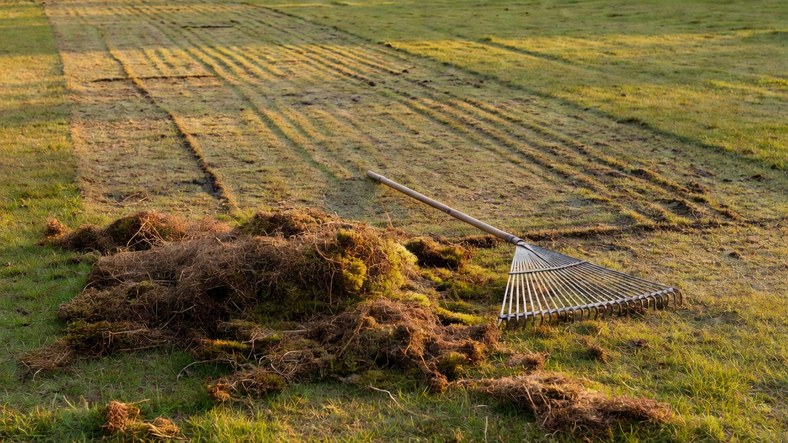
Once the moss has blackened, get it out within about two weeks, otherwise the dead layer sits there smothering the grass underneath. Scarifying does two jobs at once: it removes the dead moss and it tears out thatch, the wiry layer of dead stems and old clippings that holds moisture at the surface and gives moss its favourite seedbed.
When and in what conditions
Autumn scarifying works any time from September to early November while the grass is still growing strongly. Most UK specialists aim for September or October so the lawn recovers before the cold, and the RHS suggests October or early November where moss is the main target. Pick a mild spell, roughly 15 to 20°C, when the surface of the lawn is dry but the soil underneath still holds warmth and moisture. Scarifying a soaking lawn rips out healthy grass along with the moss.
How to do it
- Mow first, a touch lower than your normal cut (scarifier manufacturers suggest around 2cm for this one pass), so the tines can reach the moss at the base of the sward. Clear away any stones.
- On a small lawn, work over it vigorously with a spring-tine rake, first in one direction and then at right angles to it, so you lift as much dead material as possible.
- On anything larger, hire or buy a powered scarifier. Set the blades shallow so they just score the surface, a few millimetres deep, going deeper only where the matting is heavy. Keep the machine moving and lift the blades when you turn.
Brace yourself for the volume: a mossy lawn gives up a startling amount of debris, and it will look ragged and bare afterwards. That is normal, recovery is quick at this time of year, and the bare patches are exactly why the next two steps follow straight on.
Do not bin the spoils. Raked-out moss and thatch can be composted, though moss rots slowly in bulk, so mix it well with grass clippings and shredded autumn leaves rather than piling it in one wodge. A compost tumbler like the one we have reviewed makes the mixing and turning easy. You can also set a little moss aside in spring for the birds, which collect it for nesting material.
Aerate and Top Dress While the Soil Is Workable
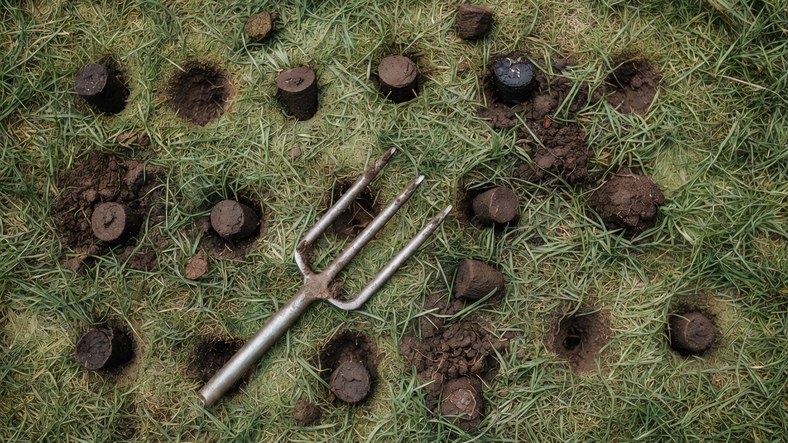
Compaction is one of the biggest hidden causes of moss, and autumn, with the soil soft but not yet saturated, is the time to relieve it. Aerating opens the root zone to air and water, drains the surface dampness that moss depends on and helps the lawn cope with winter wet and summer drought alike.
- For most lawns, a garden fork does the job. Drive it in as deep as the tines allow, wiggle it back and forth to widen the holes, and repeat in sets spaced 10 to 15cm apart. It is hard work, so concentrate on the compacted, mossy and heavily used areas, or cover a different section each autumn. Every two to three years is enough for a typical lawn.
- On heavy clay or waterlogged ground, use a hollow-tine aerator instead. Its open tubes pull out plugs of soil, typically to a depth of 7 to 10cm, which relieves compaction far more effectively. Sweep up the plugs, and expect to repeat every three to four years.
Follow aeration with a top dressing to keep those new channels open. The RHS recipe is three parts sandy loam, six parts sharp sand and one part well-rotted compost or soil improver, applied at 2 to 3kg per square metre, roughly a shovelful at a time. Brush it into the holes with the back of a rake or a stiff broom; it should soon disappear into the sward. On heavy soil this steadily improves texture and drainage, which is precisely the change moss dislikes most.
If part of the lawn still squelches deep into spring after this, the problem is bigger than aeration can fix. Installing proper drainage is a major project, so first ask whether that patch really wants to be a lawn at all; the final step covers the alternative.
Overseed Bare Patches and Feed for Autumn
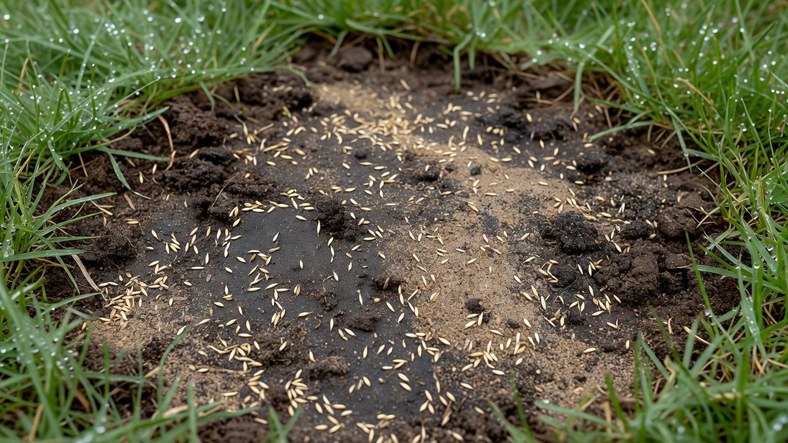
A scarified, aerated lawn is full of open ground, and open ground never stays empty: either grass claims it or moss and weeds do. Sow quickly, ideally within a day or two of scarifying, while the soil is warm and autumn moisture is reliable. Grass seed wants that warmth, so the earlier in autumn it goes down the better; seed sown much later than October tends to sit dormant through the cold and come up in spring instead.
Sowing
- Match the mix to the conditions you diagnosed in step one: a hard-wearing ryegrass blend for family lawns and worn routes, or a shade-tolerant fescue-based mix under trees. We have reviewed two solid options, Pronto Premium grass seed and GroundMaster lawn seed, if yours needs restocking.
- Rake the seed lightly into the surface so it makes good contact with the soil, then cover it with a thin layer of top dressing to hide it from birds and hold moisture.
- Keep the seeded areas moist for the first two weeks if the weather turns dry, and keep feet off until the new grass reaches about 5cm.
Feeding
Once the new seed has germinated, apply an autumn lawn feed, and make sure it is one formulated for autumn: lower in nitrogen and higher in potassium, so it builds roots and toughens the grass rather than forcing soft, leafy growth that winter diseases love. A spring or summer feed used now does more harm than good. Spread it evenly, about a handful per square metre by hand or with a calibrated spreader, ideally just before rain; water it in if nothing falls within a day or so.
Two sequencing cautions. Moss killer goes down before seed, at least a few days ahead, because iron sulphate stops new seedlings germinating well. And once you have overseeded, wait around 6 to 8 weeks before putting any more iron sulphate on that area. Run the steps in order (treat, scarify, sow, feed) and there is no conflict.
Fix the Conditions So Moss Does Not Come Back
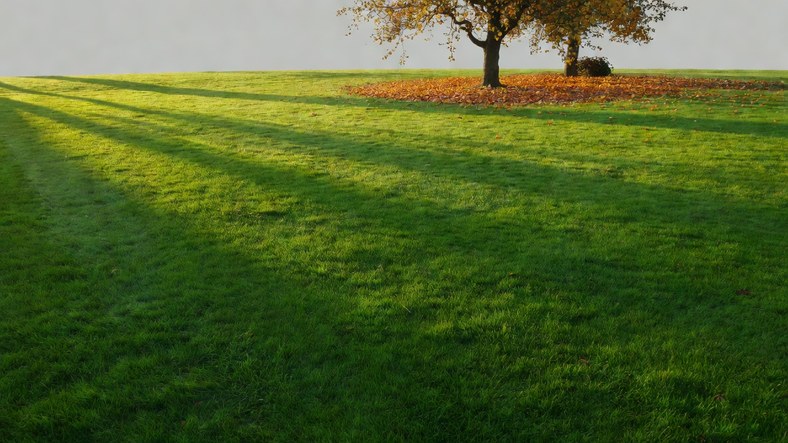
Here is the truth the product shelf does not mention: there is no such thing as a permanent moss killer, and the RHS is blunt about it. Moss spores are airborne, they travel for miles, and they germinate wherever they land on damp, thin, unloved turf. Everything so far clears this year's moss; this step decides whether you repeat the whole job every autumn.
Change what the moss was exploiting
- Raise the cut. Set the mower a notch higher through autumn and check your mower's cutting height guidance for your grass type. A slightly longer sward shades out establishing moss and keeps the grass strong.
- Let light in. Prune back overhanging branches and shrubs where you can, and rake fallen leaves off the lawn promptly; a leaf blanket creates exactly the dark, damp surface moss loves.
- Feed on a calendar. A spring feed and an autumn feed keep the sward dense enough that spores land on grass, not soil. A well-fed lawn is the best long-term moss defence there is.
- Stay on top of compaction and drainage. Re-spike the worn routes each autumn and keep working on the wet spots.
Hold the line over winter
If your lawn is moss-prone, do not go quiet from November to March. Light applications of iron sulphate every 4 to 8 weeks from late autumn through to early spring keep new moss suppressed and the grass a deep winter green. If the grass looks hungry in midwinter, a specific winter feed applied during a mild spell between December and early February keeps it fortified without forcing growth. Come spring, check the problem areas again and repeat whichever step needs it.
Or stop fighting in the worst corner
Where a patch is permanently damp and deeply shaded, grass may simply never win, and the RHS makes a case many gardeners are coming round to: let the moss have it. Moss is evergreen, soft, walkable and needs no mowing, and it shelters and feeds far more garden wildlife than struggling turf ever will. Alternatively, replant that patch with shade-loving ground cover. Artificial grass is not the escape hatch it appears to be, since moss will happily establish on that too.
Frequently Asked Questions
Can I just rake moss out of my lawn without killing it first?
You can, but killing it first makes the job noticeably easier. Dead moss shrinks and rakes out with far less effort, you are less likely to scatter living fragments around the lawn, and because it turns black or brown you can see exactly which patches you have missed. Only rake live moss out if you are against the clock, and be thorough about collecting it.
Is November too late to get rid of moss in a lawn?
It is usually too late for the full renovation, because scarifying and overseeding need the warmth of September and October to recover. If moss has taken hold in late autumn, switch to containment: repeat applications of iron sulphate every 4 to 8 weeks through winter, an autumn or winter feed to keep the grass strong, and a high mowing setting. Then do the full scarify and reseed job properly in spring.
Do baking soda or washing-up liquid kill lawn moss?
These home remedies circulate widely online and some guides still recommend them, but the RHS advises against using any household product on a lawn. They can damage the grass, they act as broad-spectrum insecticides that harm garden insects, and none of them is an approved lawn treatment. A proper iron sulphate based moss killer is more effective and far more predictable.
Why does moss keep coming back to my lawn every year?
Because no moss killer is permanent and the spores are airborne, moss returns wherever the conditions that first invited it remain: shade, compaction, poor drainage, close mowing or thin, hungry grass. Treating the moss without changing those conditions is a yearly loop. Fix the causes and each autumn's regrowth gets smaller, until it stops being a job at all.
Related Reading
Disclaimer: This article contains Amazon affiliate links. We may earn a small commission from qualifying purchases at no extra cost to you.