
When to harvest leeks UK: read the shank, not the calendar
Leeks are ready when the shank is thumb-thick and the flags stand stiff, not on a date. Early types come out from late August; hardy winter ones stand through frost and are lifted December to March. Here is how to read the row.
We earn commission from qualifying Amazon purchases. It costs you nothing and does not affect what we recommend.
Quick answer
The short answer to when to harvest leeks UK-wide is: early varieties from late August to November, hardy winter varieties from December to March. The signal that overrides the calendar is the shank, which should be at least thumb-thick (about 2.5cm) with stiff upright flags. Frost improves winter leeks, so lift as you need them and clear the row before they bolt in April.
Leeks are the most forgiving harvest on the plot: a leek is ready when it is big enough to be worth the trouble, and it stays ready for months. The catch is that "leeks" covers two different crops, a late-summer type that wants eating before winter and a hardy type that sulks if lifted early. Sort out which you have and most of the timing question answers itself.
Reading the row: the signals that settle it
All of these take a couple of minutes with a fork and your thumb. Read them together.
Shank diameter: thumb-thick is usable, 3 to 4cm is full size
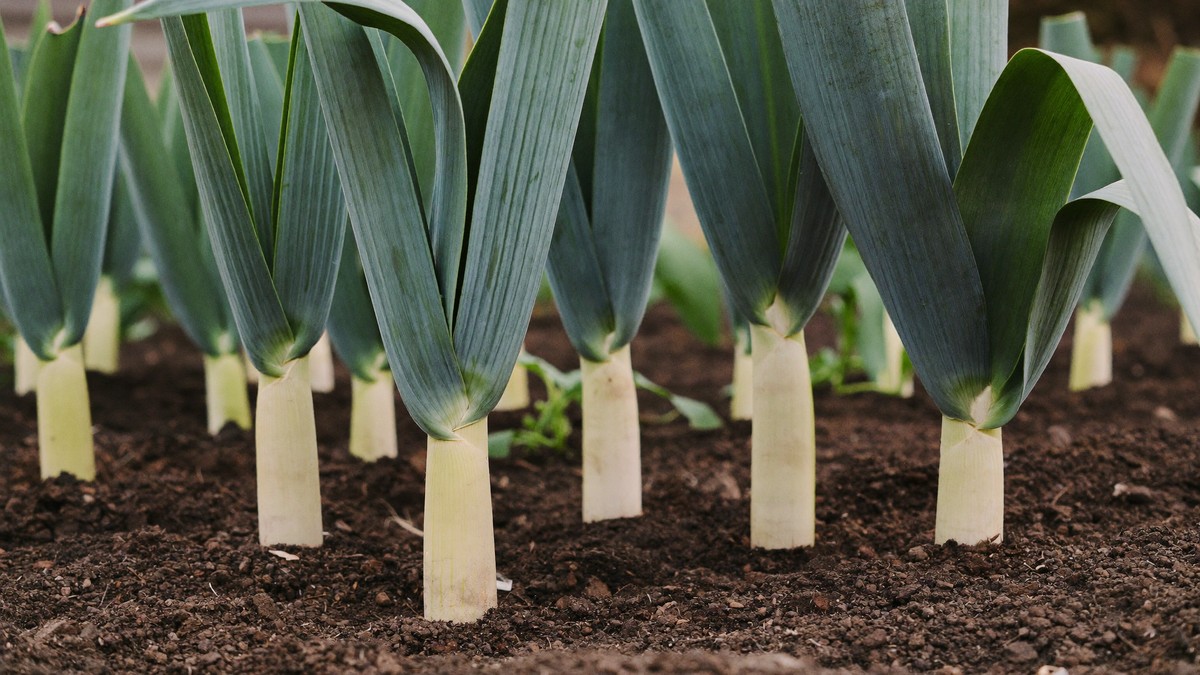
Put your thumb against the shank just above the soil. At least thumb-thick, around 2.5cm across, is a usable leek that will cook well. Around 3 to 4cm is a full-size leek of the kind you see in a shop. Thinner than a pencil is a baby leek, edible but not worth lifting unless you want them that way.
A thin leek in November is not unripe, just small, and a hardy type will keep fattening slowly through mild spells into the new year.
White shank length above the root plate
A leek dropped into a 15cm dibber hole in June usually shows 10 to 15cm of white above the root plate by autumn; earthed-up rows give more. Short white with a lot of green is not a reason to wait, because it will not lengthen much once the plant is mature. Lift it and use more of the pale green than you would from a bought leek.
Flags stiff and upright, or beginning to sag
The leaves, called flags, tell you about condition rather than size. A leek in good order holds them stiff and fanned out in a flat V. When the outer flags go limp, yellow at the tips and flop outwards, the plant has stopped growing: in autumn it has hit its size and is coasting, in late winter it may be gathering itself to bolt. Either way, start lifting the biggest.
Ground conditions and frost
Leeks are lifted, not pulled, so the state of the soil decides whether you can get at them. Damp, workable ground is ideal; waterlogged clay smears into every layer of the shank, and frozen ground will not take a fork at all.
Frost itself is no threat to hardy varieties. It is a flavour improver: cold converts starch in the shank to sugar, which is why growers of Musselburgh and Bandit will tell you not to bother until after the first proper frost. Early types like King Richard are less hardy and can be spoiled by a severe freeze, another reason to eat them by November.
The test-lift
If the row looks about right and you are not sure, lift one and cut it in half lengthways. A firm, tight, white centre with no woody core is ready. Soft or slimy in the middle means it has sat too long in wet ground or has leek moth in it. A hard, pale stalk running up the centre is a flower stem, and the whole row needs lifting within days.
Early, mid or late: which leek are you growing?
If you have lost the packet, the plant's build gives it away. Early types are tall, slim and paler green with a long shank; hardy winter types are shorter, thicker and darker, often with a blue tint to the flags.
Early and autumn varieties
King Richard, Jolant, Hannibal and the F1 autumn types are sown under cover in January or February, planted out in May, and ready from late August. They are at their best through September, October and November, stand a light frost but not a hard one, and go coarse if left into the new year.
Mid-season and late hardy varieties
Musselburgh, Bandit, Bleu de Solaise and Northern Lights are the ones your grandparents grew. Sown in March or April and planted out in June or July, they are slow to size up and not really worth lifting before December. They stand through hard frost and snow and are lifted as needed from December to March, which is when there is nothing else on the plot.
Grow both and there is never a gap. If you only grow one, a hardy type is the more useful in most UK gardens because it covers the hungry months.
Month by month, August to March
These dates are for the middle of England. Move them a fortnight earlier on the south coast, two to three weeks later in Aberdeen and the uplands, and accept that a warm autumn or a cold spring shifts everything by a fortnight from one year to the next. The shank settles what the calendar cannot.
August
Early varieties sown in January are approaching thumb-thick by the end of the month, and the first can go as baby leeks. Hardy types are still pencil-thin and need leaving alone. Water in a dry August: this is the month leeks put on size, and drought now is the usual reason for a thin crop later.
September
The main month for early types. King Richard, Jolant and Hannibal should be thumb-thick or better, so lift the biggest first and let the rest grow on. It is also peak month for leek moth and allium leaf miner, so check the flags for tunnelling and brown streaks as you go. Hardy varieties: nothing yet beyond watering and weeding.
October
Early varieties continue and should be cleared by the end of the month or soon after. Hardy types are starting to look like leeks and a few of the largest may be usable, though they are better for waiting. Take the first frost as the cue to stop watering and earth up the hardies one last time.
November
The last of the early types come out; anything left into December risks going coarse or being caught by a hard frost. Hardy varieties are close to full size but still improving. If a cold spell is forecast, lift a week's worth and heel them in.
December
Hardy varieties are ready. Lift on damp, unfrozen days, biggest first, and leave the rest standing; after a frost the shanks are noticeably sweeter. Keep a heeled-in reserve topped up so a frozen bed does not leave you short over Christmas.
January and February
Peak winter harvest. Leeks stand happily through snow and frost; the only problem is getting them out of frozen ground, which the heeled-in batch solves. In February, watch for the outer leaves splaying and a firm central stalk, the first sign of bolting.
March
Clear the row. Lengthening days trigger flowering, and once a leek pushes a flower stem the middle goes woody within a couple of weeks. Lift everything, use the best fresh, and heel in or fridge the rest. An empty leek bed in March is right on schedule for early potatoes.
Lifting a leek without snapping the shank
Pull a leek by the flags and you will be holding a handful of leaves with the shank still in the ground. The fork does the work.
- Pick a dry-ish day. Damp but not waterlogged, and not frozen.
- Push a fork in alongside the row. Vertically, 10 to 15cm to one side of the leek, as deep as the tines go, then lever back gently. You want the soil round the roots loosened, not the leek levered out on the fork.
- Lift by the base of the shank. Grip low, just above the soil, and draw upwards while the fork holds the ground open. If it resists, fork again from the other side rather than pulling harder.
- Trim roots and flags. Roots back to about 1cm below the root plate, flags down to a hand's width above where the white ends. Leaving some pale green gives you more usable leek than the shop-style trim. Shake off soil; do not wash unless you are cooking it today.
Lift only what you need for the next few days; the row is the store.
Leave them standing, heel them in, or fridge them
Three methods, used together: the row for the long term, heeling in as the reserve for frozen weeks, the fridge for what is already lifted.
In the ground until needed
The default. Hardy leeks lose nothing by standing through winter and gain sweetness from every frost. Keep the bed weeded so slugs have fewer places to hide, and resist lifting the whole row just because it is a nice day.
Heeling in before a hard freeze
Before a cold spell that will lock the soil, lift a week or two's worth, trim nothing, and bury the roots: either in a shallow trench in a spare corner near the house, leeks laid at an angle with the shanks above ground, or upright in a bucket of damp compost in a shed. Both keep for several weeks and can be picked out by hand whatever the ground is doing. The bucket is easier; the trench keeps them fresher.
Short-term in the fridge
A trimmed, unwashed leek in the salad drawer keeps for a week to ten days, wrapped loosely so the flags do not dry out. Do not slice it first; cut surfaces go slimy in a couple of days. For longer, slice, blanch for a minute and freeze for soups and stews.
What goes wrong, and how to recover
Bolting in spring
A leek that survives winter is a biennial at the end of its first year, and lengthening days in March and April tell it to flower. The first signs are the outer flags splaying and a hard, round stalk in the centre of the shank. Once that stalk is there the middle is woody and only good for stock. Recovery is speed: lift the whole row the moment you see it in one plant, because the rest are days behind.
Rust
Bright orange pustules on the flags, appearing from late summer and worst in warm, wet autumns on crowded rows. It looks alarming and does very little harm to the shank. Strip the worst leaves, cook the leek as normal, and bin or burn the strippings rather than composting them. Wider spacing and clearing all leek and onion debris at the end of winter reduce it next year.
Leek moth
Small caterpillars that tunnel into the flags and down into the shank, leaving brown streaks, windows in the leaves and a slimy centre. Damage peaks in September and October. Lift and use affected leeks now, cutting out the tunnelled parts, because the holes let rot in. Fine insect mesh over the row from planting is the only reliable prevention.
Allium leaf miner
Easy to confuse with leek moth. The giveaway is a line of tiny white dots on the flags where the adult fly has fed, and later small brown pupae like grains of rice between the layers of the shank. Lift and use what you can, bin the rest, and mesh the row next year in spring and autumn when the flies are active.
Snapped shanks and frozen ground
Both come from pulling instead of forking. A snapped leek is still fine to eat; fork out the rooted stub and use that too. If the ground is frozen, do not force it: wait for a thaw or take from the heeled-in reserve.
Frequently asked questions
Can I harvest leeks in August in the UK?
Yes, if they are an early variety sown in late winter and the shank is at least thumb-thick. King Richard and Jolant types are bred for this and are at their best lifted young from late August into October. A Musselburgh sown in April will be pencil-thin in August and is worth leaving until winter.
Do leeks need a frost before harvesting?
No, but it helps. Frost converts some of the starch in the shank to sugar, so hardy winter leeks taste sweeter and milder after a cold snap. Early varieties are meant to be eaten before frost arrives, so do not hold them back waiting for one.
How long can leeks stay in the ground?
Hardy varieties stand all winter and are usually the last crop cleared from the plot. The soil is the best store you have, so lift as needed from December to March. Clear the row before the plants push a flower stem in April, because a bolting leek turns woody through the middle.
Why are my leeks so thin?
Almost always spacing, water or a late start. Leeks planted closer than 15cm apart, transplanted late in July, or left dry through August stay thin. They are still perfectly edible; treat them like spring onions, or leave hardy ones to fatten a little more before spring.