
Pond Cover Net for Autumn Leaves UK: Blagdon's Clearview Catches Leaves. Three Charities Say What Else It Can Catch
We earn commission from qualifying Amazon purchases. It costs you nothing and does not affect what we recommend.
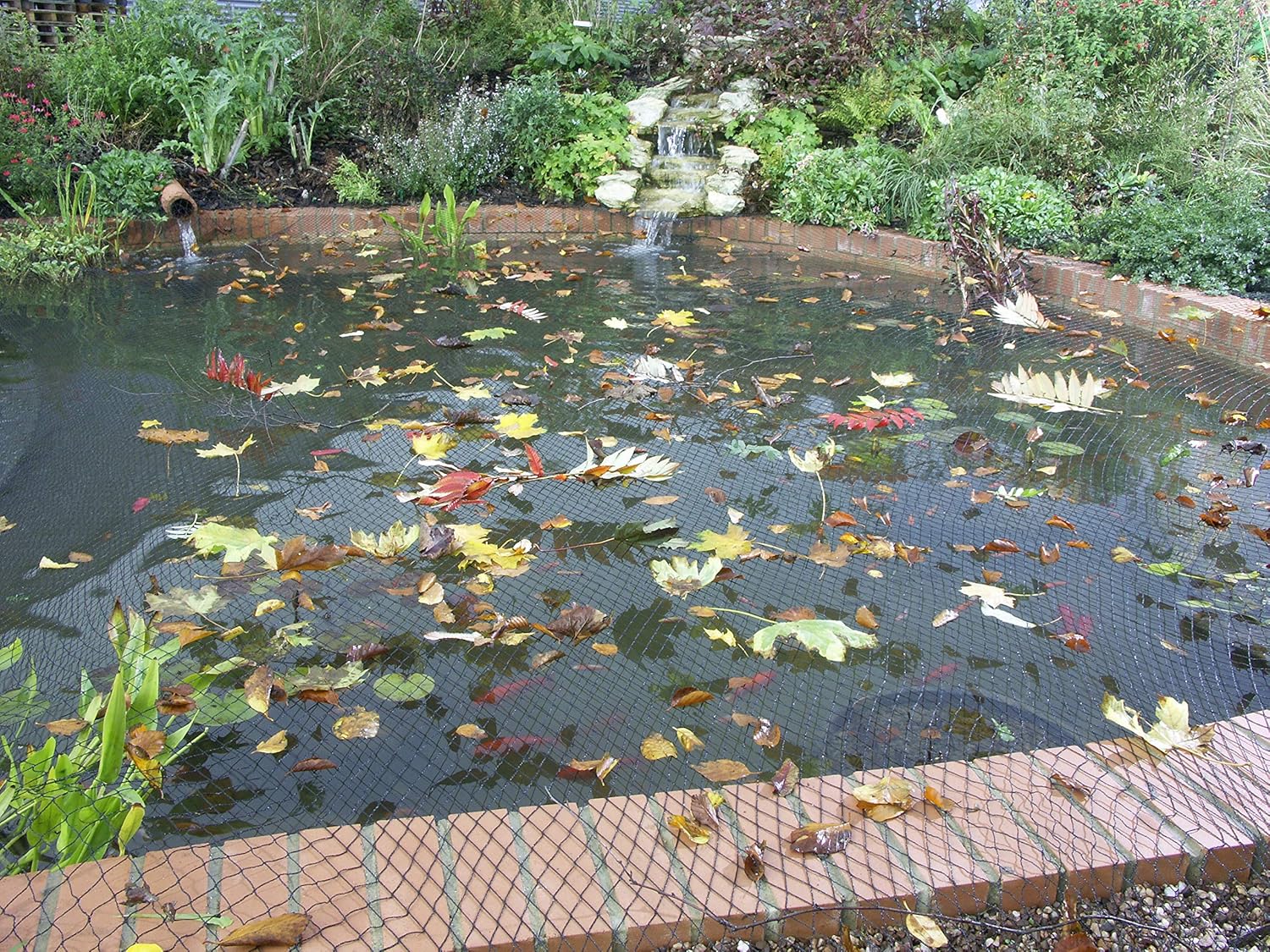
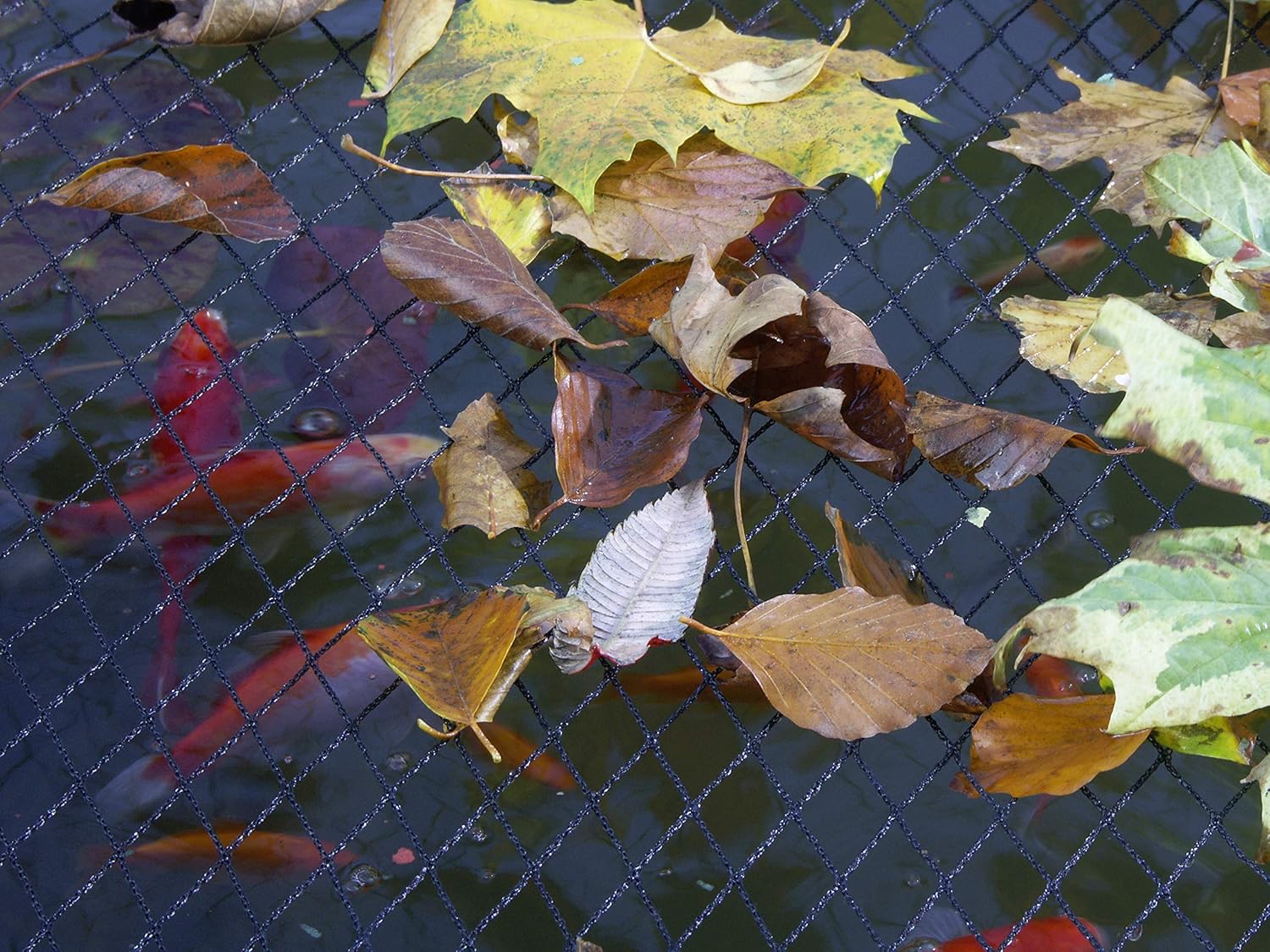
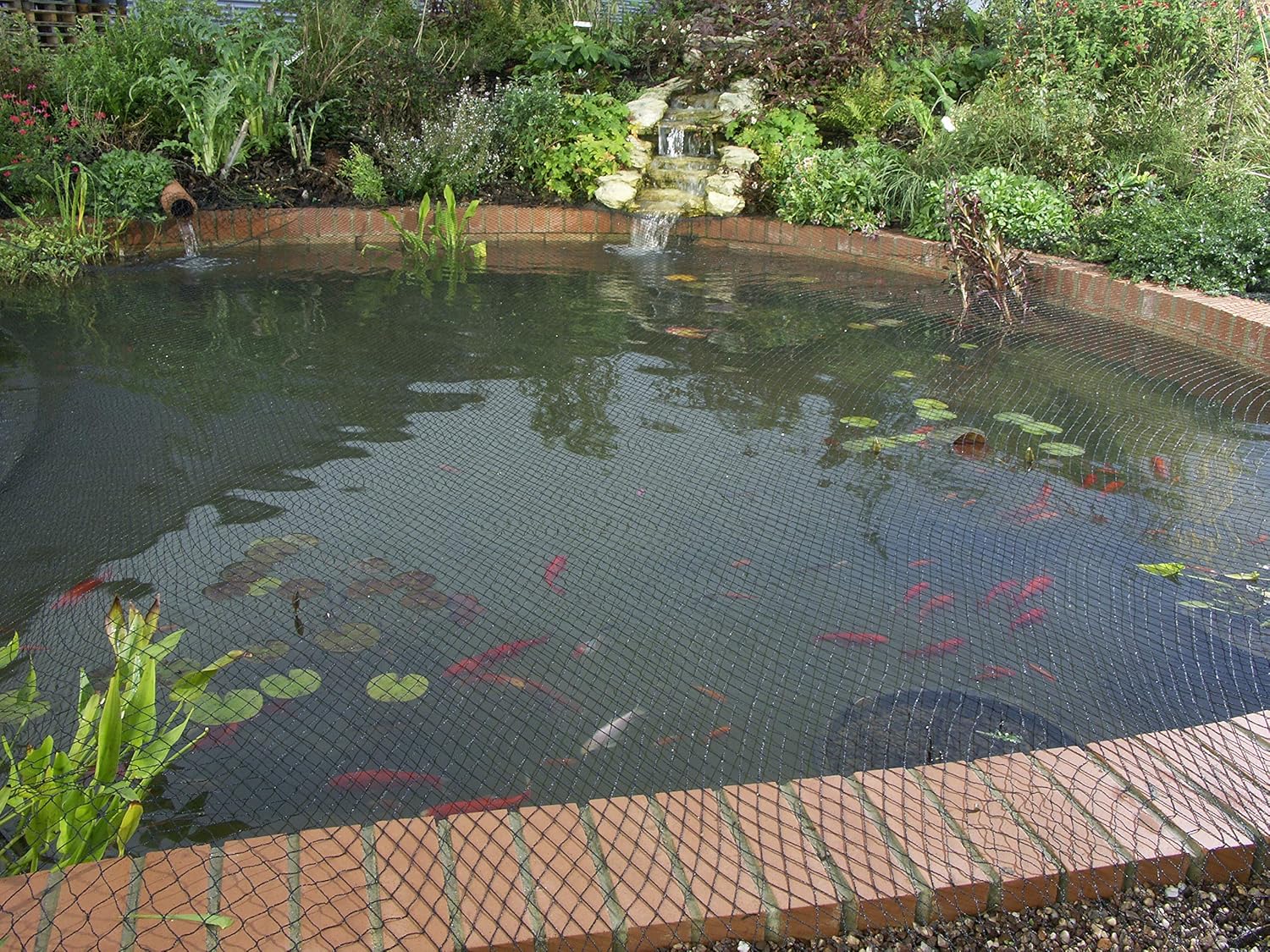
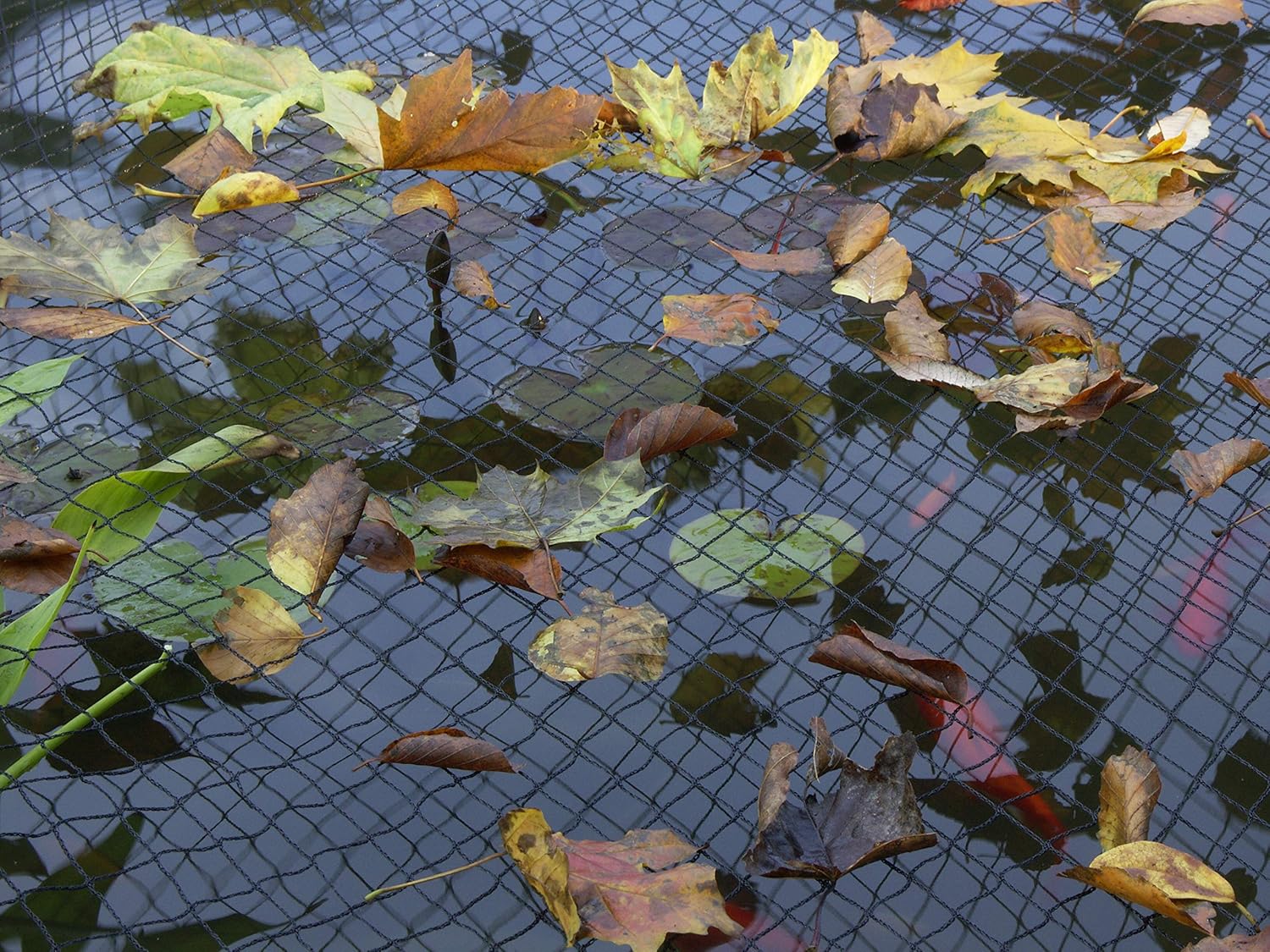
Blagdon's listing photographs show the Clearview doing exactly what a leaf net is for: a brick-edged pond in clear water, then the same pond under a drift of fallen leaves with the fish still visible beneath. They also show the net lying on the water, which is what Blagdon's only published tensioning advice, written for its raised pools, tells you to lift it clear of. Three UK wildlife charities advise against netting a pond, and ARC names what else a fine net catches: grass snakes, frogs and hedgehogs.
- The Only Leaf Report in the Reviews Comes From the 6 x 5 m
- Six Pegs, One Sentence of Instructions, and a Net Lying on the Water
- Three Metres by Two Is the Smallest Size Blagdon Makes
- What You Look At While It Is On, and Why These Buyers Actually Came
- Grass Snakes, Frogs and Hedgehogs: The Case Three Charities Make Against Netting a Pond
- On Before the Leaves Fall, Off When the Leaves Stop, and Our Score
Blagdon's listing photographs make the case for this net better than its five bullets: a brick-edged pond in clear water, fish and lily pads under a black mesh, then the same pond weeks into autumn, leaves drifted on the mesh with the fish still visible underneath.
Look longer and they show what the listing never mentions. The net is lying on the water: lily pads sit directly under it at the surface, and the leaves on top sit wet rather than held clear. Every piece of fitting advice we found says a pond net should be pulled tight, and Blagdon's own support page, written for a different product, says tight enough to lift it off the surface. Neither explains how, with six pegs.
So this review follows the 3m x 2m Clearview, smallest of six sizes, through the autumn it is sold for: what lands on it, where it sits, and who else it catches.
The Only Leaf Report in the Reviews Comes From the 6 x 5 m
The evidence: we could read only the 8 review cards Amazon prints on the listing page. All 8 are United Kingdom verified purchases, but the sample is filtered: 5 five-star, 2 four-star, 1 three-star, no one- or two-star reviews, averaging 4.50 against the lifetime 4.4 across 3,258 ratings. Amazon prints that same 4.4 on all six sizes, so the reviews are pooled across the range.
Only one of the 8 is about leaves, it is not about this size, and it is nearly 14 years old. Jennywren, 4 stars, November 2012, the set's most upvoted card: 'I purchased the Blagdon 6 x5 m clearview fine cover net'. That is the 30 m² version, five times ours; Blagdon sells all six as the same Clearview fine net, so what she says about the fabric and the leaves it held carries; her account of the size cannot. With 'very large trees very close' it 'caught trillions of leaves' in a few weeks and 'withstood the raking and sweeping to clear the fallen leaves from ontop of it' (sic). Raking is the step the listing skips, and it is yours: no source gives a frequency, so clear it whenever the mesh stops sitting clear of the water.
Why catch the leaves at all? Our guide to when to stop feeding pond fish has the mechanism and the month; Froglife's is a nutrient overload in autumn, algal blooms in spring. The RHS is more relaxed: net only 'if leaf fall is excessive', and 'don't worry if a few leaves end up your pond, as there is little evidence this is bad for pondlife'. The Freshwater Habitats Trust adds that leaves feed caddis flies. Stopping every leaf is not the aim, and what you rake off is raw material for our leaf mould guide.
Six Pegs, One Sentence of Instructions, and a Net Lying on the Water
The listing's entire fitting guide is one bullet: 'Simply stretch the net across your pond and secure with the fixing pegs provided'. Nothing on tension, height or peg spacing. The 3m x 2m has a 10 m perimeter and 6 pegs.
Blagdon publishes a tension instruction, but for a different product: its support page for its Affinity raised pools, which names 'the Blagdon Clearview Net 3 x 2m' as the material, says 'Stretch across and re-clip if more tension is need to lift the net from the surface of the water' (sic). That is a rigid-rimmed pool and fold-back clips, not a ground-level pond and pegs, and there is no Blagdon instruction for the pegged case. Its own photographs show the net at the surface.
Every source agrees on the tension. Amphibian and Reptile Conservation (ARC): 'Keep the netting taut at all times.' Two of the 8 raise it unprompted: Pete the instructor, 5 stars, staples his to a wooden frame, 'Make sure you stretch it to make it tight over the pond'; and Scotty H, the set's only 3-star review, found it 'difficult to stretch over the pond' because 'unless you work at it it's either too long or too narrow'. Scotty H is one reviewer, not a pattern, but his is the only detailed account of fitting it the way it is sold. rosie pollard did the opposite: 'only just draped it over the pond for now'.
So: fix the net to something with an edge you can tension against, the way Blagdon clips to a rail and Pete staples to a frame. Peg that edge down tight; it is the span across the middle that nothing in the packet holds up. The pegs are stakes 'for securing to ground' in Pete's words, so a slabbed or decked surround gives them nothing to bite, and a turf edge gives you nothing to raise the net against. No source we found solves that: give the pond an edge, or accept the net will rest on the water and clear it more often. Huck Nets, a netting maker rather than a wildlife body, says a pond net 'should be taut and sit a few inches above the water surface to prevent leaves or debris from sinking under the net'. Re-tighten it whenever you clear leaves off, and ARC asks you to 'regularly check it to re-tighten when necessary'.
Blagdon Clearview Pond Cover Netting 3m x 2m
A strong, near-invisible leaf and heron net for a pond under about 2.5 m by 1.5 m, held clear of the water rather than pegged flat, cleared of leaves and taken off when leaf fall ends. Not for a garden with grass snakes, frogs or hedgehogs.
Three Metres by Two Is the Smallest Size Blagdon Makes
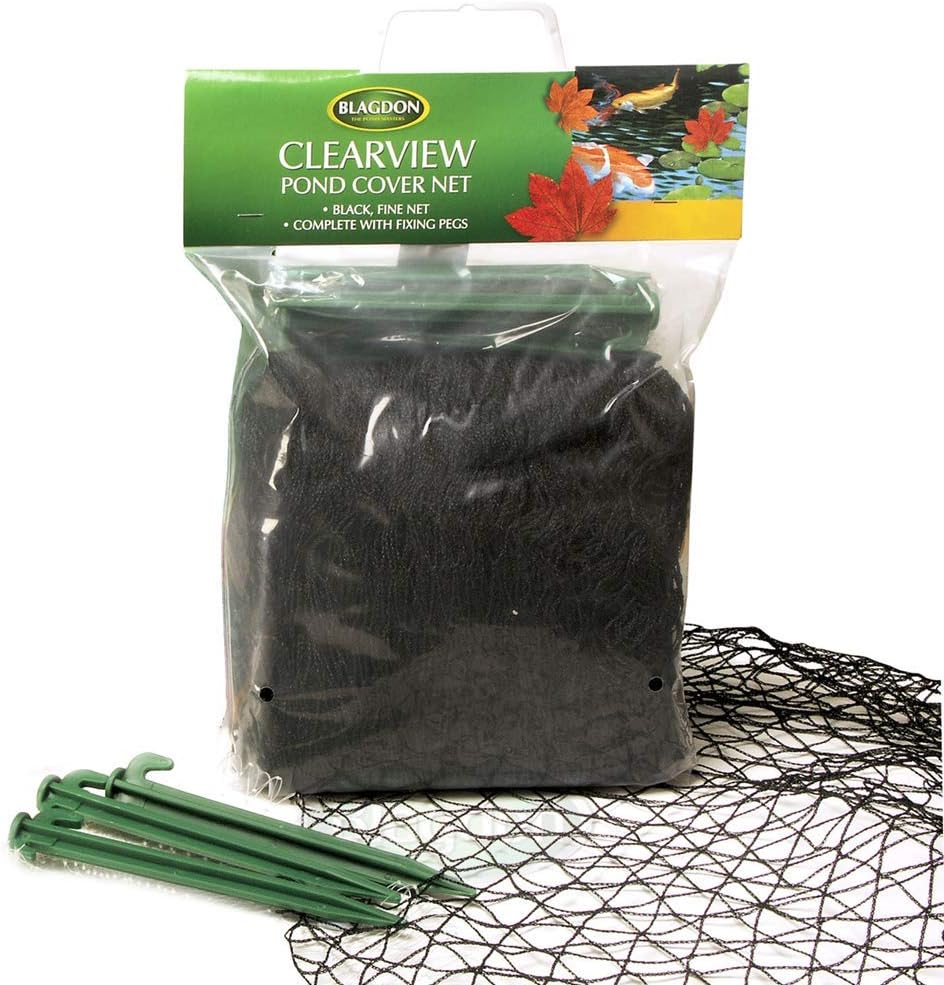
Six sizes, on Amazon's own comparison grid: our 3m x 2m at 6 m² with 6 pegs, then 4m x 3m, 6m x 3m, 6m x 4m, 6m x 5m and 6m x 10m at 60 m² with 14 pegs. Thrive, the gardening charity, says order 'at least 50cm larger than the width and length of the pond', which by our arithmetic makes ours a net for a pond no more than about 2.5 m by 1.5 m, measured at its widest points.
Two of the 8 bought bigger: Jennywren's 6 x 5 m, and IceCream, who bought larger to cut down and found it 'stretches out a fair bit'. That 50cm is not spare: it is what you grip, pin and lose to holding the net clear, so size up if the pond is near the limit, which is what Scotty H ran out of. At ground level the surplus ends as loose mesh, and ARC says snakes 'spend most time close to the ground', so fold it under and pin the perimeter; six pegs will not do that on their own, so buy extra pegs.
It is not a child or pet cover: the listing states no load it will hold, and the Wildlife Trusts and RHS send that worry to a wire grid or a fence.
If your pond is bigger than about 2.5 m by 1.5 m, buy the Blagdon Clearview Pond Cover Netting 6m x 3m instead: the same net at 18 m² with 8 pegs and the same pooled 4.4 badge. Buy extra pegs there too: 8 around an 18 m perimeter is one every 2.25 m by our arithmetic, wider than the 1.7 m on ours.
What You Look At While It Is On, and Why These Buyers Actually Came
These buyers mostly did not come for leaves: 3 of the 8 mention herons, one mentions leaves, though the listing's first bullet puts 'leaf pollution' first. Mike, 5 stars, had tried decoys and floating mats: 'The heron made a couple of attempts but was ultimately thwarted by this high-quality net.' Whichever job you bought it for, the fitting conditions above still apply.
The name is accurate: IceCream, whose first net was green, reports 'you can actually still see your fish and pond when looking through it', and a year on that it is 'still going strong'.
Grass Snakes, Frogs and Hedgehogs: The Case Three Charities Make Against Netting a Pond
ARC says 'Grass snakes in particular can become entangled in certain types of netting', that 'Loosely secured plastic netting that has very fine strands is the most problematic', and that trapped snakes 'may die a slow death'. Frogs, toads, birds and hedgehogs 'can get caught in such netting too'. Froglife's pond guide says 'Steer clear from using pond-netting'. The Wildlife Trusts, in a booklet published with the same RHS that is relaxed about a few leaves, say 'Avoid netting as animals might get caught', in a passage about children and pets rather than leaves. A fourth charity stops short: the RSPCA permits pond nets 'pulled tight and checked regularly', and rescues 'hundreds of animals a year' tangled in netting.
ARC's netting leaflet puts numbers on it: 'For snakes, the worst type of netting has very fine, flexible strands, with a mesh size between about 1 and 3cm', so use 'a mesh size of at least 5cm' with cord at least 3mm thick, or rigid wire, or a mesh under 0.5cm. Under the heading 'Hazardous netting' it describes 'Plastic netting with a mesh size of around 2cm' as 'commonly used over ponds to deter herons or prevent leaves falling in'.
Where does the Clearview sit? Blagdon does not say. The only figure in circulation is retailer Pondkeeper's 'Mesh gauge (approx.): 2cm', and that retailer's page for the 6m x 4m prints 2cm and '25mm' side by side without choosing. So we cannot tell you this net is 2cm. We can tell you every published figure for it sits inside the 1 to 3cm band ARC calls the worst, and that Blagdon publishing nothing is what stops you checking. Strand thickness is in ARC's test too, and the sources contradict there as well: Amazon's 'Strong Double Weave' against Pondkeeper's 'Strong single strand nylon', with Blagdon silent.
Our answer splits on the pond. For a fish pond we stand by our own pond-feeding guide, linked above, which says net in September. It gives the month and not the fitting: nothing about tautness, checking or wildlife, so those conditions are ours, not its. If yours is a wildlife pond, or grass snakes, frogs or hedgehogs use your garden, take the charities' route: ARC's 'specialist metal or rigid plastic pond grilles', or a wide-mesh braided cord net kept taut; a wire grid that still lets frogs in and out (Wildlife Trusts and RHS); daily leaf removal by hand net, or cutting back nearby trees (Froglife). None is a product we can send you to on Amazon: we searched and found nothing there well enough reviewed to recommend. The mesh figures are no more settled than the strands: Huck Nets, a netting maker, says 'A 28mm mesh size is good for catching leaves'; a 5cm mesh, on our reading, would let most leaves through; and no wildlife body publishes a leaf-catching mesh at all.
Check the edges, not the middle. Find something trapped and ARC's instruction is to cut rather than pull: 'Very carefully snip the netting around the snake's body using scissors (nail scissors are often best)', and 'Do not kill a trapped snake. All British snakes need our help, and are in fact protected by law.' The RSPCA's 24-hour line is 0300 1234 999.
On Before the Leaves Fall, Off When the Leaves Stop, and Our Score
On timing they line up at first: Thrive says 'The best time to net a pond is in autumn, before too many leaves fall', and our guide says the same under September. After that only Thrive commits: 'The net can stay on through winter'. ARC and the Wildlife Trusts argue about the netting itself rather than the calendar, and no UK authority we could find publishes a take-it-off date. Ours is a recommendation, not a published instruction: the net catches falling leaves, so once the trees are bare it has stopped doing its job while the entanglement risk carries on. Take it off when leaf fall ends, then store it where snakes cannot reach it (ARC), at least 30cm off the ground (RSPCA). That is leaf reasoning, and 3 of the 8 bought for herons: leaving it up past leaf fall runs the risk on, so that reader takes on the checking, or fits a rigid grille. ARC and the RSPCA both say check it regularly and neither says how often; our own rule is to look along the edges whenever you pass the pond and whenever you clear leaves off.
Our score is 4.0 out of 5, below the 4.4 badge and deliberately so: 8 filtered cards cannot speak for 3,258 ratings, and none of the numbers price in a pond with grass snakes, a net with no published mesh figure, or fitting advice for a different product. The reviews establish that it is strong, see-through, and catches leaves at the right size.
Buy the 3m x 2m if your pond is under about 2.5 m by 1.5 m, you have an edge to tension it clear of the water, and you will clear the leaves, check the edges and take it off when leaf fall ends. Buy the 6m x 3m if the pond is bigger, with extra pegs. Skip fine flexible netting if grass snakes, frogs or hedgehogs use your garden, and with grass snakes, assume they do unless you know otherwise: take the leaves out by hand, or fit a rigid grille or a wide-mesh braided cord net kept taut.
Blagdon Clearview Pond Cover Netting 3m x 2m
A strong, near-invisible leaf and heron net for a pond under about 2.5 m by 1.5 m, held clear of the water rather than pegged flat, cleared of leaves and taken off when leaf fall ends. Not for a garden with grass snakes, frogs or hedgehogs.