When to lift dahlias in the UK: read the foliage, not the calendar
Frost, not the date, tells you when to lift dahlias in the UK. Here is what to look for on the plant, how it changes from Cornwall to Scotland, when leaving them in the ground is a fair choice, and how to dry and store the tubers so they come through to spring.
We earn commission from qualifying Amazon purchases. It costs you nothing and does not affect what we recommend.
Quick answer
In the UK, lift dahlias once the first hard frost has blackened the foliage, which usually means late October to mid November, earlier in Scotland and later on the south coast. If no frost has arrived by early December, lift anyway. On free-draining soil in a mild area you can leave them in the ground under a thick mulch instead.
The question of when to lift dahlias in the UK has a calendar answer and a plant answer, and the plant answer wins. Frost is the trigger: a hard frost kills the top growth, the plant stops feeding the tubers, and the crown shuts down for winter. Lift after that point and the tubers have finished bulking up, which is what you want going into storage.
What follows is mainstream UK horticultural guidance with the regional variation left in. Where growers disagree, we say so and say which way we would go.
What the plant is telling you
Look at the dahlias before you look at the forecast. Ninety seconds in the border settles it.
Foliage blackened by frost
This is the signal. After a proper frost the leaves go from green to a limp, blackened, almost translucent mess overnight, and the stems collapse with them; Bishop of Llandaff, with its dark bronze leaves, turns from glossy to soggy in a single night. When you see that, aim to have the tubers out within about a week, before the collapsed stems channel rain into the crown.
A light air frost that only nips the top leaves does not count; if most of the plant is still green and firm the next morning, there is no rush.
Still green in a mild November
Plenty of gardens in the south and west go through the whole of November with dahlias still flowering. Cafe au Lait and the big dinner-plate types keep blooming as long as the nights stay above freezing, and green foliage means the tubers are still being fed, so you lose nothing by waiting. Watch the soil instead: once the ground stays wet for days after rain, the risk shifts from frost to rot, and it is worth lifting whatever the top growth looks like. Early December is the backstop either way.
In the ground versus in pots
Compost in a pot freezes faster and harder than open ground, so a pot left outside through a cold snap can lose the whole tuber. The upside is that a pot can simply be moved: once the foliage has died back, stop watering, carry it into a shed and you are done.
Border dahlias cannot be moved, so the choice is lift or protect in place. Pompon and small bedding types on light soil are the best candidates for leaving in; dinner-plate and named varieties are the ones to lift.
Heavy clay versus free-draining soil
Dig a small hole beside the plant after rain. If water sits in it for more than an hour, that soil will rot a tuber over winter, and lifting is the right call. If it drains away, the tubers have a fair chance under mulch, provided your area does not get prolonged hard frosts. Raised beds and sandy or chalky soil in the south are the classic leave-in situations.
Mild coastal versus cold inland
First frost dates move by weeks across the UK and by a fortnight between years, so treat any date as a starting point to adjust. Coastal Cornwall, Devon and Scilly may not see a killing frost until December, or at all in a mild year. The Midlands and the south east typically get one between late October and mid November. Inland Scotland, the Pennines and the North York Moors can be blackened by early or mid October. Frost pockets run earlier; walled town gardens run later.
Lift them or leave them in the ground?
Growers disagree here, and both sides have a point. The case for leaving dahlias in is that the tuber tolerates cold better than people assume, plenty of southern gardens have had them come back for years under mulch, and lifting is a fortnight of fiddly work. The case for lifting is that a wet UK winter kills more tubers than a cold one, and a lifted tuber can be inspected, divided and started early under cover.
It comes down to soil drainage, how cold your area gets, and how much you would mind losing that plant. Free-draining soil, mild area, replaceable variety: leave it in, cut the stems to 10 cm and pile at least 10 cm of bark, compost or straw over the crown. Heavy soil, cold inland spot, or a variety you spent months tracking down: lift it. Our view is to lift anything you care about and experiment with the rest; a leave-in gamble that fails is discovered in June, when it is too late to buy replacements.
Month by month, September to March
September
Nothing to lift yet; the tubers are still being built by all that foliage. Deadhead, stake anything top heavy, and tie a label to each stem now while you can still see which variety is which. In November everything is a black stump.
October
The watching month. Scotland, the north and inland frost pockets may get a killing frost any time from the start of October, in which case lift within the week. Everywhere else, stop feeding and check the plants after any clear, still night. If you plan to leave any in, have the mulch ready to go on the moment the foliage blackens.
November
The main lifting month for most of England and Wales. If frost has blackened the foliage, lift and start drying. If the plants are still green, by mid November on heavy soil we would lift regardless, because the ground is only getting wetter and tubers dry very slowly in a cold, damp shed.
December
The backstop. Anything still in the ground comes out in the first half of the month, frost or not. Tubers already in store get their first proper check: soft patches, mould on the medium, any sign of mice.
January to March
Check the store once a month; firm tubers with intact skins want nothing doing. In March in a greenhouse, or April without one, pot the tubers up in barely damp compost to start them into growth, and plant out after the last frost, late May or early June for most of the UK.
How to lift and store the tubers
Cut back the stems
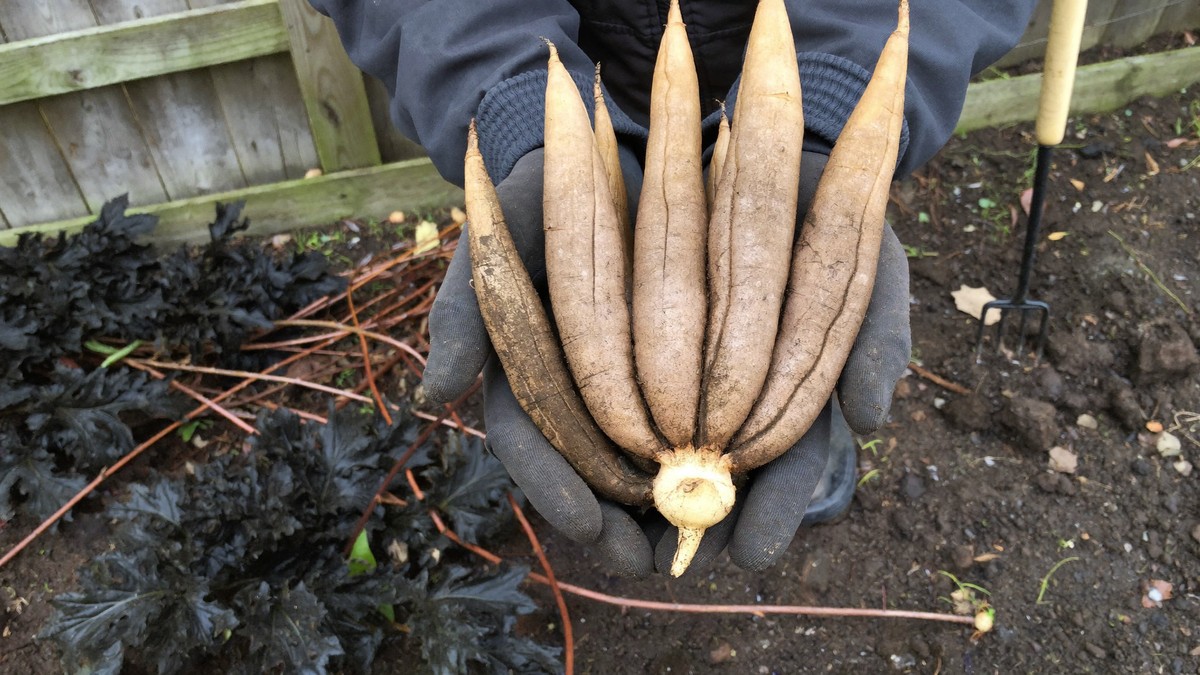
Cut every stem down to 10-15 cm above the soil with secateurs or loppers. That stump is your handle for lifting and for hanging the clump upside down later, so do not cut it flush, and leave the label attached to it.
Lift with a fork
A dahlia clump spreads wider than the stems suggest, and the tubers hang off the crown by thin necks that snap if you lever against them. Push a garden fork in a full 30 cm out from the stems on all four sides, going straight down before you lever. A fork beats a spade because it slides between tubers rather than slicing them.
Most of this job is done crouched at ground level. If your knees do not enjoy that, a padded garden kneeler with handles makes the cleaning and labelling stage far more comfortable.
Clean and drain upside down
Shake off as much soil as will come away, and on clay rinse the clump with a hose, because soil packed between the tubers holds water. Trim any tuber that is broken, soft or speared by the fork back to firm flesh.
Now hang or stand the clump upside down somewhere frost free with air moving through it: a greenhouse bench, a garage, a shed with the door propped open on dry days. Dahlia stems are hollow and hold water; draining them is the single most important step in stopping crown rot. Give it one to two weeks. Dry enough means the skin has gone slightly leathery and dull and no water runs out of the stems when you tip the clump. Stop before they wrinkle.
Label and pack in dry medium
Label every clump, then nestle the clumps crown side up in a dry medium in a crate, cardboard box or slatted tray. Dry multi-purpose compost is what most people already have; a bag of Growmoor multi-purpose compost left open in a dry shed for a week does the job. Vermiculite is lighter and holds a little moisture without going soggy, dry sand works, and scrunched newspaper around each clump is the cheapest option.
Cover them loosely and leave the box open or with holes for airflow. Sealed plastic bags and lidded tubs trap moisture and are the fastest way to lose the lot.
Store cool and check monthly
The target is frost free, cool and dark: above freezing, below about 10 degrees C. An unheated garage, a frost-free shed or a cool spare room all work. A heated house shrivels them; a shed that freezes for one night turns them to mush, so if that is all you have, wrap the box in fleece and get it off the floor. Once a month, unpack and squeeze each tuber. Five minutes is the difference between viable tubers in March and a box of compost.
What goes wrong and how to recover
Rot. A soft, dark, sour-smelling patch on a tuber or at the crown. Cut it out back to firm, pale flesh, let the cut surface dry for a day or two, then repack in fresh, dry medium. If rot has reached the crown, salvage any tubers with an intact neck and firm body, and bin the rest.
Shrivelling. Tubers going wrinkled and light means the store is too warm or the medium too dry. Move the box somewhere cooler and lightly dampen the medium, not the tubers. Badly shrivelled but still solid tubers can be soaked in tepid water for a few hours, surface dried and repacked; papery, hollow ones are past saving.
Frost getting into the store. Frozen tubers thaw to mush and there is no recovery, so prevention is the only fix. Keep the box off the floor and away from the shed wall, wrap it in fleece, and on a night with a hard frost forecast bring it into the coolest room of the house.
Mice. Gnawed tubers and droppings in the medium. Swap the cardboard box for a crate with fine mesh over the top and set traps beside it. A partly eaten tuber with the crown intact still grows.
Stored wet. Tubers boxed before the stems drained, or packed in damp compost, start rotting within weeks. Unpack the lot, dry them again for a week, cut out soft patches and repack in bone-dry medium. This is the most common way a whole box is lost.
Frequently asked questions
Can I leave dahlias in the ground over winter in the UK?
Yes, in a mild area on free-draining soil, under at least 10 cm of mulch, accepting that a wet winter may kill some. On heavy clay, from the Midlands northwards, or for any variety you would hate to lose, lift them. Months in cold, wet soil rot a tuber faster than cold alone.
Do I have to wait for frost before lifting dahlias?
No, frost is the ideal signal rather than a requirement. Waiting lets the plant finish feeding the tubers, which improves storage. If you need the bed cleared or the ground is turning to mud, lift from mid October and give the tubers a longer drying period to make up for it.
What if there is no frost by December?
Lift them anyway in the first half of December. Mild autumns are common on the south and west coasts, and there is no benefit in leaving tubers in soil that gets colder and wetter every week. Cut the stems down as if frost had done it, then follow the normal lift, dry and store routine.
Can I lift dahlias grown in pots, or should I leave them in the pot?
Either works. The simplest option is to cut the stems back, stop watering, and move the whole pot into a frost-free shed until spring. If you need the pot, tip the tuber out once the foliage has died back, shake off the compost and store it in dry medium like any other.
How do I know if a stored dahlia tuber is dead?
Squeeze it. A live tuber is firm, like a raw potato, with the neck to the crown intact. A dead one is either mushy and sour smelling, which is rot, or papery and hollow, which is terminal shrivelling. A slightly soft tuber with firm flesh inside is worth potting up in March to see if it shoots.