
Butterfly Netting For Cabbages And Kale UK: What Size Are The Holes?
We earn commission from qualifying Amazon purchases. It costs you nothing and does not affect what we recommend.
The packet makes two promises: no birds, and no cabbage white butterflies. Only one of those survives contact with a hundred UK reviews.
- Two Different Jobs, Printed On The Same Label
- Against Birds, A Clean Sheet Across 100 Reviews
- Against Cabbage Whites, Six Growers Say It Failed
- Two Buyers Put A Number On The Mesh. The Manufacturer Never Did.
- Draped Flat Or Raised On Hoops? The Label Treats Them As Equal
- Why Some 'Too Small' Reviews May Not Be About This Roll
- What Happens After The First Season
- Who Should Buy This, And Who Needs A Finer Mesh
Somewhere on this listing there ought to be a number. Mesh netting lives or dies by the width of its holes, and anyone who has watched a row of kale turn to lace in August already knows it. Gardening Naturally sell this as bird and butterfly netting, the label on the roll says it stops cabbage white butterflies, and the Amazon bullets promise reliable protection for brassica plants.
Not one of them says how big the gaps are.
That silence turns out to be the whole story, because the 100 most recent UK reviews split cleanly along exactly that line. On birds there is no argument whatsoever. On cabbage whites, six growers say the butterflies got in anyway, and two of them describe standing there watching it happen. Both camps bought the same netting.
Two Different Jobs, Printed On The Same Label
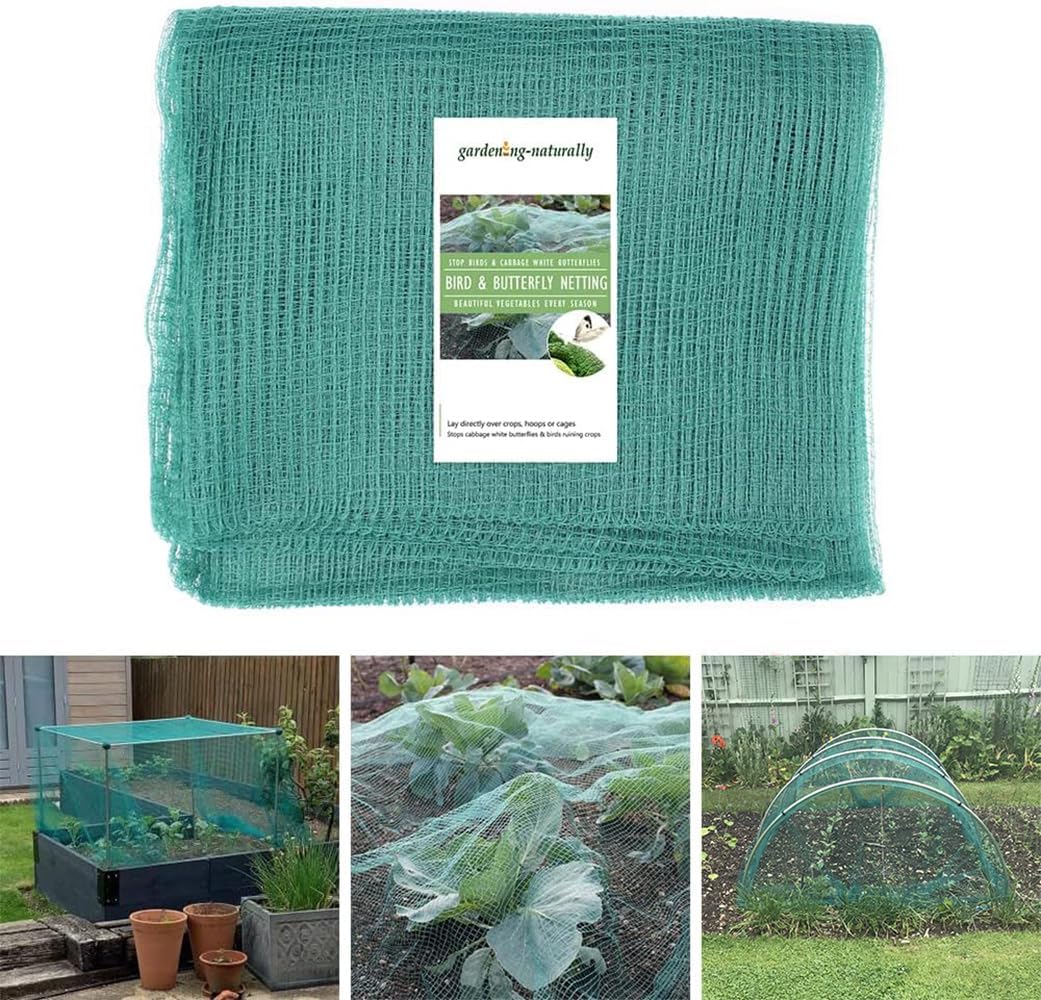
Worth noticing before anything else: the Amazon title and the physical packaging are selling slightly different things. The listing calls it Anti Butterfly Netting for Garden Fruit Crop Protection. The label wrapped around the folded roll reads BIRD & BUTTERFLY NETTING, with STOP BIRDS & CABBAGE WHITE BUTTERFLIES across the top and Stops cabbage white butterflies & birds ruining crops in the panel underneath. Birds are not a footnote here. They are half the pitch.
The material is high-density polyethylene, UV stabilised, and the listing leans hard on how it feels, describing netting that is soft to touch rather than the rigid, abrasive stuff you may have fought with before. The roll reviewed here is 2m x 5m, and the same listing sells other widths. Mounting advice on the label is refreshingly short: lay directly over crops, hoops or cages.
One bullet also suggests using it to cover ponds against falling debris and herons. Across all 100 reviews, nobody mentions a pond and nobody mentions a heron. Whatever else people are buying it for, it is not that.
Against Birds, A Clean Sheet Across 100 Reviews
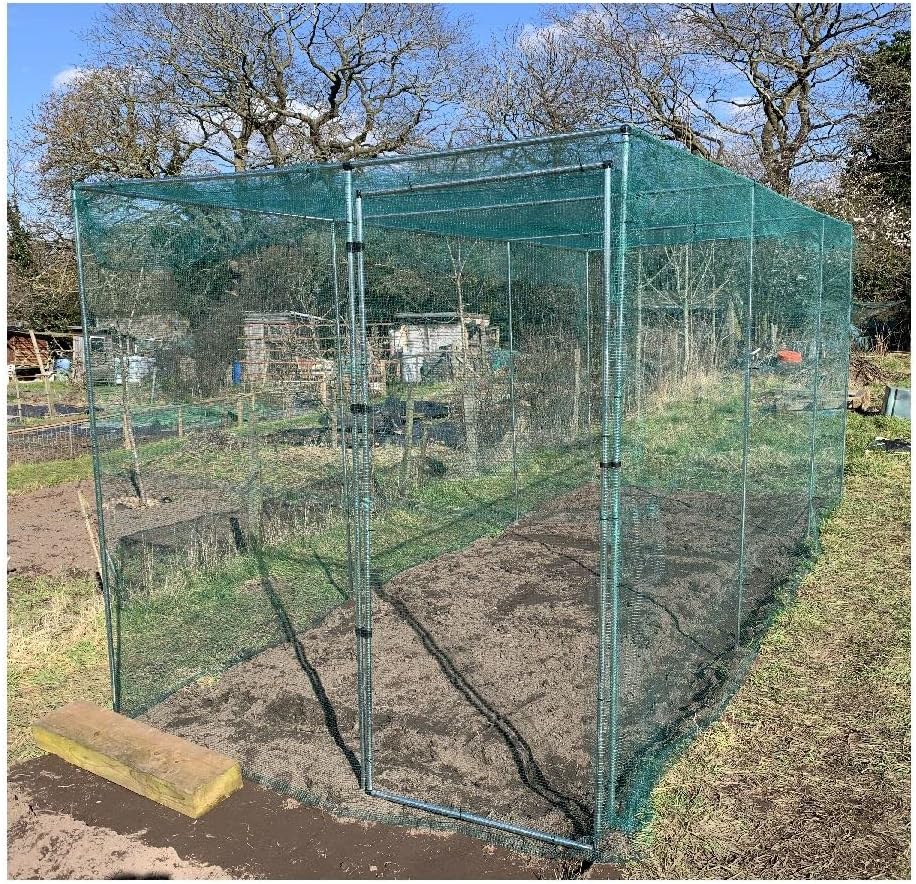
Start with the part that is not in dispute. Thirteen of the 100 reviews report birds or pigeons being kept out, and no review reports a bird getting through. Not one. For a product whose entire job is exclusion, that is a striking result.
The reports are specific rather than vague. One five-star buyer had "a problem with Pigeons eating my grass seed" and says "It has successfully kept them out and grass is growing." Another says "Really stopped the birds eating my cherries. Will use every year". A third had been fighting the same battle for seasons: "Have tried various covers over the years but this netting is by far the best solution."
It works on bare soil too. A reseeded lawn came through with "No bird problem as in previous years." and one four-star allotment holder who had birds "peck them to shreds" fitted it over cabbages and reports simply that "they did the job." Even one of the three-star reviewers whose complaint is about butterflies concedes the point without hesitation: "Worked fine against the birds".
If pigeons on your brassicas, or blackbirds on your currants, are the reason you are shopping, the review record here is about as clean as it gets. Check today's price on Amazon.
Against Cabbage Whites, Six Growers Say It Failed
Now the argument. Six of the 100 reviewers state that cabbage white butterflies got past this netting, and their language is not gentle about it. A one-star buyer who bought three lots writes that "The holes are to big and they get through, brassicas ruined already!" (sic). Another one-star is blunter still: "This is not by any stretch of the imagination butterfly proof. The cabbage white pass through the netting with ease to wreak havoc upon my brassicas."
Two of the six did not just report a failure, they watched the method. A three-star reviewer reports: "I watched them land on the netting, close their wings & drop through but then unable to get back out again." A four-star reviewer describes the same manoeuvre independently: "They will flip their bodies through (I have watched them do it)." Two people, in separate years, describing a butterfly folding itself through the same mesh.
The other two are more measured. One three-star found the netting easy to cut and strong, but "the ever inventful butterfly found a way through to my brassica." Another says it does not keep the white cabbage butterflies off "unless you double layer it and fix it several inches above the vegetables."
Set against that, 15 reviewers report the opposite outcome, and they are equally concrete. One repeat buyer with a plot "plagued with cabbage white butterflies" says "It is brilliant and is keeping the butterflies off my crops saving me time and energy." Another had lost the lot the previous year: "I bought this because last year the butterfly got all my cabbages. But not now". A third reports "no butterflies/caterpillars accessing the plants."
One pattern is worth flagging, because it cuts against the usual shape of these things. Every single one of the six failure reports carries four stars or fewer. Not one five-star reviewer reports a butterfly getting through. The people who rate it top marks and the people who say it leaked are two separate groups, which makes both sets of accounts harder to wave away.
Gardening Naturally Soft Green Anti Butterfly Netting for Garden Fruit Crop Protection (2m x 5m)
Soft HDPE crop netting that UK growers rate 4.5 stars, with a spotless record against birds and pigeons across 100 recent reviews. Lays flat over crops or stretches over hoops and cages.
Two Buyers Put A Number On The Mesh. The Manufacturer Never Did.
Here is what makes this dispute so frustrating to settle. The bullets do not give a mesh aperture. The product description field is empty. We opened all four listing images at full size, including the label and the close-ups, and there is no spec panel, no dimension diagram and no aperture figure anywhere on them. The one number that would let you decide before buying is simply not published.
So two buyers put a number on it themselves. A five-star reviewer describes netting that is "Very strong with about 7mm x 9mm mesh" and signs off hoping it will keep the cabbage whites out. A four-star reviewer titles their review "Note for butterflies 7mm is too big." and adds that "5mm square is needed and make sure they can't crawl under!"
Read those together and something interesting falls out. The two buyers who actually name a figure broadly agree on it. What they disagree about is whether that is small enough. One hopes around 7mm will do the job; the other has watched butterflies defeat exactly that gap and says you need 5mm.
Two caveats before you treat 7mm as gospel, because we are not going to state it as fact. These are customer estimates, one of them explicitly hedged with the word "about", not manufacturer specifications. And the sharper of the two claims comes from the only review in all 100 that is not marked as a verified purchase. It is the best evidence available, and it still is not a spec sheet. If a guaranteed aperture matters to your crop, buy from a seller who prints the number.
Draped Flat Or Raised On Hoops? The Label Treats Them As Equal
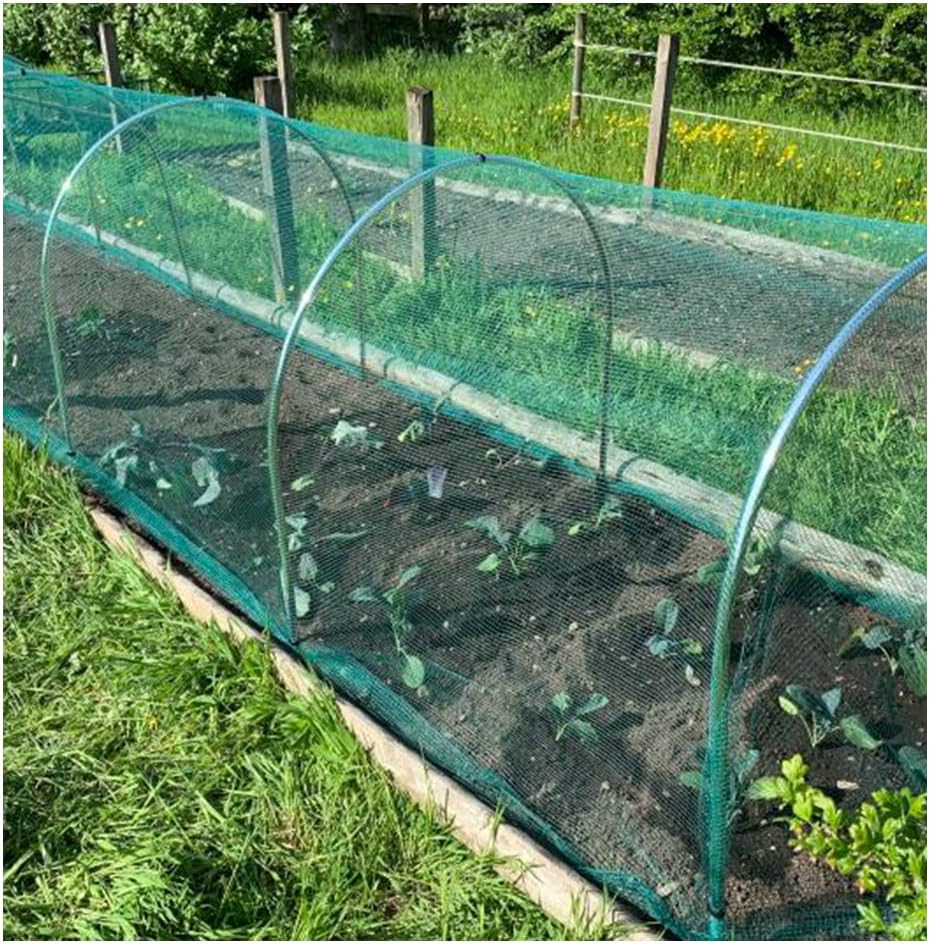
The label offers three mounting options as though they were equivalent: lay directly over crops, hoops, or cages. At least one reviewer thinks that is the mistake.
One three-star grower who found butterflies on the crop is precise about what they did: "Laid it over my cabbages as advised on the packaging." Their conclusion is that flat is not enough, and that the netting needs doubling and fixing several inches clear of the leaves. It reads like a real finding, and it lines up with something the four-star reviewer who wants 5mm adds almost in passing: "make sure they can't crawl under!"
Meanwhile one of the most detailed positive reviews in the set describes a different setup entirely, with the netting held "over hoops and free flow cover over the larger crops". Others built structures rather than draping: a vegetable cage, a fruit cage roof, and one allotment holder who assembled a frame from "a load of metal sticks and sum pipe" (sic) reports the netting "waz ace at keeping the butterflies and uver fings off" (sic).
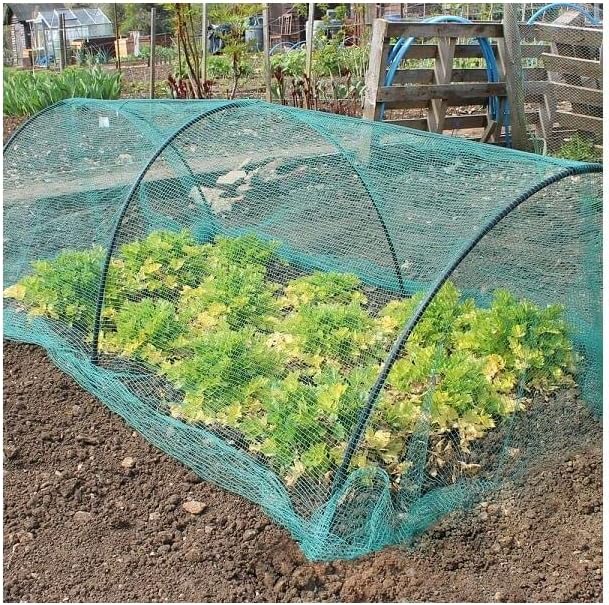
Be careful how much weight you put on this, though. Only one of the six failure reports actually tells us how the netting was mounted, so we cannot claim that draping causes the failures. It is one reviewer's diagnosis plus a suggestive pattern in who reports success, not a proven mechanism. What we can say is that raising it on hoops costs very little, several successful reviewers raised it clear of the crop on hoops, a frame or a cage, and none of the reviewers who describe using hoops or a cage reports a butterfly getting through. The listing photographs show the same thing: netting stretched over hoops into low tunnels with the hem taken right down to the ground.
Why Some 'Too Small' Reviews May Not Be About This Roll
Five reviewers say the netting arrived smaller than they wanted, and three of those are one-star. One writes "far smaller than expected". Another, more cheerfully self-critical, admits "I should have checked the dimensions" before concluding it "wouldn't cover one kale plant." A third calls it a very small piece of netting for what it costs.
Before you read that as a verdict on the 2m x 5m roll, there is something you need to know about how these reviews are collected. This listing sells the netting in a range of widths, and Amazon pools reviews across those variants onto one page. Reviewers confirm it themselves: one praises the fact it "can be bought in a range of sizes to meet individual needs", another advises to "go up a size if any question of if it will fit". Which means some of the size complaints on this page may not be about the roll you are looking at.
So treat size complaints with care, and check the variant you are actually adding to your basket. Plenty of buyers found this roll fine as supplied: six reviewers describe the size as right, generous, or exactly what they needed, including "Just the right size" and "A generous amount of netting". One five-star buyer wanted slightly more coverage and simply joined two pieces.
It cuts easily too, which takes the sting out of buying long. Several reviewers mention trimming it to fit raised beds and supports with no fraying drama, one noting it "cuts quite easily" compared with cheaper netting that is "brittle and difficult to handle."
What Happens After The First Season
Read the durability praise closely and a lot of it is forecasting rather than reporting. One reviewer says it "should last", another that it will "last a few years for sure", a third that it "will be able to be used for years to come". These are people who have just unfolded a new roll and like the feel of it. Fair enough, but it is not evidence.
The reviews that carry real weight are the handful with time behind them. Six reviewers either report a completed season or have bought it more than once. One four-star allotment holder fitted it over cabbages, left it up until winter, and says it was "still looking good when I took it down in winter". A five-star buyer using it as a fruit cage roof went further and "washed it at the end of the season in my washing machine and it has come out just fine." Repeat purchases do the rest of the talking: one is on a second roll, another on a third pack, another ordered a second after liking the first.
The dissent is real but small. Four reviewers criticise the material itself, calling it "very thin and flimsy" or poor quality, and one two-star warns you "Need plenty of wrap over when tacking to a frame as falls apart very easily". That last one is a specific, useful caution: if you are stapling this to timber, leave yourself generous overlap. Worth noting that one of those four negative reviews is dominated by a delivery and refund complaint rather than the netting's performance, so we have kept it out of the crop-protection counts entirely.
Two reviewers raise wildlife, from opposite directions. One hopes it is "closely enough knit to not pose a threat to wild life". The other, who rates it five stars and uses it constantly, adds a disposal note more manufacturers should print: when you finally throw it out, "do Cut it up into small pieces, as it Does go to Landfill, and small animals & birds can get caught up in it" (sic). Good advice for any garden netting.
Who Should Buy This, And Who Needs A Finer Mesh
Four and a half stars from more than 1,500 lifetime ratings is a strong record, and the 100 recent UK reviews we read average 4.41, so nothing has gone badly wrong lately. Seventy-two of that hundred are five-star. This is a well-liked product, and for most of the jobs people buy it for it clearly works.
Buy it if birds are your problem. On that job the review record across 100 reviews contains no failures at all, and it is equally happy over cherry trees, seedbeds, reseeded lawn and brassicas. Buy it if you want something soft enough to lay straight onto foliage without shredding it, easy enough to cut to a raised bed, and light enough to throw over hoops single-handed. Buy it if you are roofing a fruit cage, as one reviewer sensibly does while keeping wider net on the sides so "I need the pollinators to get in through larger holed net on the sides."
Think harder if cabbage whites are the only reason you are shopping. Fifteen reviewers say it stops them and six say it does not, the manufacturer publishes no aperture figure to settle it, and the two buyers who measured put it near 7mm, which one of them considers too generous by 2mm. If you are protecting a serious brassica bed and a caterpillar outbreak would ruin your year, either raise this on hoops well clear of the leaves as the packaging's own critics suggest, or spend more on a netting that states its mesh size in writing.
Used with that expectation set properly, it is an easy recommendation, and at this size it covers a good stretch of bed for the money. Just go in knowing which of its two advertised jobs it does without argument.
Gardening Naturally Soft Green Anti Butterfly Netting for Garden Fruit Crop Protection (2m x 5m)
Soft HDPE crop netting that UK growers rate 4.5 stars, with a spotless record against birds and pigeons across 100 recent reviews. Lays flat over crops or stretches over hoops and cages.